

How Does Alloy Composition Affect the Properties of High-Strength Precision Strip Steel
2026-02-09
In the world of advanced manufacturing, High-Strength Precision Strip Steel is a cornerstone material, enabling innovations from miniature electronics to safety-critical automotive components. At Juming, we understand that the exceptional performance of this material is not a happy accident; it is a direct result of precise and purposeful alloy composition. The specific blend of iron with other elements dictates the final properties, determining whether the strip steel is suitable for a demanding spring application or a complex stamped part. This blog delves into the science behind the alloy mix and its profound impact.
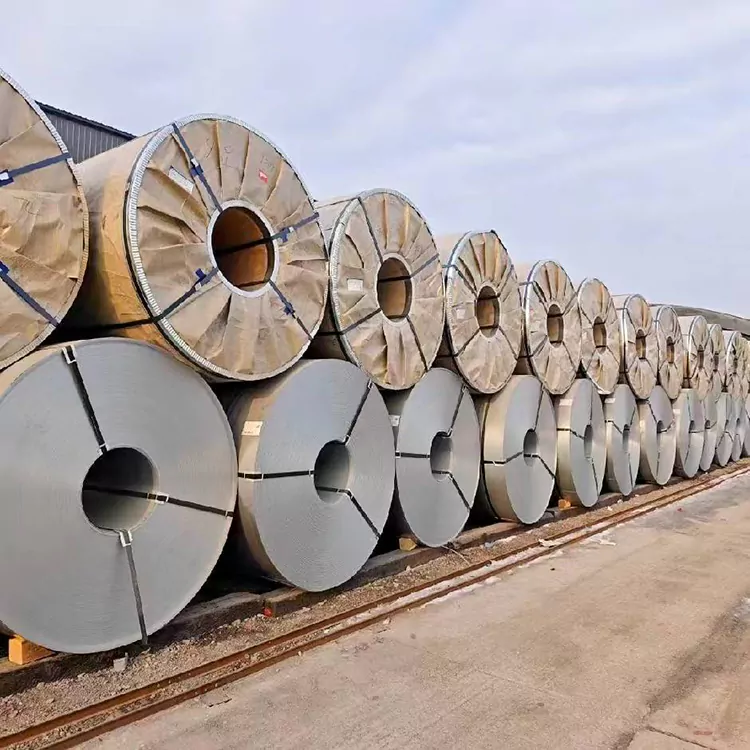
The primary alloying elements and their key roles can be summarized as follows:
-
Carbon (C): The most crucial hardening element. It increases tensile strength and hardness but can reduce ductility.
-
Manganese (Mn): Enhances strength and hardenability. It also helps deoxidize the steel during production, improving internal soundness.
-
Silicon (Si): A potent strengthener and deoxidizer. It significantly improves elastic limit, making it vital for spring steels.
-
Chromium (Cr): Boosts hardness, wear resistance, and improves corrosion resistance.
-
Nickel (Ni): Improves toughness and corrosion resistance, especially when combined with Chromium.
To illustrate how targeted compositions serve different needs, consider the following typical examples:
| Alloy System | Key Elements | Primary Properties Enhanced | Common Applications |
|---|---|---|---|
| Carbon-Manganese | C, Mn | Strength, Formability | General stamping, washers, clips |
| Spring Steel | C, Si, Mn | High Elastic Limit, Fatigue Resistance | Suspension components, connectors, springs |
| Stainless Steel | Cr, Ni (Mo) | Corrosion Resistance, Strength | Medical instruments, food processing, marine parts |
High-Strength Precision Strip Steel FAQ
What is the most important factor in achieving high strength in strip steel?
While processing is critical, the base alloy composition, particularly the carbon content, is the foundational factor. Carbon atoms create lattice distortions in the iron matrix, which directly impede dislocation movement, resulting in higher tensile and yield strength. Juming meticulously controls this balance to achieve the required strength without compromising other essential properties.
How does alloy choice affect the precision of the strip steel?
Alloy composition influences thermal expansion characteristics and response during heat treatment (annealing, tempering). Consistent, predictable behavior during these thermal processes is essential for maintaining tight dimensional tolerances and flatness. Juming's expertise in thermo-mechanical processing ensures that the inherent properties of the alloy are fully realized in the final precise dimensions.
Why might two strips with similar strength have different performance?
They likely have different alloy compositions. One may achieve strength through high carbon, making it brittle, while another might use a combination of lower carbon with elements like silicon and vanadium for better toughness and fatigue life. Selecting the correct alloy composition is key to optimal in-service performance for your specific application.
Understanding the intricate relationship between alloy composition and final material behavior is what separates a standard product from a precision-engineered solution. At Juming, our metallurgical experts don't just supply strip steel; we engineer material performance from the atomic level up. We collaborate with you to select or tailor the perfect alloy that meets your exact requirements for strength, formability, corrosion resistance, and longevity.
Contact us today to discuss how Juming's mastery over alloy composition can provide the ideal High-Strength Precision Strip Steel for your next breakthrough project.