

How Does a Wedge Anchor Provide Reliable Concrete Fastening?
2026-08-14
Article Summary
A wedge anchor is one of the most widely used mechanical fastening solutions for securing heavy-duty structures to concrete surfaces. However, many buyers, contractors, and engineers still face challenges when selecting the right anchor, including incorrect sizing, insufficient holding strength, corrosion concerns, and installation problems. This article explains how wedge anchors work, why they are trusted for demanding applications, how to choose the right product, and how Ningbo Fixingmore Precision Machinery Factory helps customers achieve dependable fastening solutions.
By understanding the structure, installation process, material options, and application requirements of wedge anchors, users can reduce installation risks, improve project efficiency, and select fastening products that match their specific needs.
Table of Contents
- Article Outline
- Why Are Wedge Anchors Important for Concrete Fastening?
- How Does a Wedge Anchor Work?
- What Makes the Structure of a Wedge Anchor Reliable?
- How Can You Choose the Right Wedge Anchor?
- How Should a Wedge Anchor Be Installed Correctly?
- Where Are Wedge Anchors Commonly Used?
- Why Choose Ningbo Fixingmore Precision Machinery Factory?
- Frequently Asked Questions
- Final Thoughts
Article Outline
- Common fastening challenges in concrete construction projects
- The working principle behind wedge anchor expansion
- Key components that influence anchor performance
- Important factors when selecting wedge anchors
- Proper installation methods for maximum holding strength
- Main industries and applications using wedge anchors
- Manufacturing advantages provided by Ningbo Fixingmore Precision Machinery Factory
- Frequently asked questions about wedge anchor solutions
Why Are Wedge Anchors Important for Concrete Fastening?
In construction and industrial projects, reliable fastening is essential for maintaining structural stability and safety. Concrete surfaces are strong and durable, but attaching equipment, steel structures, railings, and other components requires specialized fastening solutions. This is where wedge anchors become an effective choice.
A wedge anchor is designed as a heavy-duty mechanical anchor that creates a secure connection between a fixture and concrete. Unlike simple screws or lightweight fasteners, wedge anchors use an expansion mechanism that allows them to achieve strong holding performance inside solid concrete.
Many project failures are caused not by the main structure itself but by unsuitable fastening components. Selecting an anchor with improper diameter, insufficient embedment depth, or poor corrosion resistance may lead to reduced stability and increased maintenance costs.
A high-quality wedge anchor helps solve several common customer problems:
- Improves load-bearing reliability for heavy installations
- Reduces the risk of anchor loosening over time
- Provides consistent performance in concrete applications
- Simplifies installation procedures for workers
- Supports different project requirements through various sizes and materials
How Does a Wedge Anchor Work?
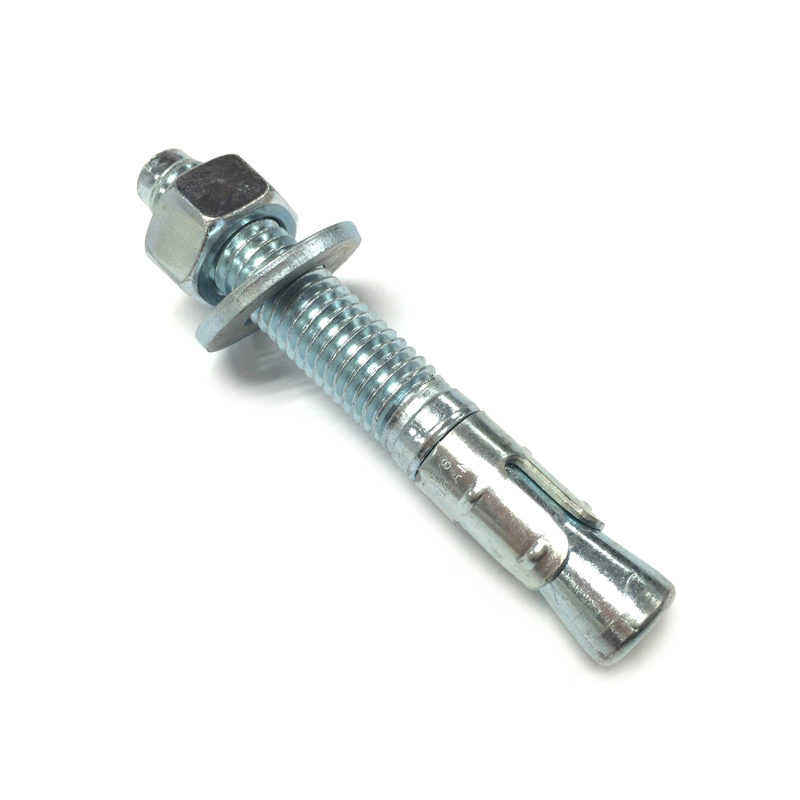
The working principle of a wedge anchor is based on mechanical expansion. The anchor assembly usually consists of a threaded steel body, expansion clip, nut, and washer. During installation, the anchor is inserted into a pre-drilled hole in concrete. When the nut is tightened, the threaded section pulls the cone-shaped end upward, forcing the expansion clip outward against the concrete wall.
This outward pressure creates friction and mechanical interlocking between the anchor and the surrounding concrete. As a result, the anchor becomes firmly fixed and can support heavy loads.
| Component | Function |
|---|---|
| Threaded Rod | Provides connection with nuts and washers while transferring load. |
| Expansion Clip | Expands outward to grip the concrete surface. |
| Conical End | Creates expansion force during tightening. |
| Nut and Washer | Secure the attached fixture and distribute pressure. |
The design allows wedge anchors to provide dependable performance in both cracked and uncracked concrete environments when properly selected and installed.
What Makes the Structure of a Wedge Anchor Reliable?
The performance of a wedge anchor depends heavily on its design details and manufacturing quality. A well-designed anchor must maintain strength during installation while providing long-term durability under different environmental conditions.
Ningbo Fixingmore Precision Machinery Factory produces wedge anchor solutions with attention to material selection, dimensional accuracy, and surface treatment. The company provides different options including carbon steel, stainless steel, zinc plated, and galvanized finishes to meet various application requirements.
| Feature | Customer Benefit |
|---|---|
| High-strength steel construction | Supports demanding fastening applications. |
| Precision manufacturing | Ensures consistent dimensions and installation compatibility. |
| Protective surface coating | Helps improve corrosion resistance. |
| Multiple size options | Allows customers to select suitable anchors for different projects. |
The company’s wedge anchor products are manufactured according to commonly used standards and can support customized requirements based on drawings or samples. This flexibility helps distributors, contractors, and OEM customers obtain fastening solutions suitable for their markets.
How Can You Choose the Right Wedge Anchor?
Choosing the correct wedge anchor requires more than selecting a random size. The anchor must match the base material, load requirement, installation environment, and project conditions.
Before purchasing wedge anchors, customers should consider the following factors:
- Concrete condition: Determine whether the application involves cracked concrete, uncracked concrete, or masonry materials.
- Load requirements: Select an anchor size according to the expected tensile and shear loads.
- Anchor diameter: Larger diameters generally provide higher holding capacity.
- Embedment depth: Proper installation depth is necessary for reliable performance.
- Environmental conditions: Choose suitable coatings or stainless steel options for corrosion resistance.
| Application Requirement | Recommended Consideration |
|---|---|
| Indoor construction | Zinc plated carbon steel wedge anchors |
| Outdoor projects | Galvanized or corrosion-resistant options |
| Heavy machinery installation | Larger diameter heavy-duty wedge anchors |
| Structural fastening | Anchors with verified strength and dimensional accuracy |
How Should a Wedge Anchor Be Installed Correctly?
Even the highest-quality wedge anchor cannot achieve its designed performance without correct installation. Improper drilling, insufficient hole depth, incorrect tightening torque, or poor cleaning procedures may reduce the anchor’s holding capacity and affect long-term reliability.
A professional installation process helps ensure that the expansion mechanism works properly and that the anchor maintains stable contact with the concrete.
The typical installation steps include:
- Prepare the installation location: Identify the correct position and confirm that the concrete structure is suitable for anchoring.
- Drill the correct hole: Use a suitable drill bit with the recommended diameter and create a hole according to the required embedment depth.
- Clean the hole: Remove dust and debris from inside the hole because contaminants may prevent proper expansion.
- Insert the wedge anchor: Place the anchor into the hole until the washer and nut reach the fixture surface.
- Tighten the nut: Apply the recommended tightening torque to activate the expansion clip and create a secure connection.
- Check the installation: Verify that the anchor is firmly fixed and the attached component is stable.
| Installation Factor | Possible Problem | Solution |
|---|---|---|
| Incorrect hole diameter | Reduced expansion performance | Use the recommended drilling size |
| Insufficient hole cleaning | Lower holding strength | Remove dust before installation |
| Wrong tightening force | Anchor may loosen or become damaged | Follow proper torque requirements |
| Wrong embedment depth | Reduced load capacity | Select suitable anchor length |
For contractors and industrial users, following standardized installation practices can significantly reduce project delays and prevent future maintenance problems.
Where Are Wedge Anchors Commonly Used?
Because of their strong mechanical performance and reliable connection ability, wedge anchors are widely used across many industries. They are especially suitable for applications where safety, stability, and long service life are important.
Common application areas include:
- Construction projects: Used for fixing structural components, steel frames, support brackets, and concrete-related installations.
- Industrial equipment installation: Provides secure connections for machinery, production equipment, and heavy-duty systems.
- Infrastructure projects: Applied in bridges, transportation facilities, and public construction systems.
- Architectural applications: Used for installing railings, barriers, handrails, and other building accessories.
- Energy and utility projects: Supports equipment mounting where strong and durable fastening is required.
| Industry | Typical Uses |
|---|---|
| Building Construction | Steel structures, supports, brackets, and fixtures |
| Manufacturing | Machine bases and equipment anchoring |
| Transportation | Infrastructure components and safety facilities |
| Commercial Facilities | Equipment mounting and structural accessories |
The wide application range of wedge anchors demonstrates their importance as a dependable fastening solution for modern construction and industrial environments.
Why Choose Ningbo Fixingmore Precision Machinery Factory?
Selecting the right manufacturer is an important step when purchasing wedge anchors in large quantities or for specialized applications. Customers need more than standard products; they need consistent quality, professional manufacturing capabilities, and reliable technical support.
Ningbo Fixingmore Precision Machinery Factory focuses on precision hardware manufacturing and provides high-quality fastening solutions for global customers. With manufacturing experience and strict attention to product accuracy, the company supports customers requiring dependable wedge anchor products for construction and industrial applications.
The company’s advantages include:
- Professional production capability: Advanced manufacturing processes help maintain stable product quality and accurate dimensions.
- Material flexibility: Different materials and surface treatments are available to meet various environmental requirements.
- Customization service: Products can be developed according to customer drawings, specifications, and application needs.
- Quality-focused manufacturing: Each production stage is managed to ensure reliable performance and consistency.
- Global supply support: The company helps international customers obtain efficient fastening solutions.
| Ningbo Fixingmore Precision Machinery Factory Capability | Customer Value |
|---|---|
| Precision machining technology | Reliable product accuracy and compatibility |
| Customized manufacturing | Solutions for different project requirements |
| Various material choices | Suitable options for different environments |
| Professional service | Improved purchasing and technical experience |
For companies looking for dependable fastening components, working with an experienced manufacturer can help reduce supply risks and improve project efficiency.
How Can You Improve the Service Life of Wedge Anchors?
Although wedge anchors are designed for durability, proper selection and maintenance practices can further improve their service life. Environmental conditions, installation quality, and regular inspection all influence long-term performance.
Recommended practices include:
- Select corrosion-resistant materials for humid or outdoor environments.
- Avoid exceeding the recommended load capacity.
- Inspect anchor connections regularly in high-vibration applications.
- Ensure installation follows professional guidelines.
- Replace damaged anchors instead of reusing compromised components.
For large construction projects and industrial applications, preventive management of fastening systems can reduce unexpected failures and maintenance expenses.
Frequently Asked Questions
What is a wedge anchor used for?
A wedge anchor is mainly used to fasten objects securely to concrete surfaces. It is commonly applied for structural components, machinery, steel frames, railings, and other heavy-duty installations requiring strong holding performance.
How strong is a wedge anchor?
The strength of a wedge anchor depends on factors such as diameter, embedment depth, concrete quality, material type, and installation method. Selecting the correct specification is essential for achieving the expected load capacity.
Can wedge anchors be used outdoors?
Yes. Outdoor applications usually require corrosion-resistant options such as galvanized or stainless steel wedge anchors. The correct material choice helps protect against environmental exposure.
What materials are wedge anchors made from?
Common materials include carbon steel and stainless steel. Different surface treatments, such as zinc plating or galvanization, may also be used to improve corrosion resistance.
How do I choose the correct wedge anchor size?
The correct size depends on the load requirement, fixture type, concrete condition, and installation environment. Professional suppliers can help customers select suitable specifications based on project details.
Final Thoughts
A wedge anchor provides a reliable solution for concrete fastening by combining strong mechanical expansion, durable materials, and efficient installation. From construction projects to industrial equipment mounting, these anchors help create secure connections that support safety and long-term performance.
Choosing the right product specification, following correct installation procedures, and cooperating with an experienced manufacturer are key factors in achieving successful fastening results.
With professional manufacturing capabilities and customized solutions, Ningbo Fixingmore Precision Machinery Factory is committed to providing reliable wedge anchor products for customers worldwide. If you need high-quality fastening solutions tailored to your project requirements, please contact us today to discuss your needs and receive professional support.