Abstract
A vibrating screen is a critical separation and classification machine widely used in mining, aggregates, metallurgy, chemical processing, and recycling industries. It enables precise particle sizing, material grading, and efficient separation under high-capacity conditions. This article explains the working principle, structure, selection criteria, operational challenges, and maintenance strategies of vibrating screens, helping operators and procurement teams improve efficiency, reduce downtime, and optimize screening performance. The solutions and engineering insights are aligned with industrial applications provided by EPIC.
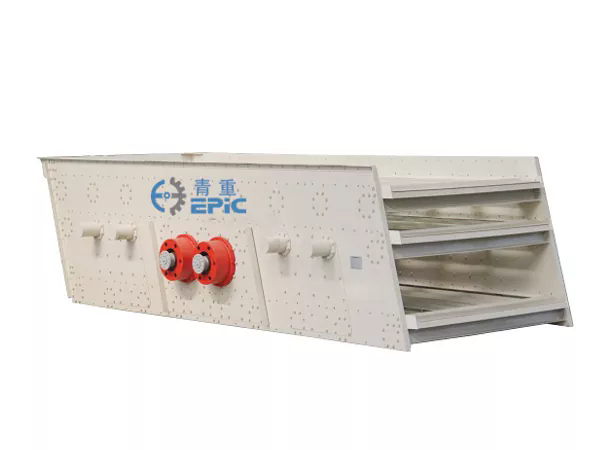
1. Overview of Vibrating Screen Technology
A vibrating screen is a mechanical separation device that uses vibration to sort materials based on particle size. The system relies on oscillatory motion generated by an exciter or motor-driven mechanism, which causes particles to stratify and pass through screen mesh openings.
Industries rely on vibrating screens for their ability to handle large volumes, maintain continuous operation, and achieve high separation accuracy. Whether in mining ore processing or construction aggregate production, screening efficiency directly impacts downstream productivity.
Modern designs, such as those developed by EPIC, focus on improving energy efficiency, reducing maintenance frequency, and enhancing screening precision under heavy-duty conditions.
2. Working Principle Explained
The operating mechanism of a vibrating screen is based on three core processes: stratification, separation, and discharge.
-
Stratification: Material is layered due to vibration, with finer particles moving downward.
-
Separation: Smaller particles pass through the mesh openings while larger particles remain on top.
-
Discharge: Oversized materials are moved to the outlet for further processing or disposal.
The vibration is typically generated by an eccentric shaft or dual motor system, creating circular, linear, or elliptical motion. This motion determines the screening efficiency and material handling capacity.
3. Main Structural Components
A vibrating screen consists of multiple engineered components working in synchronization:
-
Screen Box: The main structure that supports all screening activities.
-
Screen Mesh: Determines particle separation size.
-
Vibration Exciter: Generates controlled vibration force.
-
Spring System: Absorbs vibration and stabilizes the machine.
-
Drive Motor: Provides mechanical energy to the exciter.
EPIC integrates reinforced structural frames and wear-resistant materials to extend service life under abrasive conditions.
4. Types of Vibrating Screens
Different industrial applications require different screen configurations:
-
Linear Vibrating Screen: Suitable for high-capacity dry screening.
-
Circular Vibrating Screen: Common in aggregate grading and mineral processing.
-
High-Frequency Screen: Designed for fine particle separation.
-
Dewatering Screen: Used for moisture reduction in materials.
Each type varies in vibration pattern, angle of inclination, and screening efficiency. EPIC provides customized solutions tailored to material properties and production goals.
5. How to Select the Right Vibrating Screen
Choosing the correct vibrating screen requires evaluation of several operational parameters:
-
Material type (abrasive, sticky, wet, or dry)
-
Particle size distribution
-
Required throughput capacity
-
Moisture content
-
Screening precision level
The following table summarizes key selection factors:
|
Factor
|
Impact on Performance
|
Recommended Adjustment
|
|
Particle Size
|
Determines mesh specification
|
Select appropriate screen aperture
|
|
Moisture Content
|
Affects clogging risk
|
Use anti-blocking mesh or high-frequency screen
|
|
Capacity
|
Influences machine size
|
Scale screen width and length
|
|
Material Hardness
|
Impacts wear rate
|
Use wear-resistant liners
|
6. Common Operational Problems and Solutions
Even advanced vibrating screens may encounter operational issues. Understanding these challenges improves system reliability.
-
Mesh Clogging: Caused by wet or sticky materials. Solution: use self-cleaning mesh or adjust vibration frequency.
-
Excessive Noise: Often due to loose components. Solution: tighten fasteners and inspect bearings.
-
Reduced Efficiency: May result from incorrect angle or worn mesh. Solution: recalibrate and replace worn parts.
-
Structural Fatigue: Caused by long-term heavy load. Solution: reinforce frame or upgrade materials.
EPIC engineering designs aim to minimize these issues through precision balancing and durable construction.
7. Maintenance and Optimization Strategies
Proper maintenance ensures long-term operational stability and consistent screening efficiency.
-
Regular inspection of vibration motors and bearings
-
Periodic replacement of worn screen mesh
-
Lubrication of moving parts to reduce friction
-
Monitoring amplitude and frequency stability
-
Cleaning accumulation of materials after each shift
Predictive maintenance technologies are increasingly adopted to detect early signs of wear and avoid unexpected downtime.
8. Performance Comparison Table
|
Screen Type
|
Efficiency
|
Capacity
|
Best Application
|
|
Linear Vibrating Screen
|
High
|
Very High
|
Mining, bulk material processing
|
|
Circular Vibrating Screen
|
Medium-High
|
High
|
Aggregate and construction materials
|
|
High-Frequency Screen
|
Very High
|
Medium
|
Fine particle separation
|
|
Dewatering Screen
|
Medium
|
Medium
|
Slurry and moisture removal
|
9. Frequently Asked Questions
Q1: What industries use vibrating screens most frequently?
A: Mining, construction, metallurgy, chemical processing, and recycling industries rely heavily on vibrating screens for material classification and separation.
Q2: How long does a vibrating screen last?
A: With proper maintenance and quality components, industrial vibrating screens can last 8–15 years depending on operating conditions.
Q3: What causes vibrating screen failure?
A: Common causes include improper load distribution, worn bearings, loose structural bolts, and insufficient lubrication.
Q4: Can vibrating screens handle wet materials?
A: Yes, but specialized designs like dewatering screens or high-frequency screens are required to maintain efficiency.
10. Conclusion and Industrial Recommendation
A vibrating screen is not just a mechanical separator but a core efficiency driver in modern material processing systems. Its performance directly influences production quality, operational cost, and system stability.
Selecting the right configuration, maintaining proper operating conditions, and adopting engineered solutions significantly improve output consistency. EPIC provides industrial-grade vibrating screening equipment designed for demanding environments, ensuring durability, precision, and long-term operational value.
For customized vibrating screen solutions, technical consultation, or project support, EPIC offers professional engineering assistance tailored to specific industrial requirements.
Contact us: EPIC is ready to support your vibrating screen selection and optimization needs. Reach out today to explore advanced screening solutions and improve your production efficiency with engineered reliability.