

How Does a Structural Hollow Section Improve Solar Mounting Strength and Efficiency?
2026-08-25
Article Summary: Structural Hollow Section is an important steel component for modern photovoltaic mounting systems and outdoor structural applications. Its closed tubular geometry provides an efficient balance between strength, rigidity, weight, durability, and material usage. When properly engineered and manufactured, it can help solar developers address common challenges such as excessive structural weight, wind and snow loading, corrosion, difficult installation, and inconsistent component dimensions. This article explains how Structural Hollow Section works, where it is used, how to select the right specification, and what buyers should evaluate when sourcing from a professional manufacturer.
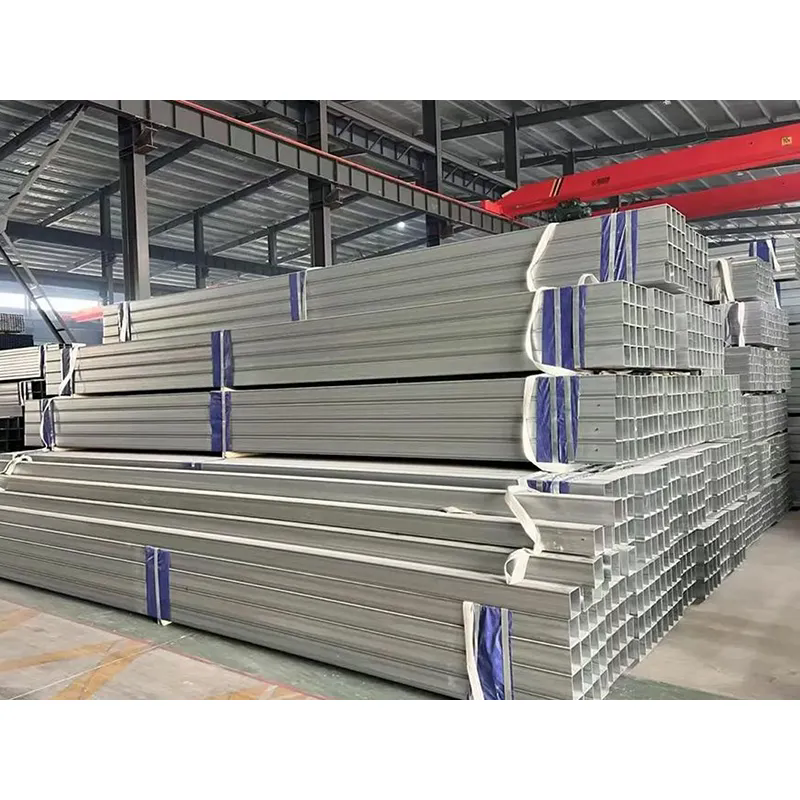
Table of Contents
- Article Outline
- What Is a Structural Hollow Section?
- Why Does the Hollow Design Matter?
- How Does Structural Hollow Section Improve Structural Efficiency?
- Where Is Structural Hollow Section Used in Solar Projects?
- How Should You Select the Material and Surface Treatment?
- What Factors Should Buyers Consider?
- How Is Structural Hollow Section Manufactured?
- How Can Quality Be Verified?
- Structural Hollow Section Compared with Solid Steel Members
- Why Is Customization Important?
- Common Purchasing Problems and Practical Solutions
- Why Work with Energet Solar Solution?
- FAQ
- Conclusion
Article Outline
- Understand the construction and function of Structural Hollow Section.
- Learn why closed tubular profiles are suitable for solar mounting structures.
- Evaluate strength, weight, corrosion resistance, and installation requirements.
- Choose appropriate steel grades, dimensions, wall thicknesses, and coatings.
- Understand the manufacturing and inspection processes behind reliable hollow sections.
- Identify common procurement problems before placing a bulk order.
- Explore customized solutions from Energet Solar Solution.
What Is a Structural Hollow Section?
A Structural Hollow Section is a hollow steel profile designed to carry structural loads while using material efficiently. Unlike a solid steel bar, it contains an enclosed internal space surrounded by a continuous steel wall. Common configurations include Square Hollow Section (SHS) and Rectangular Hollow Section (RHS).
The geometry makes these profiles particularly useful where engineers need a combination of load-bearing capability, dimensional consistency, relatively low self-weight, and resistance to bending or torsional forces. These characteristics make Structural Hollow Section suitable for photovoltaic support structures, solar carports, ground-mounted solar installations, agricultural PV systems, and other outdoor steel structures.
For solar projects, structural components must withstand more than the static weight of photovoltaic modules. Wind uplift, snow accumulation, vibration, thermal expansion, installation loads, and long-term environmental exposure can all affect structural performance. Therefore, the section profile and steel specification must be selected according to the actual engineering requirements rather than simply choosing the lowest-cost steel available.
Why Does the Hollow Design Matter?
The primary advantage of a hollow structural profile comes from its geometry. Material is positioned around the outside of the section rather than concentrated throughout a solid core. This arrangement can provide favorable structural performance without unnecessarily increasing the amount of steel.
A closed profile also provides useful resistance to torsional deformation. This is particularly valuable in solar mounting structures, where loads may not always act perfectly vertically. Wind can generate uplift and lateral forces, while uneven loading can introduce additional bending and twisting.
- Efficient material distribution: Steel is positioned where it contributes effectively to structural stiffness.
- Lower structural self-weight: Less material can reduce the weight of individual components.
- Good torsional rigidity: The closed cross-section can resist twisting effectively.
- Stable geometry: Square and rectangular profiles provide predictable connection surfaces.
- Flexible fabrication: Sections can be cut, drilled, welded, and integrated into different structural assemblies.
However, a hollow profile is not automatically suitable for every project. Wall thickness, steel grade, section dimensions, span, connection method, load conditions, and corrosion protection all influence the final structural performance.
How Does Structural Hollow Section Improve Structural Efficiency?
Solar mounting structures must balance mechanical performance with project economics. A structure that is excessively heavy may increase transportation, handling, foundation, and installation costs. Conversely, an undersized section can create unacceptable deflection or strength problems.
Structural Hollow Section helps engineers address this balance through its efficient cross-sectional configuration.
1. Efficient Resistance to Bending
When a structural member bends, the distribution of material within its cross-section strongly affects its resistance. A suitably designed hollow profile places steel away from the neutral axis, which can contribute to effective bending performance.
This makes hollow sections useful for beams and other supporting members where controlled deflection is important.
2. Resistance to Torsion
Solar structures may experience twisting caused by wind, asymmetric loading, or connection arrangements. The enclosed shape of a Structural Hollow Section provides a continuous perimeter that can offer strong torsional resistance.
This is one reason closed sections are attractive for applications requiring structural stability in multiple loading directions.
3. Reduced Dead Load
Reducing unnecessary structural weight can have benefits beyond the steel member itself. Lighter components may simplify transportation and on-site handling and can reduce the load transferred to foundations or supporting structures.
4. Consistent Connection Geometry
Square and rectangular profiles provide relatively flat external surfaces for brackets, connectors, clamps, plates, and welded components. This can simplify structural detailing and fabrication.
Where Is Structural Hollow Section Used in Solar Projects?
Structural Hollow Section is particularly valuable in photovoltaic projects because solar support systems are exposed to changing environmental loads throughout their service life.
Ground-Mounted Solar Power Plants
Utility-scale solar farms require extensive quantities of structural steel. Hollow sections can be used for support columns, beams, bracing elements, and other structural members where the design requires appropriate strength and rigidity.
The selection should account for local wind conditions, snow loads, soil conditions, module configuration, support spacing, and foundation design.
Commercial and Industrial Rooftop Solar
For rooftop installations, structural weight can be a significant consideration. A properly engineered hollow profile can provide the required mechanical performance without unnecessarily increasing the load imposed on the roof structure.
Before selecting a section, engineers should verify the existing roof structure, allowable loading, attachment method, and local building requirements.
Solar Carports
Solar carports combine photovoltaic generation with a functional parking structure. They require structural members capable of supporting modules while also maintaining sufficient stability over relatively large spans.
Structural Hollow Section can provide clean external geometry and suitable stiffness for columns, beams, and other fabricated components.
Agrivoltaic and Fishery Solar Structures
Agrivoltaic and fishery PV projects often have specialized structural layouts. Larger spans, unusual module elevations, humidity, and long-term outdoor exposure can make material selection particularly important.
Hollow steel profiles can be adapted to different structural configurations when their dimensions, steel grade, and corrosion protection are correctly specified.
Outdoor Steel Structures
Beyond photovoltaic systems, Structural Hollow Section can also be applied to equipment platforms, walkways, guardrails, support frames, and other outdoor engineering structures.
How Should You Select the Material and Surface Treatment?
Material selection should begin with the project's structural calculations and environmental conditions. Carbon steel grades such as Q235B and Q355B may be selected for different engineering requirements, but the appropriate grade depends on the design specification and applicable standards.
Surface protection is equally important because outdoor steel structures may be exposed to rain, humidity, condensation, salt spray, industrial pollutants, and temperature fluctuations.
| Option | Main Characteristic | Typical Consideration |
|---|---|---|
| Q235B Carbon Steel | General structural steel | Suitable where project calculations and specifications permit this grade |
| Q355B Carbon Steel | Higher strength level | Useful where higher structural strength is required |
| Hot-Dip Galvanizing | Zinc-based corrosion protection | Commonly selected for outdoor steel structures |
| ZAM Coating | Zinc-aluminum-magnesium protection | Can be considered for demanding corrosion environments and project-specific requirements |
The coating specification should not be selected independently from the project environment. Coastal installations, high-humidity locations, industrial areas, and regions with substantial temperature variation may require different protection strategies.
What Factors Should Buyers Consider?
Purchasing Structural Hollow Section only by price can create problems later. A more reliable procurement process considers structural performance, manufacturing consistency, surface protection, logistics, and project compatibility together.
- Section shape: Determine whether SHS or RHS provides the most suitable geometry.
- Outer dimensions: Confirm width, height, and profile dimensions according to engineering drawings.
- Wall thickness: Select thickness based on strength, stability, deflection, fabrication, and project requirements.
- Steel grade: Verify that the material grade meets the engineering specification.
- Length: Define standard or customized lengths to reduce unnecessary cutting on site.
- Surface treatment: Match corrosion protection with the actual installation environment.
- Dimensional tolerance: Ensure consistent dimensions for smooth assembly.
- Straightness: Excessive deformation can complicate installation and alignment.
- Weld quality: For welded hollow sections, manufacturing consistency is critical.
- Packaging: Proper packaging helps reduce damage during transportation and handling.
How Is Structural Hollow Section Manufactured?
Reliable performance begins with controlled manufacturing. Although production methods can vary according to the section specification, a typical manufacturing process may involve steel preparation, forming, welding, straightening, cutting, surface treatment, and inspection.
Steel Preparation
Appropriate steel material is prepared according to the required grade, dimensions, and production specification. Material traceability is important for projects requiring controlled documentation.
Roll Forming
Steel strip is progressively formed into the required profile. Controlled forming helps establish consistent dimensions and section geometry.
Automatic Welding
Where the production design requires a welded tube, automated welding equipment can help maintain consistent weld quality and production efficiency.
Straightening and Cutting
After forming and welding, the section can be straightened and cut into specified lengths. Accurate cutting is particularly useful for large solar projects because it can reduce site modification work.
Surface Finishing
Depending on the application, the section can receive hot-dip galvanizing, ZAM coating, or another specified surface treatment.
How Can Quality Be Verified?
Quality control should cover more than visual inspection. Structural components need consistent dimensions and material characteristics because small variations can affect assembly and structural behavior across a large installation.
| Inspection Item | Why It Matters |
|---|---|
| Material Verification | Confirms the supplied steel corresponds with the specified material grade. |
| Dimension Measurement | Ensures profile dimensions remain within the required tolerances. |
| Wall Thickness Inspection | Helps verify structural consistency and material usage. |
| Straightness Inspection | Reduces alignment and installation difficulties. |
| Weld Inspection | Checks manufacturing consistency at the welded seam. |
| Coating Inspection | Verifies surface protection according to the project specification. |
A professional supplier should also be able to provide appropriate production and inspection documentation when required by the project.
Structural Hollow Section Compared with Solid Steel Members
Solid steel members remain useful for many applications, but they are not automatically the best choice for every solar structure. The decision should be based on structural calculations and project constraints.
| Factor | Structural Hollow Section | Solid Steel Member |
|---|---|---|
| Material Efficiency | Efficient tubular configuration | More material is distributed throughout the section |
| Self-Weight | Can be relatively low for the required structural performance | Can become heavy as cross-sectional size increases |
| Torsional Behavior | Closed section provides strong torsional characteristics | Depends strongly on the selected solid geometry |
| Connection Surface | Flat external surfaces on SHS/RHS profiles | Depends on member shape |
| Solar Applications | Well suited to many PV structural applications | Useful where solid-section characteristics are specifically required |
Why Is Customization Important?
No two solar projects are exactly the same. A utility-scale ground-mounted PV plant may have completely different structural requirements from a commercial rooftop system or solar carport.
For this reason, customized Structural Hollow Section can be valuable when standard dimensions do not align efficiently with the project design.
Customization may include:
- Square or rectangular section profiles
- Different external dimensions
- Different wall thicknesses
- Customized cutting lengths
- Specified steel grades
- Customized holes or processing
- Hot-dip galvanized surfaces
- ZAM surface treatment
- OEM production according to engineering drawings
- Bulk production for large photovoltaic projects
Customized production should begin with a clear technical specification. Drawings, load requirements, environmental conditions, connection details, quantities, and required delivery schedule should be reviewed before production starts.
Common Purchasing Problems and Practical Solutions
Problem 1: Choosing Only by Unit Price
The lowest quotation may not represent the lowest total project cost. Inconsistent dimensions, insufficient coating, excessive deformation, or poor packaging can create additional installation and replacement expenses.
Practical solution: Compare material grade, dimensions, coating, inspection requirements, packaging, lead time, and technical support together with the unit price.
Problem 2: Incorrect Wall Thickness
Using an unsuitable wall thickness can affect structural capacity, weight, fabrication, and cost.
Practical solution: Base wall thickness on engineering calculations and project specifications rather than selecting a generic thickness.
Problem 3: Insufficient Corrosion Protection
A solar mounting system is normally expected to remain outdoors for many years. Selecting a coating without considering humidity or salt exposure can reduce long-term durability.
Practical solution: Evaluate the environmental conditions first and then specify the appropriate surface protection.
Problem 4: Poor Dimensional Consistency
When large quantities of structural sections are installed across hundreds or thousands of module positions, dimensional inconsistency can multiply small installation problems.
Practical solution: Work with a manufacturer that maintains controlled forming, cutting, straightening, and inspection procedures.
Problem 5: Lack of Custom Manufacturing Capability
Standard products may not always match the engineering drawings of a specialized solar project. Additional cutting and drilling at the construction site can increase labor requirements.
Practical solution: Discuss customized dimensions, lengths, holes, and surface treatment with the manufacturer before production.
Why Work with Energet Solar Solution?
Energet Solar Solution focuses on photovoltaic mounting systems and structural components for solar applications. Its Structural Hollow Section products are designed for applications where mechanical performance, dimensional consistency, corrosion resistance, and production capacity are important.
According to the company's product information, its manufacturing capabilities include multiple production facilities and production lines, with an annual production capacity of approximately 500,000 tons. The company also states that its products are manufactured under controlled quality procedures and that its management systems include ISO 9001, ISO 14001, and ISO 45001 certifications.
For customers purchasing Structural Hollow Section for photovoltaic projects, this type of manufacturing capability can be particularly useful when a project requires large quantities, stable specifications, customized dimensions, or coordinated delivery.
Energet Solar Solution also supports customization based on project requirements, including dimensions, wall thickness, length, processing, and surface finishes. Its stated production process includes forming, welding, straightening, cutting, surface finishing, and inspection.
The key point is not simply selecting a hollow steel profile. A successful procurement decision should connect the structural design, manufacturing specification, environmental conditions, quality requirements, and installation method into one coordinated solution.
FAQ
What is a Structural Hollow Section mainly used for?
Structural Hollow Section is commonly used as a load-bearing steel component in photovoltaic mounting systems, ground-mounted solar projects, solar carports, rooftop structures, agricultural PV systems, and other outdoor steel structures.
What is the difference between SHS and RHS?
SHS means Square Hollow Section, where the external width and height are generally equal. RHS means Rectangular Hollow Section, where the width and height are different. The appropriate profile depends on the structural design and connection requirements.
Which steel grades can be used for Structural Hollow Section?
Q235B and Q355B are commonly used carbon steel grades for structural applications, although the correct material should always be determined according to engineering calculations, applicable standards, and project specifications.
Is Structural Hollow Section suitable for outdoor solar applications?
Yes. It can be suitable for outdoor solar applications when the section dimensions, steel grade, structural design, and corrosion protection are correctly selected. Surface treatments such as hot-dip galvanizing or ZAM coating may be considered according to environmental requirements.
Can Structural Hollow Section be customized?
Yes. Depending on the manufacturer's capabilities, customization can include section dimensions, wall thickness, length, holes, processing, steel grade, and surface treatment. Energet Solar Solution provides customized production based on project drawings and specifications.
How do I choose the right Structural Hollow Section for a solar project?
Start with the structural calculations and identify the required loads, spans, support spacing, environmental conditions, connection details, allowable deflection, steel grade, corrosion protection, and installation method. The supplier can then use these requirements to recommend an appropriate section specification.
Does a hollow section always weigh less than a solid steel member?
Not necessarily. Weight depends on the selected dimensions and wall thickness. The advantage of a hollow section is that its geometry can provide an efficient balance between structural performance and material usage. Final selection should be based on engineering calculations rather than a simple assumption about weight.
What quality checks should be performed before shipment?
Important checks can include material verification, external dimensions, wall thickness, straightness, weld quality, cutting accuracy, and surface coating quality. For project-specific orders, additional inspection and documentation requirements can be agreed upon before production.
Conclusion
A well-designed Structural Hollow Section can provide an effective structural solution for photovoltaic mounting systems and other outdoor steel applications. Its closed geometry offers useful bending and torsional characteristics while allowing engineers to manage structural weight and material efficiency.
However, the performance of a hollow steel section depends on more than its shape. Steel grade, profile dimensions, wall thickness, manufacturing accuracy, weld quality, surface treatment, environmental exposure, and project-specific loading conditions all need to be considered together.
For solar developers, EPC contractors, mounting-system manufacturers, and distributors, choosing an experienced manufacturer can simplify this process. Energet Solar Solution provides Structural Hollow Section solutions for photovoltaic applications, including customized dimensions, lengths, processing, and corrosion-protection options according to project requirements.
If you are planning a ground-mounted PV plant, rooftop solar system, solar carport, agrivoltaic project, or another outdoor steel structure, provide your drawings, dimensions, material requirements, quantity, and environmental conditions to the technical team. Contact us today to discuss your Structural Hollow Section requirements and receive a practical solution tailored to your project.