

Abstract: A Steel Structure Storage Warehouse has become a core solution for modern logistics, manufacturing, agriculture, and commercial storage needs. This article explains how these warehouses are designed, constructed, and optimized to solve common storage challenges such as limited space, high costs, poor durability, and inefficient layouts. It also explores technical considerations, benefits, and real-world applications while introducing how Newforge delivers reliable steel structure solutions tailored to diverse industries.
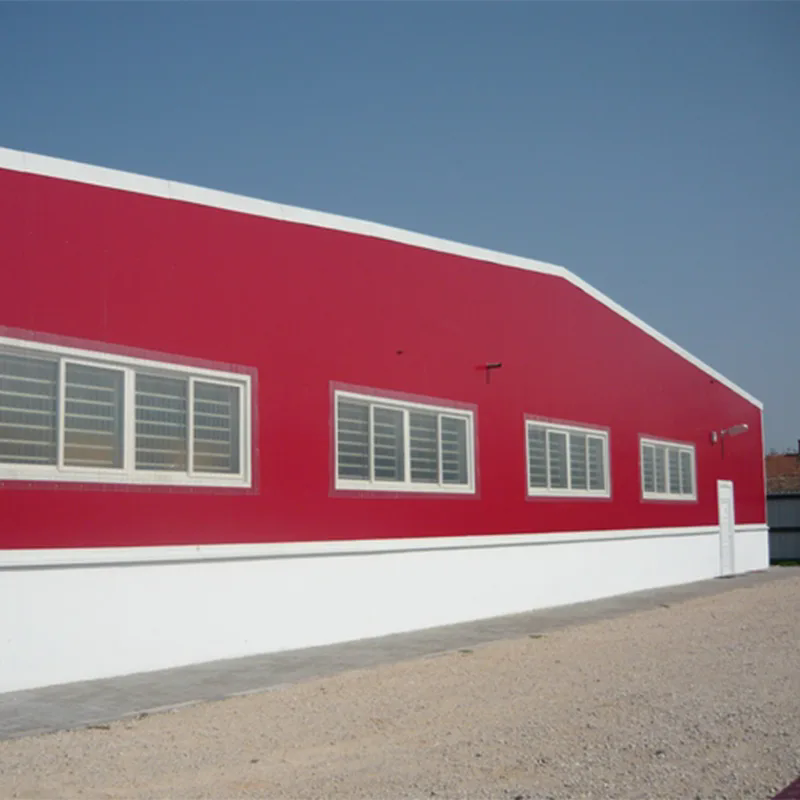
Table of Contents
- 1. Outline Overview
- 2. What is a Steel Structure Storage Warehouse?
- 3. Key Benefits of Steel Structure Warehouses
- 4. Design Considerations
- 5. Industrial Applications
- 6. Construction Process
- 7. Cost Efficiency Analysis
- 8. Maintenance and Durability
- 9. Why Choose Newforge
- 10. Frequently Asked Questions
- 11. Conclusion
Outline Overview
This article covers the complete lifecycle and value proposition of a Steel Structure Storage Warehouse, including design principles, engineering advantages, cost control strategies, and industry use cases. It also highlights how modern steel engineering improves scalability, safety, and long-term investment returns.
What is a Steel Structure Storage Warehouse?
A Steel Structure Storage Warehouse is a prefabricated or custom-engineered building system primarily constructed using steel frames, columns, beams, and cladding systems. Unlike traditional concrete buildings, steel warehouses are designed for flexibility, rapid construction, and high load-bearing capacity.
These structures are widely used in logistics hubs, manufacturing plants, cold storage facilities, agricultural storage, and large-scale distribution centers.
Core structural components include:
- Main steel frame (columns and beams)
- Secondary framing (purlins and girts)
- Roof and wall cladding systems
- Foundation anchoring systems
- Ventilation and insulation layers
Key Benefits of Steel Structure Warehouses
Steel structure warehouses offer significant advantages over traditional construction methods. These benefits directly address common pain points faced by industrial operators.
| Benefit | Description |
|---|---|
| Fast Construction | Prefabricated components reduce installation time significantly. |
| Cost Efficiency | Lower labor and material waste compared to concrete buildings. |
| High Durability | Steel resists deformation, weathering, and seismic activity. |
| Flexible Expansion | Easy to extend or modify structure as business grows. |
| Large Span Design | Enables column-free interior space for optimized storage layout. |
These advantages make steel warehouses a preferred choice for companies seeking scalable infrastructure solutions.
Design Considerations
Designing a Steel Structure Storage Warehouse requires careful engineering analysis to ensure safety, performance, and long-term usability.
Key design factors include:
- Load requirements: Dead load, live load, wind load, and snow load calculations.
- Storage type: Palletized goods, heavy machinery, or bulk materials.
- Height optimization: Maximizing vertical storage efficiency.
- Ventilation and insulation: Temperature-sensitive goods require controlled environments.
- Access points: Efficient loading docks and logistics flow design.
Advanced CAD modeling and structural simulation tools are often used to optimize performance before construction begins.
Industrial Applications
Steel warehouses are used across multiple industries due to their adaptability and strength.
- Logistics and distribution centers
- Manufacturing and assembly plants
- Agricultural storage facilities
- Cold storage and food processing
- Automotive parts storage
- E-commerce fulfillment centers
The flexibility of steel structures allows businesses to customize interior layouts based on operational requirements.
Construction Process
The construction of a Steel Structure Storage Warehouse follows a streamlined industrial process that reduces time and risk.
Typical stages include:
- Site evaluation and foundation preparation
- Steel fabrication in controlled factory environments
- Transport of prefabricated components
- On-site assembly using bolted or welded connections
- Roof and wall installation
- System testing and finishing
This modular approach ensures higher precision and minimizes on-site delays.
Cost Efficiency Analysis
One of the most compelling advantages of steel structure warehouses is long-term cost efficiency.
Cost factors include:
- Reduced foundation requirements due to lighter structure
- Lower labor costs from faster assembly
- Minimal maintenance over lifespan
- Energy savings through insulation integration
While initial investment may be comparable to traditional buildings, lifecycle costs are significantly lower, making steel warehouses a financially sustainable option.
Maintenance and Durability
Steel structures are known for long service life when properly maintained. Protective coatings and galvanization prevent corrosion and extend structural integrity.
Recommended maintenance practices include:
- Regular inspection of joints and fasteners
- Repainting or recoating exposed steel surfaces
- Drainage system maintenance to prevent water accumulation
- Roof inspection after extreme weather events
With proper care, steel warehouses can last several decades with minimal performance degradation.
Why Choose Newforge
Newforge specializes in designing and manufacturing high-performance Steel Structure Storage Warehouses tailored to industrial needs. With advanced engineering capabilities and strict quality control systems, Newforge delivers solutions that balance strength, efficiency, and scalability.
Key advantages of working with Newforge include:
- Custom structural design based on client requirements
- High-grade steel materials with certified quality standards
- Efficient prefabrication and rapid installation support
- Global project experience across multiple industries
- Technical consultation throughout project lifecycle
Newforge focuses on delivering long-term value rather than short-term construction output.
Frequently Asked Questions
Q1: How long does it take to build a steel structure warehouse?
Depending on size, most projects can be completed within weeks to a few months due to prefabrication efficiency.
Q2: Are steel warehouses suitable for extreme weather conditions?
Yes, they are engineered to withstand high wind loads, seismic activity, and heavy snow conditions.
Q3: Can the warehouse be expanded later?
Yes, modular steel structures allow easy expansion or modification.
Q4: Is insulation necessary?
For temperature-sensitive storage, insulation is recommended to maintain internal environmental stability.
Conclusion
A Steel Structure Storage Warehouse provides a powerful solution for modern industrial storage challenges, combining durability, flexibility, and cost efficiency. Its modular design and rapid construction advantages make it a preferred choice across multiple sectors.
With expertise in engineering and fabrication, Newforge delivers reliable warehouse solutions designed to meet evolving industrial demands and long-term operational goals.
For tailored solutions and professional support, contact us at Newforge today. Let us help you build a smarter, stronger, and more efficient storage future.
