

How Does a Steel Penstock Gate Regulate Water Flow in Large-Scale Hydraulic Systems?
2025-12-30
Article Abstract
Steel Penstock Gates are critical flow-control components widely applied in hydraulic engineering, water conservancy projects, wastewater treatment facilities, hydropower stations, and industrial water management systems. This article provides a comprehensive explanation of how steel penstock gates function, focusing on their structural design, operational principles, technical parameters, and application logic. Through a “how-based” analytical approach, the content clarifies how these gates achieve precise water regulation, how they are specified for different working conditions, and how future hydraulic infrastructure development is shaping their adoption. The discussion also addresses frequently asked technical questions to support informed engineering and procurement decisions.
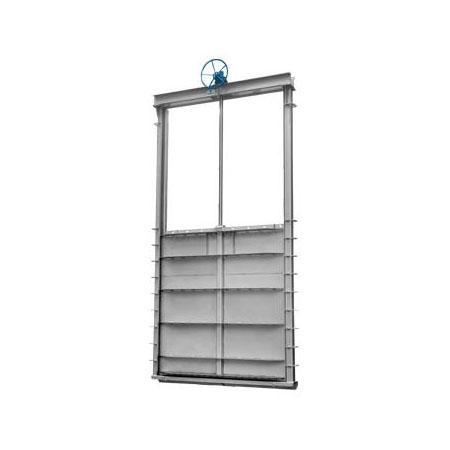
Table of Contents
- How Is a Steel Penstock Gate Structurally Designed?
- How Do Steel Penstock Gates Perform Under Different Working Conditions?
- How Should Technical Parameters Be Evaluated When Selecting a Steel Penstock Gate?
- How Will Steel Penstock Gates Adapt to Future Hydraulic Engineering Demands?
- Common Questions About Steel Penstock Gates
Content Outline
- Product overview and operational concept
- Structural components and material configuration
- Key technical parameters and performance indicators
- Application logic in hydraulic and industrial systems
- Industry development direction and long-term relevance
How Is a Steel Penstock Gate Structurally Designed?
A Steel Penstock Gate is a fabricated metal gate assembly engineered to control, isolate, or regulate water flow within open channels, pipelines, or culverts. Manufactured primarily from carbon steel or stainless steel, the gate body is designed to withstand hydraulic pressure, sediment load, and long-term exposure to moisture.
The core structure typically includes a gate leaf, embedded frame, sealing system, lifting mechanism, and guide rails. The gate leaf moves vertically or horizontally to adjust the effective flow area. Precision machining ensures minimal leakage and stable operation under fluctuating water heads.
From an engineering standpoint, the structural design emphasizes rigidity, corrosion resistance, and load-bearing performance. Reinforced ribs are commonly integrated into the gate leaf to prevent deformation. The embedded frame is anchored into concrete structures, forming a permanent interface between the gate and civil works.
How Do Steel Penstock Gates Perform Under Different Working Conditions?
Steel Penstock Gates are engineered for diverse hydraulic environments, ranging from low-head irrigation canals to high-head industrial discharge systems. Their performance is determined by sealing efficiency, actuation accuracy, and resistance to external stress factors.
In wastewater treatment applications, the gate must maintain reliable sealing despite suspended solids and chemical exposure. In hydropower or flood-control systems, the emphasis shifts toward structural strength and rapid actuation under high flow velocities.
The adaptability of steel penstock gates lies in their configurable drive systems, including manual screw hoists, electric actuators, and hydraulic cylinders. This flexibility allows integration into both automated control networks and manually operated infrastructure.
How Should Technical Parameters Be Evaluated When Selecting a Steel Penstock Gate?
Proper evaluation of technical parameters is essential to ensure long-term operational reliability. The following table summarizes typical specification ranges used in professional hydraulic engineering projects:
| Parameter | Typical Range | Engineering Significance |
|---|---|---|
| Gate Size | 300 mm – 4000 mm | Determines maximum flow capacity |
| Design Water Head | Up to 20 m | Defines structural strength requirements |
| Material Grade | Carbon Steel / Stainless Steel | Affects corrosion resistance and service life |
| Sealing Type | Rubber / Composite | Controls leakage rate |
| Actuation Method | Manual / Electric / Hydraulic | Influences operational efficiency |
These parameters should be reviewed in conjunction with site-specific hydraulic calculations, environmental exposure conditions, and operational frequency.
How Will Steel Penstock Gates Adapt to Future Hydraulic Engineering Demands?
As water infrastructure projects increasingly emphasize automation, durability, and lifecycle efficiency, steel penstock gates are evolving accordingly. Enhanced surface treatments, improved sealing materials, and smart actuator integration are becoming standard considerations.
Future hydraulic systems are expected to rely on data-driven flow regulation, where gate position feedback and remote control capabilities play a central role. Steel penstock gates, due to their mechanical simplicity and structural reliability, remain well-positioned to support these advancements.
From an asset management perspective, standardized modular designs are also gaining traction, enabling faster installation, simplified maintenance, and scalable system upgrades across large networks.
Common Questions About Steel Penstock Gates
How does a Steel Penstock Gate differ from a sluice gate?
A steel penstock gate is typically installed within pipelines or closed conduits and designed for higher pressure conditions, while sluice gates are more commonly used in open channels with lower heads.
How is leakage controlled in a Steel Penstock Gate?
Leakage is minimized through precision-machined sealing surfaces and elastomeric or composite seals that maintain contact pressure under varying hydraulic loads.
How long is the service life of a Steel Penstock Gate?
With appropriate material selection, protective coatings, and routine maintenance, steel penstock gates can achieve service lives exceeding 20–30 years in standard operating environments.
Conclusion and Industry Perspective
Steel Penstock Gates continue to play a foundational role in modern hydraulic engineering due to their structural integrity, adaptability, and precise flow control capabilities. As infrastructure systems evolve toward higher efficiency and smarter operation, these gates remain a dependable solution for water regulation across industrial and municipal sectors.
Within this context, FYL focuses on delivering steel penstock gate solutions aligned with international engineering standards and project-specific requirements. By combining robust fabrication practices with practical application insight, FYL supports long-term operational reliability in complex hydraulic environments.
For project consultation, technical clarification, or customized steel penstock gate solutions, please contact us to discuss application requirements and engineering objectives in detail.