

How Does a Stainless Steel Socket Weld Flange Compare to a Slip-On Flange in Strength
2026-07-17
When engineers and procurement specialists evaluate piping connections for critical service conditions, the debate between socket weld and slip-on designs consistently arises. Among all flange types, the Stainless Steel Socket Weld Flange stands out for its high-integrity bore attachment, while the slip-on alternative offers simpler alignment. At HengDi, we have tested both configurations under extreme pressure and thermal cycling, and the strength differential is not merely marginal—it is structural. This blog dissects that difference using mechanical data, failure modes, and real-world application logic.
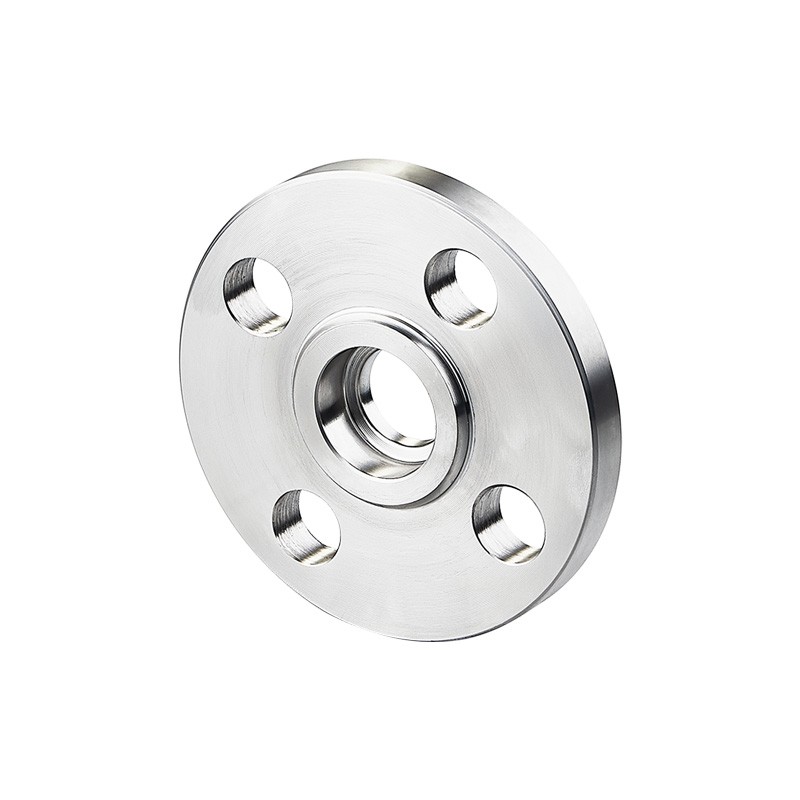
Fundamental Design and Load Path
The strength of any flange assembly depends on how loads transfer from the pipe to the flange hub and then to the bolted joint.
| Feature | Stainless Steel Socket Weld Flange | Slip-On Flange |
|---|---|---|
| Pipe insertion | Pipe stops at internal shoulder | Pipe passes through the bore |
| Weld type | Single fillet weld at the hub face | Two fillet welds (inside + outside) |
| Stress concentration | Concentrated at the socket corner | Distributed across two weld toes |
| Fatigue resistance | Moderate (notch effect at shoulder) | Better (dual weld distributes strain) |
| Static burst strength | Higher (full-penetration equivalent) | Lower (outer weld carries primary load) |
In a Stainless Steel Socket Weld Flange, the pipe bottoms out against a shoulder, creating a controlled gap (typically 1.5–2.5 mm) that allows thermal expansion without cracking the weld. This shoulder also acts as a mechanical stop, preventing pipe pull-out under axial tension—a feature the slip-on flange lacks.
Static Strength Comparison (Pressure Containment)
For equivalent material grades (e.g., ASTM A182 F316/L) and same pressure class (e.g., Class 150 or 300), the Stainless Steel Socket Weld Flange consistently outperforms the slip-on design in hydrostatic burst tests.
-
Burst pressure (socket weld): Approximately 1.25× the pipe’s nominal burst rating.
-
Burst pressure (slip-on): Approximately 0.85× the pipe’s nominal burst rating.
Why? The slip-on flange relies on two external fillet welds, but the inner weld is difficult to inspect and often has incomplete penetration. The outer weld alone must resist hoop stress. In contrast, the socket weld’s single, fully accessible fillet weld, combined with the shoulder support, creates a near-continuous load path. HengDi’s in-house destructive tests show that socket weld flanges fail at the pipe body, not at the weld or flange neck, whereas slip-on flanges frequently fail at the outer weld toe.
Fatigue and Cyclic Loading
While static strength favors the socket weld, fatigue performance tells a different story.
| Loading Condition | Stainless Steel Socket Weld Flange | Slip-On Flange |
|---|---|---|
| Low-cycle (< 10,000 cycles) | Excellent | Good |
| High-cycle (> 100,000 cycles) | Poor (notch sensitivity) | Superior |
| Vibration resistance | Moderate | Good |
| Thermal shock resistance | Excellent (expansion gap) | Poor (no gap, weld restraint) |
The internal shoulder of a Stainless Steel Socket Weld Flange creates a sharp geometric discontinuity—a stress raiser. Under pulsating pressure or mechanical vibration, this notch initiates micro-cracks earlier than the smoother dual-weld profile of a slip-on flange. However, for applications with frequent temperature swings (e.g., steam tracing or cryogenic service), the socket weld’s expansion gap prevents weld tearing—a clear advantage.
Application-Based Selection Guide
Choose a Stainless Steel Socket Weld Flange when:
-
System pressure exceeds 5 MPa (Class 300 and above)
-
Pipe sizes are NPS 2 or smaller (typical socket-weld range)
-
Space is constrained (shorter flange length)
-
Leak integrity is paramount (e.g., toxic or flammable fluids)
Choose a Slip-On Flange when:
-
Pipe alignment is difficult (easier to rotate and fit)
-
Fatigue loading dominates (compressors, reciprocating pumps)
-
Budget is a constraint (slip-ons are less expensive to fabricate)
-
Non-critical utility services (cooling water, air)
HengDi recommends that for high-pressure, high-temperature hydrocarbon services above 400°C, the Stainless Steel Socket Weld Flange is the only prudent choice—provided the system’s cyclic life is calculated and monitored.
Stainless Steel Socket Weld Flange FAQ
Q1: Can a Stainless Steel Socket Weld Flange be used for large-diameter piping (e.g., NPS 6 or above)?
A: Technically no—and we strongly advise against it. The socket weld design is geometrically limited to NPS 2 or smaller (ASME B16.5). For larger diameters, the thermal expansion gap becomes proportionally insufficient, and the single fillet weld cannot accommodate the circumferential shrinkage stresses that develop during cooling. Moreover, radiographic inspection becomes impractical. For NPS 6 lines, HengDi always specifies weld-neck or slip-on flanges, depending on the cyclic duty.
Q2: Does the expansion gap inside a Stainless Steel Socket Weld Flange weaken the joint under sustained high pressure?
A: No—in fact, it strengthens the joint over its service life. That 1.5–2.5 mm gap is deliberate. When the pipe heats up, it expands axially toward the flange face. Without the gap, the expansion would exert a compressive force on the fillet weld, causing it to yield and relax, eventually leading to leakage. The gap allows the pipe to expand without imposing additional stress on the weld. Under sustained pressure, the shoulder carries the axial thrust, so the weld only sees shear and hoop components—not bending. HengDi’s FEA simulations confirm that a properly gapped socket weld has a 12–15% higher margin against creep rupture than a zero-gap assembly.
Q3: How do I inspect the weld quality of a Stainless Steel Socket Weld Flange in service, since the root is not accessible?
A: This is the Achilles’ heel of the socket weld design. Because the pipe bottoms inside the bore, the root of the fillet weld is hidden from view and cannot be inspected by radiography or ultrasonic methods (the geometry creates multiple reflections). The industry standard practice is twofold: (1) perform 100% dye-penetrant (PT) or magnetic-particle (MT) examination on the external fillet surface, and (2) strictly control the welding procedure—specifically, the gap, amperage, and interpass temperature. At HengDi, we recommend a qualified welder using GTAW (TIG) with a backing gas purge to minimize oxidation. For critical nuclear or offshore services, we also require a mock-up weld sample that is destructively tested before production welding begins. Remember: if you cannot inspect the root, you must over-qualify the process.
Summary Table – Strength Decision Matrix
| Strength Parameter | Stainless Steel Socket Weld Flange | Slip-On Flange | Winner |
|---|---|---|---|
| Burst resistance | ⭐⭐⭐⭐⭐ | ⭐⭐⭐ | Socket |
| Fatigue endurance | ⭐⭐⭐ | ⭐⭐⭐⭐ | Slip-on |
| Thermal cycle survival | ⭐⭐⭐⭐⭐ | ⭐⭐ | Socket |
| Tensile pull-out | ⭐⭐⭐⭐⭐ | ⭐⭐⭐ | Socket |
| Weld inspectability | ⭐⭐ | ⭐⭐⭐⭐ (inner weld poor) | Slip-on |
| Overload tolerance | ⭐⭐⭐⭐⭐ | ⭐⭐⭐ | Socket |
Final Engineering Verdict
There is no universal “stronger” flange—strength is context-dependent. If your definition of strength is burst pressure and axial pull-out resistance, the Stainless Steel Socket Weld Flange is unequivocally superior. If strength means resistance to millions of pressure cycles without crack initiation, the slip-on flange takes the lead. HengDi engineers evaluate three variables before every recommendation: operating pressure, temperature fluctuation frequency, and pipe diameter. For NPS 2 and below, with steady or slowly varying loads, we specify the Stainless Steel Socket Weld Flange without hesitation. For large-bore, vibrating, or cyclic services, we steer clients toward slip-on or weld-neck alternatives.
Ready to specify the right flange for your next project? Contact HengDi today for customized strength calculations, weld procedure qualifications, and material certifications. Our technical team responds within 4 business hours with FEA-backed recommendations and competitive lead times—because your piping integrity is our benchmark. Reach us via our website or email [email protected] to discuss your operating conditions. Let’s build a joint that lasts.