

How Does a Stainless Steel Industrial Welded Pipe Compare to Seamless?
2026-10-15
Choosing between a Stainless Steel Welded Pipe and a seamless alternative requires an assessment of operating pressure, temperature, corrosion exposure, dimensional requirements, and project specifications. Both products are widely used in industrial piping systems, but their manufacturing routes create differences that affect inspection requirements, available dimensions, production economics, and suitability for particular duties. A welded pipe is formed from stainless steel strip or plate and joined along a longitudinal or spiral seam, while a seamless pipe is manufactured from a solid billet or other suitable feedstock without a longitudinal weld seam. At Zhejiang HengDi Stainless Steel Co., Ltd., we consider the intended service conditions and applicable engineering standards before recommending a pipe configuration.
The presence of a weld seam does not automatically make a pipe unsuitable for demanding service. Modern welding, forming, heat treatment, and nondestructive examination can produce welded products that meet stringent requirements. Likewise, the absence of a weld seam does not guarantee that a seamless pipe will outperform every welded product. Material grade, wall thickness, manufacturing quality, inspection records, and compliance with the governing specification all influence the final result.
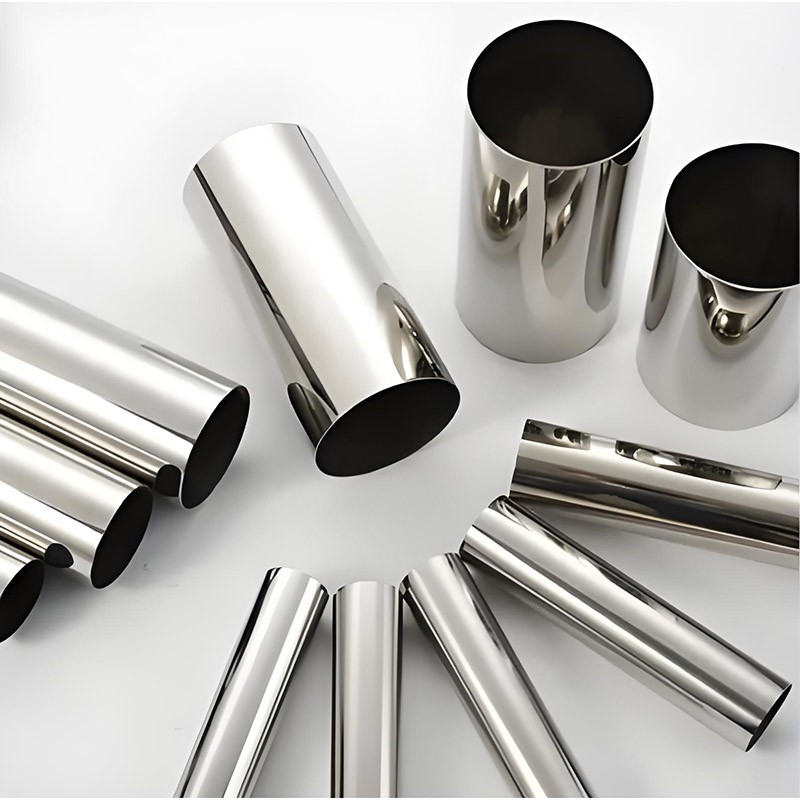
How Do Manufacturing Processes Affect Pipe Quality and Available Dimensions?
Welded pipe production typically starts with stainless steel strip or plate. The material is formed into a cylindrical shape, and the adjoining edges are joined using an appropriate welding process. Depending on the product design and manufacturing route, the weld may then undergo finishing, heat treatment, pickling, passivation, and inspection. Common production methods include TIG welding and high frequency welding for suitable product categories, although the permitted process depends on the applicable specification and intended service.
Seamless production follows a different route. A solid steel billet is heated and pierced to create a hollow shell, which is subsequently rolled, elongated, sized, and finished to the required dimensions. Additional heat treatment and surface processing may be applied according to the material grade and product standard. Since the pipe does not contain a longitudinal weld seam, its manufacturing and inspection requirements differ from those of welded products.
| Comparison factor | Welded stainless steel pipe | Seamless stainless steel pipe |
| Starting material | Stainless steel strip or plate | Solid billet or suitable solid feedstock |
| Forming method | Rolling or forming into a tubular shape | Heating, piercing, and subsequent rolling or drawing |
| Longitudinal weld seam | Present and subject to specified controls | Absent |
| Dimensional availability | Often offers broad options for outside diameter and wall thickness, depending on production capability | Availability depends on billet size, processing route, and mill capability |
| Production economics | Can be cost effective for suitable sizes and larger production quantities | May involve higher production costs for comparable specifications and dimensions |
| Quality control priorities | Weld integrity, forming quality, dimensions, material properties, and surface condition | Wall thickness consistency, internal soundness, dimensions, material properties, and surface condition |
| Typical application considerations | General industrial piping, process lines, fabrication, and suitable pressure services | Applications requiring a seamless construction route or specified seamless product compliance |
Manufacturing route also affects production planning. Welded products can offer flexibility when a project requires particular dimensions, consistent wall thickness, or substantial quantities. Seamless products may be preferred when the design specification explicitly requires seamless construction. Actual lead times depend on material availability, order quantity, finishing requirements, testing, and production schedules rather than manufacturing route alone.
Our factory evaluates the drawing and applicable standard before confirming the available product range. Buyers should distinguish between standard dimensions, mill capabilities, and special-order requirements. A technically suitable pipe must also be available in the specified size, length, surface condition, and delivery condition.
Which Pipe Type Is Better for Pressure, Temperature, and Corrosion Resistance?
Pressure capability is one of the most common reasons engineers compare welded and seamless pipe. However, pressure rating cannot be established by the manufacturing method alone. The design calculation must account for outside diameter, wall thickness, allowable material stress at the operating temperature, weld joint quality factors where applicable, corrosion allowance, manufacturing tolerances, and the governing piping code.
A seamless pipe eliminates the longitudinal weld seam, which may be advantageous where the design specification requires a seamless product or where the weld-related inspection requirements are undesirable. Nevertheless, seamless construction does not remove the risks associated with inadequate wall thickness, material defects, poor fabrication, or unsuitable design conditions.
A properly manufactured welded pipe can also be suitable for pressure service when it complies with the relevant product specification and the design code permits its use. Depending on the standard and service conditions, requirements may include weld examination, hydrostatic testing, heat treatment, and additional nondestructive testing. The required inspection level should be established by the project specification rather than assumed to be identical for all welded products.
Temperature performance likewise depends on the stainless steel grade, metallurgical condition, design stress limits, and exposure duration. Austenitic grades such as 304 and 316 are commonly selected for their combination of corrosion resistance, formability, and service-temperature capabilities. Their actual suitability must be checked against the relevant material and design standards. Neither welded nor seamless construction makes an unsuitable alloy appropriate for a particular temperature range.
| Engineering requirement | What to evaluate for welded pipe | What to evaluate for seamless pipe |
| Operating pressure | Wall thickness, weld quality, applicable joint factors, and code compliance | Wall thickness, material allowable stress, dimensional tolerances, and code compliance |
| High temperature | Base metal properties, weld procedure, heat treatment, and temperature limits | Base metal properties, heat treatment, and temperature limits |
| Corrosive media | Alloy grade, weld condition, surface treatment, and possible localized corrosion | Alloy grade, surface condition, and possible localized corrosion |
| Inspection requirements | Applicable weld examination, dimensional checks, and specified pressure testing | Specified material, dimensional, internal quality, and pressure testing requirements |
| Project acceptance | Compliance with the ordered standard and approved inspection plan | Compliance with the ordered standard and approved inspection plan |
Corrosion resistance is principally determined by the alloy composition, metallurgical condition, surface quality, and operating environment. For example, 316 stainless steel contains molybdenum, which generally improves resistance to chloride-related pitting compared with 304 in many environments. However, neither grade is immune to chloride attack under all conditions. Weld heat tint, surface contamination, and inadequate post-weld cleaning can also affect corrosion performance if not properly controlled.
For demanding chemical processing, offshore equipment, or high-temperature service, buyers should review the actual fluid composition, chloride concentration, pressure, temperature, and cleaning procedures. HengDi recommends basing material selection on documented operating requirements and the governing specification instead of assuming that either manufacturing route is universally superior.
What Product Parameters Should Buyers Specify Before Ordering?
A complete purchase specification helps prevent mismatches between the delivered pipe and the engineering design. For industrial projects, the following parameters should be confirmed before quotation and production. Exact values must be established from the project requirements and the manufacturer's verified product range rather than treated as universal specifications.
- Material grade: identify the required stainless steel grade, such as 304, 304L, 316, or 316L, and specify the applicable material standard.
- Outside diameter: state the nominal or specified outside diameter in millimetres or inches.
- Wall thickness: provide the required nominal wall thickness, schedule, or other recognized dimensional designation.
- Pipe length: define standard random lengths, fixed lengths, or the permitted length tolerance.
- Manufacturing route: clearly state whether welded or seamless construction is required or permitted by the project specification.
- Surface finish: specify the required finish, such as pickled, polished, or another agreed condition suitable for the application.
- Mechanical properties: confirm tensile strength, yield strength, elongation, and hardness requirements where specified by the applicable standard.
- Inspection and testing: identify required chemical analysis, mechanical testing, hydrostatic testing, nondestructive examination, and material test certificates.
- Delivery requirements: specify packaging, marking, traceability, documentation, and applicable shipping conditions.
Dimensional tolerances deserve particular attention. Outside diameter and wall thickness affect fit-up, flow capacity, weight, and pressure calculations. Wall thickness may vary within the tolerances allowed by the governing product standard, so engineers should use the correct design assumptions rather than relying solely on nominal dimensions. Where a project has tight assembly requirements, tolerance limits should be agreed upon before the order is placed.
Surface condition is another practical consideration. Pickling can remove oxide scale and heat tint when performed appropriately, while passivation treatments can support the formation of a protective passive surface. Polishing may be required for hygiene, cleanability, appearance, or reduced surface roughness. These processes serve different purposes and should not be treated as interchangeable. The required finish should reflect the fluid, cleaning regime, and applicable industry requirements.
For traceability, buyers should identify the documentation needed for project acceptance. Depending on the product standard and purchase order, this may include a material test certificate, chemical composition results, mechanical test results, dimensional inspection records, and evidence of required examinations. A clear inspection and test plan helps align supplier, fabricator, and end-user expectations before shipment.
Frequently Asked Questions About Welded and Seamless Industrial Pipe
Is a welded stainless steel pipe suitable for high-pressure industrial applications?
Yes, a welded stainless steel pipe can be suitable for high-pressure service when its material grade, dimensions, weld quality, inspection, and testing meet the governing design code and purchase specification. The allowable pressure depends on factors such as diameter, wall thickness, operating temperature, material strength, and any applicable weld joint factor. Engineers should verify the design calculation and required inspection level instead of deciding suitability from the presence of a weld seam alone.
Does seamless stainless steel pipe always have better corrosion resistance than welded pipe?
No. Corrosion resistance depends primarily on alloy composition, surface condition, metallurgical condition, and the service environment. Seamless pipe has no longitudinal weld seam, but this does not automatically make it more resistant to pitting or general corrosion. A properly manufactured welded pipe with suitable weld finishing and cleaning can provide excellent corrosion performance when the alloy and product specification are appropriate. Chloride exposure, temperature, and process chemistry should be evaluated before selecting either option.
How should buyers choose between welded and seamless pipe when cost and service life both matter?
Buyers should compare the total installed and operating cost rather than the purchase price alone. Review the required pressure rating, material grade, dimensions, inspection requirements, expected maintenance, availability, fabrication needs, and consequences of failure. Welded pipe may offer an economical solution when permitted by the design specification, while seamless pipe may be necessary for particular service conditions or contractual requirements. A documented engineering assessment helps balance procurement cost, compliance, and expected service performance.
How Can the Right Pipe Specification Support Reliable Operation?
The decision between welded and seamless stainless steel pipe should be based on engineering requirements, not on a blanket assumption that one type is always better. Welded products can offer manufacturing flexibility and cost advantages for suitable applications, while seamless products provide a construction route without a longitudinal weld seam. Both must meet the applicable material, dimensional, mechanical, and inspection requirements for their intended service.
Zhejiang HengDi Stainless Steel Co., Ltd. encourages project teams to confirm material grade, outside diameter, wall thickness, manufacturing route, surface finish, and testing requirements before finalizing procurement. Share your technical specification and operating conditions with our team to evaluate a suitable product configuration for your industrial piping project and establish clear acceptance criteria before production.