

How Does a Stainless Steel Flange Improve Reliability in Modern Piping Systems?
2026-03-12
In industrial piping projects, engineers constantly face the same concern: how can we ensure long-term reliability while keeping installation and maintenance practical? Over the years, I have seen that the right flange solution often determines whether a pipeline performs smoothly for decades or becomes a recurring maintenance problem. As the global demand for corrosion-resistant piping components continues to rise, Zhejiang HengDi Stainless Steel Co., Ltd. has gradually entered the market conversation through consistent manufacturing upgrades and product refinement. Among their solutions, the Stainless Steel Flange has become an essential component for industries that require durability, precision, and safe pipeline connections.
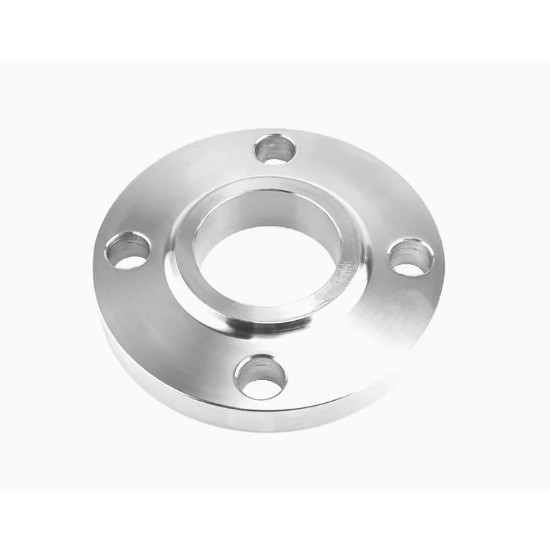
Why Do Engineers Prefer a Stainless Steel Flange for Critical Pipeline Connections?
In many industrial systems, pipe joints are the most vulnerable points. When the wrong connection type is used, leakage, corrosion, and mechanical stress can quickly compromise the entire system. From my experience working with industrial suppliers and project engineers, a properly manufactured Stainless Steel Flange provides three key advantages that other connection methods struggle to match.
- Reliable sealing performance under pressure
- Excellent corrosion resistance in harsh environments
- Convenient installation and disassembly during maintenance
- Compatibility with a wide range of piping standards
- Long service life that reduces replacement costs
Because stainless steel naturally resists oxidation and chemical corrosion, a Stainless Steel Flange is particularly suitable for industries such as oil and gas, chemical processing, marine engineering, water treatment, and food production. In these sectors, pipeline reliability is not just about efficiency—it directly affects operational safety.
How Does a Stainless Steel Flange Help Reduce Maintenance and Downtime?
One of the most overlooked advantages of flange connections is the role they play in maintenance planning. Unlike welded joints, flanged connections allow technicians to remove, inspect, and replace pipeline sections without cutting the pipe.
When I speak with plant maintenance teams, they often highlight how a high-quality Stainless Steel Flange reduces the time required to service valves, pumps, or pipeline segments.
The benefits become clearer when we compare different pipeline connection approaches.
| Connection Method | Maintenance Difficulty | Leakage Risk | Service Flexibility |
| Welded Joint | High | Low initially | Very limited |
| Threaded Connection | Moderate | Moderate | Limited |
| Stainless Steel Flange | Low | Very low with proper gasket | High |
This flexibility is one reason why modern industrial facilities continue to adopt flanged systems. When combined with the corrosion resistance of stainless steel, the Stainless Steel Flange becomes a long-term infrastructure investment rather than a temporary solution.
Which Types of Stainless Steel Flange Are Commonly Used in Industrial Systems?
Different pipeline environments require different flange designs. When selecting a Stainless Steel Flange, engineers usually consider pressure level, pipe diameter, and installation method.
Based on typical industrial usage, several types appear most frequently in engineering projects.
- Weld Neck Flange – suitable for high-pressure pipelines
- Slip-On Flange – widely used for moderate pressure systems
- Blind Flange – designed to seal pipe ends
- Socket Weld Flange – ideal for small diameter pipelines
- Threaded Flange – useful when welding is not practical
Each of these designs serves a different engineering purpose, yet they all rely on the same core advantage: the structural strength and corrosion resistance of stainless steel.
How Does Manufacturing Quality Influence Stainless Steel Flange Performance?
While the design of a flange is important, the manufacturing process ultimately determines its reliability. A poorly machined flange can lead to sealing failure, misalignment, or premature corrosion.
When evaluating a Stainless Steel Flange supplier, I usually focus on several key production factors.
- Material traceability and certified stainless steel grades
- Precision machining of sealing surfaces
- Strict dimensional tolerance control
- Pressure and structural testing
- Compliance with international standards
Manufacturers that maintain strict quality control processes are able to deliver flanges that remain stable even in high-temperature or high-pressure environments. This is where experienced suppliers, including companies like Zhejiang HengDi Stainless Steel Co., Ltd., continue to invest in production equipment and inspection procedures to improve product consistency.
What Should Buyers Consider When Choosing a Stainless Steel Flange Supplier?
From the perspective of procurement managers and project engineers, choosing the right supplier is just as important as selecting the right product.
When sourcing a Stainless Steel Flange, several practical considerations usually guide the decision.
| Selection Factor | Why It Matters |
| Material Certification | Ensures corrosion resistance and mechanical strength |
| Production Capacity | Guarantees stable supply for large projects |
| Dimensional Accuracy | Prevents leakage and installation problems |
| International Standards | Ensures compatibility with global pipeline systems |
| Technical Support | Helps engineers select the correct flange type |
In my experience, reliable suppliers often provide more than just products. They also offer technical guidance and manufacturing flexibility that simplify large industrial projects.
Could the Right Stainless Steel Flange Be the Key to a More Efficient Pipeline System?
Modern infrastructure projects demand long-lasting components that balance performance, safety, and cost efficiency. When pipelines operate under high pressure, corrosive chemicals, or extreme temperatures, connection reliability becomes a critical factor.
A carefully manufactured Stainless Steel Flange helps ensure that pipeline systems remain stable while allowing engineers to maintain and expand installations without unnecessary disruption.
If you are currently planning a pipeline project or searching for a dependable flange supplier, working with experienced manufacturers can make a measurable difference. Companies such as Zhejiang HengDi Stainless Steel Co., Ltd. continue to provide industrial-grade flange solutions designed to meet international engineering requirements.
If you would like to learn more about available specifications, customization options, or bulk supply capabilities, we welcome you to contact us today and discuss how the right Stainless Steel Flange solution can support your next project.