

How Does a Spherical Roller Bearing Work?
2026-06-18
Abstract
Spherical roller bearings are highly engineered mechanical components designed to support heavy radial loads and moderate axial loads while accommodating misalignment between the shaft and housing. This article explains their structure, working principles, applications, selection criteria, and maintenance strategies. It is intended to help engineers, procurement specialists, and equipment operators reduce downtime, improve machinery reliability, and optimize bearing life in demanding industrial environments.
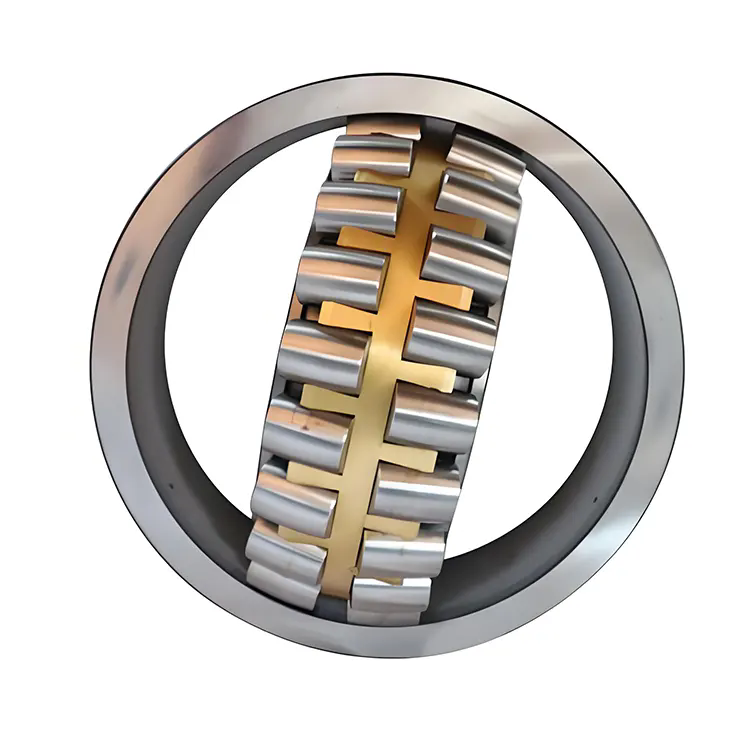
Table of Contents
- Abstract
- Introduction to Spherical Roller Bearings
- Structure and Key Components
- Working Principle
- Types and Design Variations
- Industrial Applications
- How to Select the Right Bearing
- Installation Guidelines
- Maintenance and Lubrication
- Common Problems and Troubleshooting
- Advantages and Limitations
- Why Komel Bearing Company Limited
- FAQ
- Conclusion
Introduction to Spherical Roller Bearings
A spherical roller bearing is a specialized rolling-element bearing designed to handle high-load, low-to-medium-speed applications where shaft misalignment is unavoidable. Unlike rigid bearing types, spherical roller bearings can self-align due to the geometry of their outer raceway, which is spherical in shape. This unique feature makes them indispensable in industries such as mining, metallurgy, paper production, cement manufacturing, and heavy transportation systems.
In real-world operations, equipment misalignment caused by shaft deflection, mounting errors, or structural deformation is common. Spherical roller bearings are engineered to compensate for these issues, thereby significantly reducing wear and extending operational life.
Structure and Key Components
A spherical roller bearing consists of several precision-engineered components that work together to ensure smooth and efficient operation under harsh conditions.
- Inner Ring: Mounted on the shaft and rotates with it.
- Outer Ring: Features a spherical raceway allowing self-alignment.
- Rollers: Barrel-shaped rolling elements that distribute load evenly.
- Cage: Keeps rollers evenly spaced and reduces friction.
- Lubrication System: Ensures reduced wear and heat dissipation.
The barrel-shaped rollers are the defining feature, enabling the bearing to support heavy radial loads while accommodating angular misalignment.
Working Principle
The working principle of a spherical roller bearing is based on rolling contact mechanics. When the shaft rotates, the inner ring moves with it, causing the rollers to rotate between the inner and outer raceways. Because the outer raceway is spherical, the bearing can adjust its internal alignment dynamically.
This self-aligning capability ensures that load distribution remains uniform even if the shaft is slightly misaligned. As a result, stress concentration is reduced, minimizing premature failure.
- Radial loads are carried by multiple rollers simultaneously.
- Axial loads are supported in both directions.
- Misalignment is automatically compensated through the spherical geometry.
Types and Design Variations
Spherical roller bearings are available in several configurations to suit different operational requirements.
| Type | Description | Typical Use |
|---|---|---|
| Standard Spherical Roller Bearing | General-purpose design with high load capacity | Industrial machinery |
| Sealed Spherical Roller Bearing | Pre-lubricated and sealed for contamination resistance | Mining and harsh environments |
| Split Spherical Roller Bearing | Designed for easy installation in hard-to-access systems | Heavy equipment maintenance |
| High-Speed Variant | Optimized for reduced friction and higher RPM | Processing industries |
Industrial Applications
Spherical roller bearings are widely used across industries where reliability under extreme load is critical.
- Mining and mineral processing equipment
- Cement mills and crushers
- Paper and pulp machinery
- Steel rolling mills
- Marine propulsion systems
- Wind turbines and power generation systems
In these environments, equipment is often exposed to vibration, contamination, and heavy dynamic loads, making spherical roller bearings a preferred choice.
How to Select the Right Bearing
Choosing the correct spherical roller bearing requires careful evaluation of operating conditions.
- Load Type: Determine radial and axial load requirements.
- Speed: Ensure bearing is rated for operational RPM.
- Misalignment: Assess shaft deflection tolerance.
- Environment: Consider contamination, moisture, and temperature.
- Lubrication Method: Oil or grease compatibility.
Incorrect selection often leads to premature failure, increased downtime, and higher maintenance costs.
Installation Guidelines
Proper installation is critical to achieving full bearing performance and lifespan.
- Ensure shaft and housing are clean and within tolerance.
- Use appropriate mounting tools to avoid impact damage.
- Check alignment before final tightening.
- Avoid overloading during assembly.
Even minor installation errors can significantly reduce bearing efficiency and increase wear rates.
Maintenance and Lubrication
Regular maintenance is essential for ensuring long service life.
- Monitor lubrication condition and replenish as needed.
- Check for vibration and abnormal noise.
- Inspect seals and housing integrity.
- Maintain proper operating temperature ranges.
Lubrication plays a critical role in reducing friction and preventing surface fatigue. In high-load applications, scheduled lubrication is non-negotiable.
Common Problems and Troubleshooting
| Issue | Possible Cause | Solution |
|---|---|---|
| Excessive noise | Insufficient lubrication or contamination | Clean and re-lubricate bearing |
| Overheating | Overloading or poor alignment | Check load conditions and alignment |
| Vibration | Damaged rollers or imbalance | Replace bearing or rebalance system |
| Premature wear | Incorrect installation or poor lubrication | Reinstall and improve lubrication practices |
Advantages and Limitations
Advantages:
- Excellent load-carrying capacity
- Self-aligning capability
- Durability in harsh environments
- Reduced downtime in heavy machinery
Limitations:
- Higher cost compared to simpler bearings
- Requires proper lubrication management
- Not ideal for ultra-high-speed applications
Why Komel Bearing Company Limited
Komel Bearing Company Limited is committed to delivering high-performance spherical roller bearing solutions engineered for demanding industrial environments. With a focus on precision manufacturing, material quality, and application-specific customization, the company supports industries that require long-lasting reliability under heavy load conditions.
Each bearing is designed with strict quality control standards to ensure consistency, durability, and optimal performance. Whether for mining equipment, steel production lines, or energy systems, Komel Bearing Company Limited provides solutions that help reduce maintenance costs and improve operational efficiency.
FAQ
Q1: What makes spherical roller bearings different from other bearings?
They can accommodate misalignment while supporting heavy radial and axial loads, unlike rigid bearing types.
Q2: Where are spherical roller bearings most commonly used?
They are widely used in mining, cement, steel manufacturing, and heavy industrial machinery.
Q3: How long do spherical roller bearings last?
Service life depends on load, lubrication, and maintenance, but properly maintained bearings can last several years in continuous operation.
Q4: Can they operate under misalignment?
Yes, their spherical outer race allows automatic adjustment to angular misalignment.
Q5: What is the main cause of failure?
Improper lubrication, contamination, and incorrect installation are the most common causes.
Conclusion
Spherical roller bearings are essential components in modern heavy-duty machinery, offering unmatched load capacity and self-aligning capabilities. Their robust design makes them indispensable across industries where reliability and performance are critical. Proper selection, installation, and maintenance are key to maximizing their lifespan and efficiency.
For high-quality engineered solutions and professional support, Komel Bearing Company Limited remains a trusted partner in delivering durable and performance-driven bearing products tailored to industrial needs.
For inquiries, technical support, or customized solutions, contact us today to explore how Komel Bearing Company Limited can support your operations and improve your equipment performance.
