

How Does a Rotor Balance Weight Improve Equipment Performance?
2026-05-13
Abstract: Rotor balance weights are critical components in rotating machinery, ensuring smooth operation, reducing vibration, and extending the life of motors and generators. This article explores what rotor balance weights are, why they are essential, and how they function to improve mechanical performance. We will also discuss common challenges, practical solutions, and answer frequently asked questions to help engineers and maintenance professionals optimize their equipment.
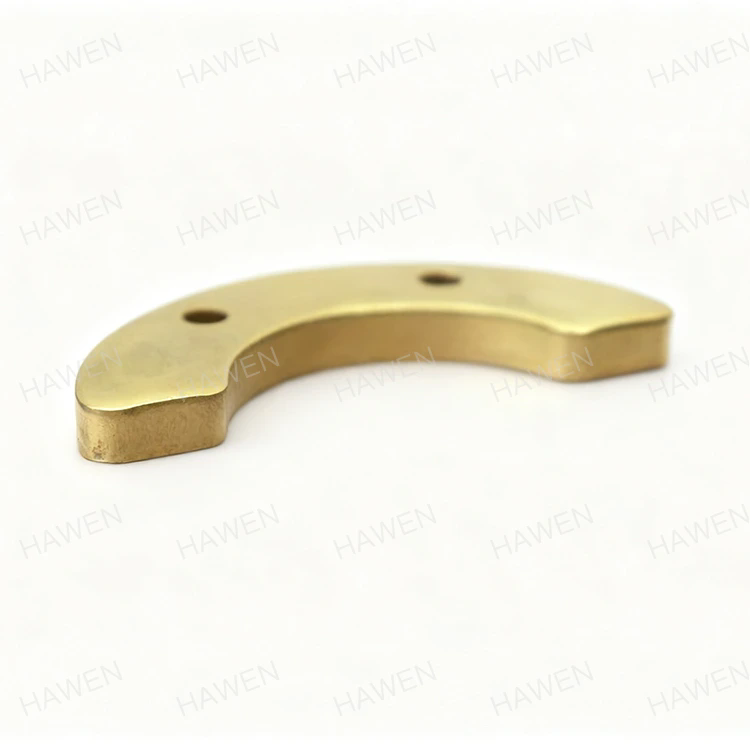
Table of Contents
- What is a Rotor Balance Weight?
- Why Rotor Balance Weight Matters
- How a Rotor Balance Weight Works
- Types and Materials of Rotor Balance Weights
- Installation and Maintenance Tips
- Common Challenges and Solutions
- FAQ
- Contact Us
What is a Rotor Balance Weight?
A rotor balance weight is a small but crucial component used in rotating machinery, including motors, generators, fans, and turbines. Its primary function is to correct mass distribution and ensure uniform rotation of the rotor. Unbalanced rotors can lead to excessive vibration, noise, and premature wear of bearings and other critical components.
Key benefits of rotor balance weights include:
- Reducing vibration and mechanical stress
- Increasing efficiency and stability of machinery
- Extending the lifespan of rotating equipment
- Minimizing energy loss due to uneven rotation
Why Rotor Balance Weight Matters
Rotors in industrial equipment often operate at high speeds. Even minor imbalance can lead to significant operational issues, including:
| Problem | Impact |
|---|---|
| Vibration | Causes bearing failure, misalignment, and noise |
| Uneven wear | Reduces lifespan of mechanical components |
| Energy inefficiency | Higher power consumption and operational costs |
| Operational downtime | Frequent maintenance and production losses |
By using rotor balance weights, engineers can correct these issues, ensuring smoother and more reliable operation. Companies like Zhejiang Hawen Electromechanical Co., Ltd. specialize in high-precision rotor balance weights designed for demanding industrial applications.
How a Rotor Balance Weight Works
The principle behind rotor balance weights is straightforward: they counteract uneven mass distribution within the rotor. When installed correctly, they shift the center of mass to the rotor's geometric center, reducing vibration and improving rotational symmetry.
Step-by-step operation:
- Detection: Imbalance is detected using dynamic balancing machines or vibration analysis.
- Calculation: The required weight and placement are calculated based on the rotor's speed and mass distribution.
- Installation: Precision weights are mounted on designated rotor slots or adhered with high-strength adhesives.
- Verification: The rotor is tested again to confirm proper balance and minimal vibration.
Correctly balanced rotors offer smoother operation, lower noise, and increased operational safety.
Types and Materials of Rotor Balance Weights
Rotor balance weights come in different designs and materials depending on application requirements:
- Clip-on Weights: Easy to attach; used for small motors or fans.
- Adhesive Weights: Ideal for irregular surfaces; used in high-speed applications.
- Machined Weights: Custom-engineered for large turbines and generators.
Common materials include:
| Material | Application |
|---|---|
| Steel | Heavy-duty industrial rotors |
| Lead | Compact and high-density balancing |
| Aluminum | Lightweight motors and fans |
| Brass | Specialized machinery with corrosion resistance needs |
Installation and Maintenance Tips
Proper installation and maintenance of rotor balance weights are essential to maximize equipment life:
- Always clean rotor surfaces before attaching weights to ensure firm adhesion.
- Use precise measurement tools to calculate weight placement and amount.
- Check rotor balance periodically, especially after major repairs or overhauls.
- Replace worn or damaged weights immediately to prevent equipment failure.
Regular monitoring reduces unplanned downtime and maintains optimal machine performance.
Common Challenges and Solutions
Even with rotor balance weights, challenges can arise. Here are some common issues and remedies:
| Challenge | Solution |
|---|---|
| Weight slipping or falling off | Ensure proper surface preparation and use adhesives or mechanical clips suitable for operating conditions. |
| Incorrect weight calculation | Perform dynamic balancing with professional equipment or consult experts like Zhejiang Hawen Electromechanical Co., Ltd. |
| Corrosion of metal weights | Use corrosion-resistant materials such as brass or coated steel. |
FAQ
Q1: Can rotor balance weights be used on all types of motors?
A1: Most standard motors, generators, and turbines can benefit from rotor balance weights. However, the design must match the rotor's size and speed specifications.
Q2: How often should rotor balance be checked?
A2: It is recommended to inspect rotors annually or after any repair that could alter mass distribution.
Q3: Do rotor balance weights affect energy consumption?
A3: Yes, properly balanced rotors reduce energy loss due to vibration and uneven rotation, enhancing efficiency.
Q4: Where can I purchase high-quality rotor balance weights?
A4: Zhejiang Hawen Electromechanical Co., Ltd. offers a wide range of precision rotor balance weights suitable for industrial applications. Visit their product page for details.
Contact Us
Ensure your machinery operates at peak performance with precision rotor balance weights from Zhejiang Hawen Electromechanical Co., Ltd.. Our team provides expert advice and high-quality products tailored to your equipment needs. Contact us today to optimize your machines, reduce downtime, and enhance operational efficiency.