

How Does a Rotary Cutter Improve Industrial Cutting Performance?
2026-08-24
Article Summary: A rotary cutter is a critical component in continuous cutting, slitting, converting, recycling, and material-processing equipment. The right blade can influence cutting accuracy, production speed, vibration, edge quality, maintenance frequency, and operating costs. This guide explains how a rotary cutter works, which factors determine its performance, how to select the right specification, and how proper maintenance can extend service life. It also examines practical applications in rubber, tires, flexible materials, packaging, and metal processing, with insights into customized rotary cutter solutions from Xinzhe.
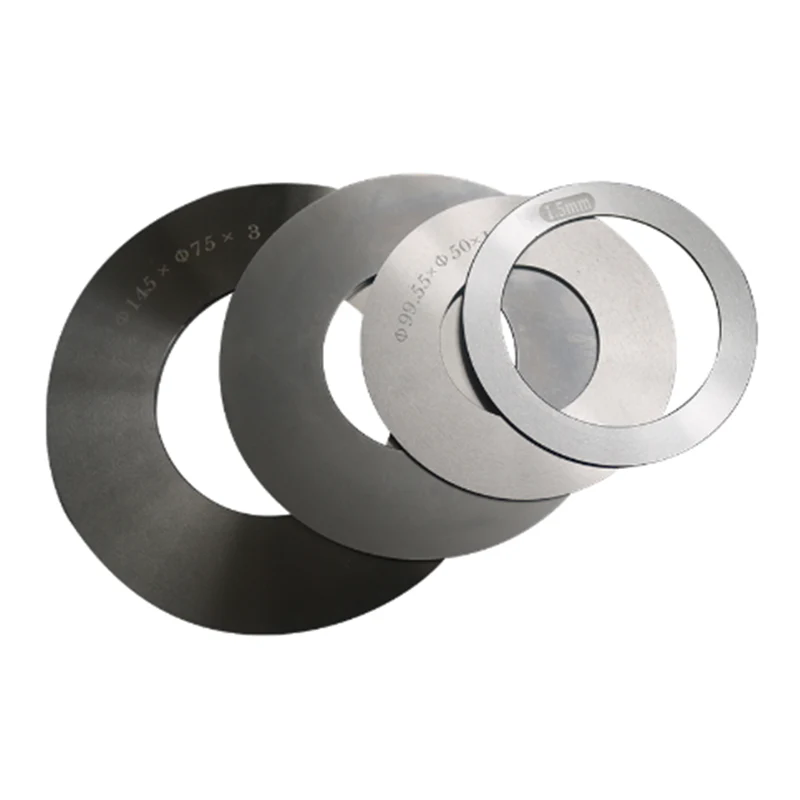
Table of Contents
- Introduction: Why Rotary Cutter Performance Matters
- What Is a Rotary Cutter?
- How Does a Rotary Cutter Work?
- Which Factors Determine Rotary Cutter Performance?
- How Does Blade Material Affect Cutting Results?
- Where Are Rotary Cutters Used?
- How Can You Choose the Right Rotary Cutter?
- What Problems Can Occur During Rotary Cutting?
- How Can You Extend Rotary Cutter Service Life?
- Why Consider Xinzhe for Rotary Cutter Solutions?
- Frequently Asked Questions
- Conclusion
Article Outline
- Understanding the structure and operating principle of rotary cutters
- Identifying the engineering factors that influence cutting quality
- Matching blade construction with the processed material
- Reducing vibration, burrs, deformation, and premature wear
- Choosing dimensions, hardness, edge geometry, and balance correctly
- Improving production continuity through maintenance and inspection
- Understanding customized manufacturing options available from Xinzhe
Introduction: Why Rotary Cutter Performance Matters
In continuous industrial production, cutting is rarely an isolated operation. A cutting blade works as part of a larger system that may include shafts, rollers, tension-control devices, feeding mechanisms, drive motors, and automated inspection equipment. If the cutting element performs poorly, the entire production line can become less efficient.
A Rotary Cutter is designed for continuous or repeated cutting in applications where production speed, dimensional consistency, and reliable edge quality are important. Unlike a stationary blade that performs a single linear cutting action, a rotary cutting system uses rotational movement to process material continuously.
This operating principle makes rotary cutters suitable for demanding applications such as tire recycling, rubber processing, film slitting, paper converting, packaging production, coil processing, and specialized food machinery.
However, simply installing a sharp circular blade does not guarantee good results. Blade geometry, material hardness, dimensional accuracy, shaft alignment, rotational balance, cutting pressure, machine speed, and the characteristics of the material being processed all affect performance.
The objective should therefore be to select a rotary cutter as part of a complete cutting system rather than treating the blade as an interchangeable commodity.
What Is a Rotary Cutter?
A rotary cutter is a circular cutting component that rotates around a central axis while interacting with a workpiece or a mating blade. Depending on the machine configuration, the cutting action can be generated through shearing, compression, slicing, scoring, or a combination of these mechanisms.
The basic structure commonly includes:
- Cutting edge: The active edge responsible for separating the material.
- Blade body: The main structural portion that supports the cutting edge.
- Central bore: The mounting opening used to connect the cutter to a shaft or tooling assembly.
- Reference surfaces: Precision-machined surfaces that help establish correct positioning.
- Beveled or stepped geometry: A design feature that can influence penetration, shearing behavior, and material clearance.
The exact configuration varies according to the equipment and application. A cutter for flexible film may have very different geometry and hardness requirements from a heavy-duty cutter used for rubber or tire processing.
For industrial customers, this distinction is important because using a blade designed for a different application can cause rapid edge deterioration, excessive heat, poor cut quality, or unexpected machine vibration.
How Does a Rotary Cutter Work?
The cutting process begins when the machine drive rotates the cutter at a predetermined speed. As the circular cutting edge enters the material, mechanical force is concentrated over a relatively small contact area.
Depending on the application, the material may be separated by a shearing action between two cutting surfaces. In other configurations, the rotating edge progressively penetrates the material as it travels through the cutting zone.
A simplified cutting sequence can be understood as follows:
- Material feeding: The workpiece enters the cutting area at a controlled speed.
- Rotational movement: The cutter rotates continuously around its central axis.
- Edge engagement: The cutting edge contacts and penetrates the material.
- Material separation: Mechanical force causes the material to split, shear, slice, or separate.
- Material discharge: The separated sections move away from the cutting zone.
- Continuous repetition: The process continues as long as the machine operates.
The advantage of this mechanism is continuity. Instead of repeatedly stopping a production line for individual cuts, rotary cutting equipment can maintain a steady processing rhythm.
For high-speed applications, however, rotational stability becomes increasingly important. Even a small imbalance or runout can become more noticeable as rotational speed increases. This is why precision machining and balancing are essential considerations for industrial rotary cutters.
Which Factors Determine Rotary Cutter Performance?
Cutting performance is influenced by several interconnected factors. Focusing only on blade sharpness may overlook the causes of many production problems.
| Factor | Effect on Performance | Typical Concern |
|---|---|---|
| Blade material | Influences wear resistance and toughness | Premature wear or edge chipping |
| Hardness | Affects resistance to deformation and abrasion | Edge collapse or brittleness |
| Edge geometry | Controls how force enters the material | Rough cuts or excessive cutting force |
| Dimensional accuracy | Supports correct blade positioning | Uneven cutting and poor alignment |
| Balance | Influences rotational stability | Vibration and noise |
| Runout | Affects consistency of the cutting path | Variable cut depth |
| Machine speed | Changes heat, centrifugal forces, and contact conditions | Thermal stress and instability |
| Workpiece characteristics | Determine required cutting force and edge design | Deformation or incomplete separation |
These factors should be considered together. For example, increasing hardness may improve abrasion resistance, but excessive hardness without sufficient toughness can increase the risk of chipping. The ideal specification depends on the application rather than one universal hardness value.
How Does Blade Material Affect Cutting Results?
The material selected for a rotary cutter must withstand the mechanical and thermal conditions generated during production. Industrial blades are commonly manufactured from engineered tool steels or other wear-resistant materials selected according to the application.
For demanding cutting environments, important material characteristics include:
- Wear resistance for abrasive materials and long production runs.
- Toughness to resist cracking and edge chipping.
- Hardness stability under operating temperatures.
- Machinability for achieving precise dimensions and edge geometry.
- Heat-treatment compatibility for obtaining the required mechanical properties.
Materials such as rubber compounds, reinforced tires, plastic films, paper, aluminum foil, stainless steel strips, and composite packaging materials impose very different demands on the blade.
For this reason, material selection should begin with the workpiece rather than the cutter itself. Consider its thickness, tensile strength, abrasiveness, elasticity, reinforcement, surface characteristics, and expected production volume.
Where Are Rotary Cutters Used?
The versatility of rotary cutting technology allows it to serve many industrial sectors. The blade design may be customized to accommodate different machine structures and processing requirements.
1. Tire Recycling and Rubber Processing
Tire recycling is one of the more demanding applications because tire materials can combine rubber, textile reinforcement, steel wire, and other components. Cutting tools must therefore withstand substantial mechanical stress and abrasive conditions.
Heavy-duty rotary cutters can be incorporated into tire dismantling, strip cutting, rubber processing, and preparation stages before further size reduction.
2. Flexible Material Slitting
Films, paper, leather, composite materials, and packaging substrates often require clean and consistent slitting. In these applications, excessive cutting force can deform the material or create uneven edges.
A properly designed rotary cutter can provide controlled engagement and continuous cutting while supporting stable production speeds.
3. Metal Coil Processing
Metal slitting requires particularly careful control of blade geometry, spacing, hardness, and alignment. Materials such as aluminum foil, stainless steel strip, and thin sheet products can require specialized cutting configurations.
Small dimensional errors can influence slit width, burr formation, edge condition, and downstream processing. Precision manufacturing is therefore especially important for metal-processing applications.
4. Packaging and Converting
Packaging equipment often operates continuously, making blade longevity and repeatability important. A worn cutter can gradually affect the quality of finished material and increase unplanned maintenance.
5. Specialized Machinery
Rotary cutters can also be engineered for specialized equipment, including food machinery and other automated processing systems where blade dimensions and material compatibility must correspond closely with the machine design.
How Can You Choose the Right Rotary Cutter?
Choosing a rotary cutter should begin with a clear understanding of the complete operating environment. The following checklist can help reduce specification errors.
- Identify the material: Determine exactly what the cutter will process.
- Measure material thickness: Thickness affects penetration depth and required cutting force.
- Determine machine speed: High-speed equipment requires careful attention to balance and dimensional accuracy.
- Check cutter diameter: The outside diameter must match the equipment and cutting cycle.
- Confirm bore dimensions: The central mounting geometry must correspond precisely to the shaft.
- Specify thickness: Blade thickness affects strength, positioning, and cutting clearance.
- Choose suitable edge geometry: Bevel angle and edge configuration should reflect the workpiece.
- Define hardness requirements: Balance wear resistance with resistance to chipping.
- Consider balancing requirements: Especially important for high-speed rotary applications.
- Discuss production volume: Continuous production may justify a more wear-resistant or application-specific design.
For customized orders, providing machine drawings, existing blade specifications, material samples, or photographs of the cutting assembly can help a manufacturer understand the actual operating conditions.
What Problems Can Occur During Rotary Cutting?
Many cutting problems are not caused by the blade alone. The machine setup, workpiece, installation method, and maintenance condition can all contribute.
| Problem | Possible Cause | Practical Response |
|---|---|---|
| Uneven cutting | Blade runout, misalignment, or uneven pressure | Inspect alignment and blade positioning |
| Excessive burrs | Incorrect clearance or worn cutting edge | Check blade condition and cutting gap |
| Edge chipping | Excessive hardness, impact, or foreign material | Review material and operating conditions |
| Rapid wear | Abrasive material or unsuitable blade specification | Consider a more appropriate material or heat treatment |
| Strong vibration | Imbalance, shaft runout, or improper installation | Inspect balance and mounting components |
| Material deformation | Excessive cutting force or unsuitable edge geometry | Optimize blade geometry and cutting conditions |
When a new blade does not solve an existing problem, it is useful to inspect the entire cutting assembly rather than immediately assuming that the blade quality is inadequate.
How Can You Extend Rotary Cutter Service Life?
Even a high-quality rotary cutter requires appropriate operating and maintenance practices. Preventive maintenance can reduce unexpected downtime and help operators identify problems before they become expensive failures.
Keep Cutting Edges Clean
Material buildup can alter the effective edge geometry and increase cutting resistance. Clean the blade according to the material and machine manufacturer's safety requirements.
Inspect for Chipping and Cracks
Small chips should not be ignored, particularly when the cutter operates at high speed. A damaged cutting edge can deteriorate rapidly and may affect the processed material.
Check Runout and Alignment
Regular inspection of the cutter, shaft, mounting surfaces, and associated components can help identify alignment problems. Excessive runout can produce inconsistent cutting and accelerate wear.
Monitor Vibration
Changes in operating vibration can provide an early indication of imbalance, mounting problems, bearing deterioration, or blade damage.
Use the Correct Cutting Conditions
Operating speed, feed rate, cutting pressure, blade clearance, and material tension should remain within suitable ranges. Pushing a cutter beyond the conditions for which it was designed can shorten service life.
Store Spare Blades Correctly
Spare cutters should be protected from impact, moisture, contamination, and accidental contact between cutting edges. Proper storage helps preserve the blade before installation.
Why Consider Xinzhe for Rotary Cutter Solutions?
Xinzhe focuses on the manufacturing of industrial cutting components and customized rotary cutting solutions. Its production approach combines machining, grinding, heat treatment, balancing, and inspection rather than treating blade production as a simple sharpening process.
For industrial customers, this integrated approach is important because rotary cutter performance depends on the interaction between multiple manufacturing characteristics.
Xinzhe's manufacturing capabilities can support rotary cutter diameters ranging from approximately 30 mm to 420 mm, with machining tolerances controlled to demanding levels for applicable products. Production equipment includes CNC machining systems, precision grinding equipment, balancing machines, heat-treatment facilities, and cryogenic hardening equipment.
Depending on the application, customization can include:
- Outside diameter
- Inside bore diameter
- Blade thickness
- Edge angle
- Bevel configuration
- Material selection
- Hardness requirements
- Surface treatment
- Balancing requirements
- Application-specific cutting geometry
Xinzhe also performs inspection processes covering raw material verification, dimensional accuracy, hardness, balancing, runout, and final product condition. These controls are particularly valuable when cutters are used in continuous production environments where inconsistent dimensions can affect the entire machine line.
For customers developing a new cutting system, the most useful approach is to provide the manufacturer with actual application information rather than ordering solely according to diameter and thickness.
Useful technical information includes:
- Machine model and cutting mechanism
- Workpiece material and composition
- Material thickness or diameter
- Production speed
- Existing cutter dimensions
- Central bore and mounting configuration
- Current blade material and hardness
- Observed cutting defects
- Expected service life
- Annual or monthly consumption
This information gives the engineering team a stronger basis for recommending a suitable cutter configuration.
Frequently Asked Questions
1. What is a Rotary Cutter mainly used for?
A Rotary Cutter is mainly used for continuous or repeated cutting and slitting operations. Typical applications include rubber and tire processing, flexible material slitting, packaging, paper converting, and metal coil processing.
2. How do I know which rotary cutter size I need?
The required size depends on the machine's shaft, mounting arrangement, cutting diameter, material thickness, and operating speed. The outside diameter, bore diameter, thickness, and edge configuration should all be checked against the equipment specifications.
3. Is a harder rotary cutter always better?
No. Higher hardness can improve resistance to abrasive wear, but excessive hardness can reduce toughness and increase susceptibility to chipping. The appropriate balance depends on the material being cut and the operating conditions.
4. Why does a rotary cutter produce excessive vibration?
Possible causes include blade imbalance, shaft runout, incorrect installation, damaged mounting surfaces, bearing problems, or an unsuitable cutter configuration. High-speed equipment requires particular attention to rotational balance and alignment.
5. How can I reduce burrs when using a rotary cutter?
Start by checking blade sharpness, edge geometry, blade clearance, alignment, material tension, and cutting speed. Excessive burrs can result from several interacting factors rather than one isolated problem.
6. Can Xinzhe manufacture customized rotary cutters?
Yes. Xinzhe provides customized industrial rotary cutter manufacturing based on dimensions, material, hardness, edge geometry, balancing requirements, and application conditions.
7. What information should I provide when requesting a quotation?
Provide the cutter drawing or dimensions, material being cut, machine model, required quantity, operating speed, existing blade specifications, and any current cutting problems. Photographs or technical drawings of the mounting assembly can also be helpful.
8. How often should a rotary cutter be replaced?
There is no universal replacement interval. Service life depends on material abrasiveness, production volume, cutting speed, blade material, heat treatment, machine setup, and maintenance. Monitoring edge condition and cutting quality provides a more reliable basis for replacement.
Conclusion
A Rotary Cutter is a precision component that can have a direct effect on cutting quality, production stability, maintenance requirements, and overall operating efficiency. Its performance depends on much more than edge sharpness. Material selection, heat treatment, dimensional accuracy, edge geometry, balancing, alignment, and operating conditions must work together.
For applications involving continuous production, selecting a cutter according to the actual material and machine conditions can help reduce common problems such as premature wear, vibration, burrs, deformation, and unexpected downtime.
Xinzhe provides industrial rotary cutter manufacturing and customization for customers requiring application-specific cutting solutions. Whether the requirement involves rubber processing, tire recycling, flexible material slitting, packaging, or precision metal processing, the correct blade specification should be developed around the actual production environment.
Ready to improve your cutting performance? Share your cutter dimensions, material requirements, machine specifications, or current cutting problems with Xinzhe. Our team can help evaluate the application and develop a suitable rotary cutter solution. Contact us today to discuss your project, request a customized quotation, and find a cutting solution designed for reliable industrial production.