

How Does a Resistant Long Radius Stainless Steel Elbow Reduce Erosion and Wear in Industrial Piping Systems
2026-07-24
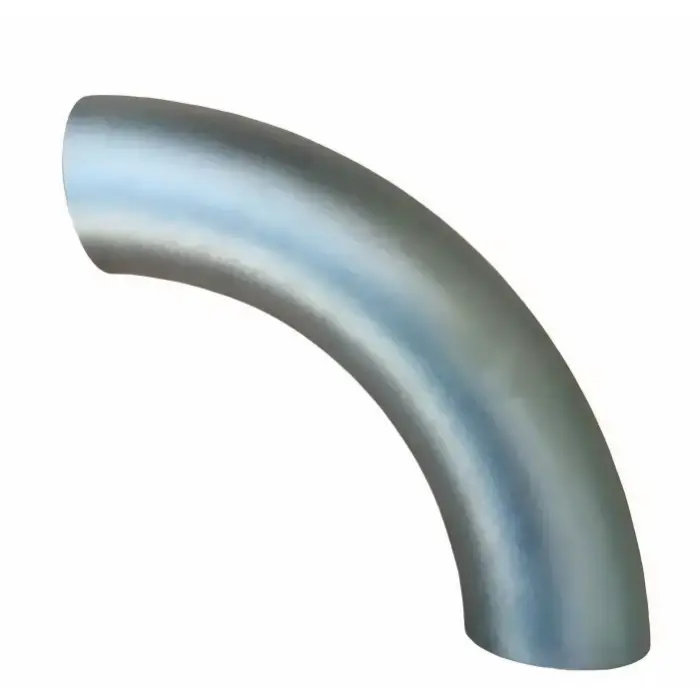
In high-stakes industrial environments, piping networks are the circulatory systems that keep operations running. Yet, these systems face a constant threat: erosion and wear caused by abrasive particulates, high-velocity fluids, and turbulent flow patterns. For plant engineers and maintenance managers, the choice of fittings directly impacts downtime, safety, and total cost of ownership. This is where the Resistant Long Radius Stainless Steel Elbow For Industrial Use becomes an indispensable asset. At HengDi, we engineer these components not merely as connectors, but as strategic solutions that extend service life, reduce unplanned outages, and maintain flow efficiency under the most punishing conditions.
The Physics of Erosion in Pipe Bends
Erosion in piping is not uniform; it concentrates at directional changes. When a fluid stream impacts the inner wall of an elbow, three destructive forces converge:
-
Particle Impact: Solid particulates strike the metal surface at oblique angles, creating micro-indentations that progressively remove material.
-
Turbulent Vortices: High-velocity flow separation downstream of the bend generates eddies that scouring the wall, accelerating localized thinning.
-
Cavitation: In liquid systems, pressure drops at the extrados (outer curve) can cause vapor bubbles to collapse violently against the surface.
Standard short-radius elbows exacerbate these effects because the tight curvature forces a sharp change in momentum. In contrast, the Resistant Long Radius Stainless Steel Elbow For Industrial Use—with a centerline radius typically 1.5 times the nominal pipe diameter (or greater)—dramatically alters the flow dynamics.
How the Long Radius Geometry Mitigates Wear
The primary mechanism is straightforward but powerful: a gentler turn reduces the centrifugal force exerted on fluid and entrained solids. The table below quantifies the comparative advantage based on industry data and HengDi’s internal testing:
| Parameter | Short Radius Elbow (1.0D) | Long Radius Elbow (1.5D) - HengDi |
|---|---|---|
| Peak wall erosion rate (relative) | 1.0 (baseline) | 0.42 – 0.55 |
| Maximum fluid velocity at extrados | 2.3× inlet velocity | 1.6× inlet velocity |
| Turbulence intensity (k-ε model) | High (strong recirculation) | Moderate (attached flow) |
| Typical service life in slurry service | 6 – 12 months | 18 – 36 months |
By increasing the bend radius, the pressure gradient across the cross-section is reduced. This keeps heavier particles closer to the inner wall (intrados) where they travel a shorter, less destructive path, rather than being flung outward to impinge the extrados. The result is a more uniform wear profile, distributing the abrasive load over a larger surface area—a principle HengDi incorporates into every forging and casting process.
Material Resilience: The Stainless Steel Advantage
Geometry alone cannot defeat wear; metallurgy must complement design. HengDi manufactures these elbows from premium austenitic and duplex stainless steels (e.g., 304L, 316L, 2205), each selected for specific service conditions. The "resistant" attribute in the Resistant Long Radius Stainless Steel Elbow For Industrial Use covers three distinct forms of degradation:
-
Abrasion Resistance: Higher work-hardening coefficients in 316L and duplex grades create a tougher surface layer under particle impact.
-
Corrosion-Erosion Synergy: In acidic or chloride-laden media, the passive chromium-oxide film repassivates rapidly, preventing the synergistic effect where corrosion weakens grain boundaries, making them more susceptible to mechanical erosion.
-
Thermal Stability: Retained impact toughness at temperatures up to 800°F (427°C) ensures that the elbow does not soften, which would otherwise accelerate wear.
HengDi applies solution annealing and controlled grain size refinement to optimize hardness without sacrificing ductility—a critical balance that brittle alternatives fail to achieve.
Real-World Performance: Industrial Case Data
Across mining, petrochemical, and pulp & paper facilities, HengDi has documented consistent improvements. In one phosphate slurry line, replacing standard 90° elbows with our Resistant Long Radius Stainless Steel Elbow For Industrial Use reduced wall thickness loss from 0.8 mm/month to just 0.25 mm/month over a 14-month trial. This translated into two fewer scheduled shutdowns per year and a 40% reduction in replacement part inventory.
Frequently Asked Questions (FAQ)
Q1: What specific flow conditions make a Resistant Long Radius Stainless Steel Elbow For Industrial Use most effective at reducing erosion?
A: This elbow delivers maximum benefit in two-phase flows (liquid-solid or gas-solid) where the Stokes number—a dimensionless ratio of particle response time to flow timescale—exceeds 10. Under such conditions, particles cannot follow rapid streamline curvature. The long radius (1.5D or 2.0D) lowers the particle impact angle at the outer wall from approximately 45°–60° (in short elbows) to below 20°. Since erosion rate scales with impact angle to the power of 1.5–2.5 for ductile metals, this geometric change alone cuts erosion by 50–70%. Additionally, for high-viscosity fluids (e.g., heavy crude), the reduced pressure drop minimizes cavitation risk, preserving the passive oxide layer.
Q2: Can a Resistant Long Radius Stainless Steel Elbow For Industrial Use withstand high-temperature cyclical service without losing its erosion resistance?
A: Yes, provided the grade matches the operating envelope. HengDi’s 316L version maintains its erosion resistance up to 850°F (454°C) intermittently, while the 2205 duplex grade excels up to 600°F (315°C) with superior fatigue resistance. The critical factor is carbide precipitation at grain boundaries, which can occur above 900°F in standard 304. HengDi combats this through low-carbon variants (e.g., 304L) and stabilized grades (321/347) upon request. Cyclical thermal shocks are addressed by the long radius design, which reduces thermal stress concentration—a common failure initiator. In every case, we recommend post-weld solution annealing to restore full corrosion-erosion performance if welding is performed in the field.
Q3: How do I calculate the expected service life of a Resistant Long Radius Stainless Steel Elbow For Industrial Use for my specific slurry application?
A: A reliable estimate requires combining three data points: (a) average particle size and hardness (Mohs scale), (b) solids concentration by weight (%), and (c) average flow velocity. Using the DNV GL erosion model (or HengDi’s proprietary wear correlation, available on request), you can project the erosion rate in mm/year. As a rule of thumb, for a typical 10% silica slurry at 4 m/s, a 1.5D HengDi elbow yields 0.2–0.3 mm/year erosion on the extrados—compared to 0.7–1.0 mm/year for a short-radius alternative. Multiply your nominal wall thickness (e.g., Sch 40 = 4.0 mm) by the corrosion allowance (typically 1.5 mm), then divide by the annual erosion rate. For the example above, that gives (4.0 + 1.5) / 0.25 = 22 years theoretical life, though we always recommend ultrasonic thickness monitoring every 6–12 months for critical circuits.
Maintenance Strategy and Installation Best Practices
Even the finest elbow requires proper handling. HengDi advises the following:
-
Bore alignment: Ensure the upstream straight pipe length is at least 5 diameters to stabilize flow before the bend.
-
Welding procedure: Use low-heat-input TIG or MIG with purging gas to avoid sugaring (oxidation) on the internal bore.
-
Inspection: Schedule periodic ultrasonic scanning at the 45° and 90° extrados positions—the most vulnerable zones.
The Economic Case for Long Radius
While the initial capital cost of a Resistant Long Radius Stainless Steel Elbow For Industrial Use is higher than a carbon steel short-radius alternative, the total lifecycle cost is decisively lower. Fewer replacements, reduced labor for change-outs, and minimized production losses make the ROI clear. HengDi’s elbows are stocked in standard sizes (2″–36″) with custom wall thicknesses and bevel-end preparations to match ASME B16.9 and MSS-SP-43 specifications.
Contact Us
Choosing the right erosion-resistant fitting is not a decision to be made from a catalog alone. Every industrial system has unique flow regimes, temperature profiles, and particle characteristics. HengDi offers application engineering support, including computational fluid dynamics (CFD) wear modeling and metallurgical consultation, to match the optimal Resistant Long Radius Stainless Steel Elbow For Industrial Use to your exact duty. Reach out to our technical sales team today with your process parameters—we will deliver a tailored proposal, sample test coupons, and reference case studies from your industry sector. Contact HengDi now to schedule a virtual assessment or request a factory visit. Your piping system’s longevity starts with a single conversation.