

How Does a Pockels Cell Driver Improve Laser Control and System Performance?
2026-07-23
Article Summary
A Pockels Cell Driver is a critical electronic component used to control the operation of Pockels cells in advanced laser systems. By providing fast, accurate, and stable high-voltage pulses, it enables precise laser modulation, pulse selection, Q-switching, and optical switching. This article explains how a Pockels Cell Driver works, why it matters for modern photonics applications, and how engineers can overcome common challenges such as timing accuracy, voltage stability, and system integration.
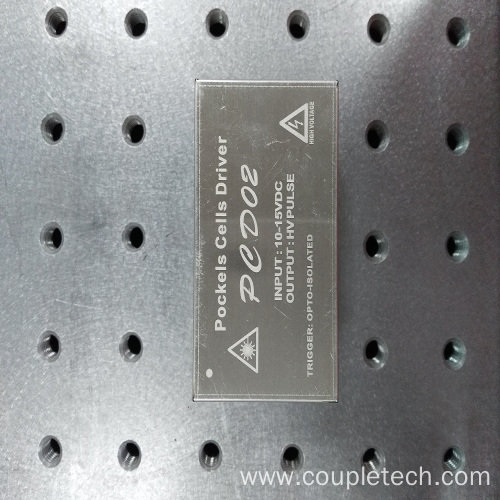 https://www.coupletech.com/q-switch-pockels-cell-driver.html
With increasing demand for high-speed laser processing, scientific research, medical equipment, and industrial automation, selecting a reliable Pockels Cell Driver solution has become essential. Coupletech Co., Ltd. provides professional optical control solutions designed to meet demanding application requirements with reliable performance and advanced technology.
Table of Contents
- How Does a Pockels Cell Driver Work?
- Why Is a Pockels Cell Driver Important for Laser Systems?
- What Challenges Can a Pockels Cell Driver Solve?
- Key Features of a High-Performance Pockels Cell Driver
- Applications of Pockels Cell Drivers
- How to Select the Right Pockels Cell Driver?
- Why Choose Coupletech Co., Ltd.?
- Frequently Asked Questions
Article Outline
- Understanding the operating principle of Pockels Cell Drivers
- Exploring their role in improving laser accuracy and efficiency
- Analyzing common technical problems and practical solutions
- Identifying important performance characteristics
- Learning about industry applications and selection methods
How Does a Pockels Cell Driver Work?
A Pockels Cell Driver is designed to generate high-speed electrical signals that control the optical behavior of a Pockels cell. A Pockels cell is an electro-optical device that changes the polarization state of light when an external electric field is applied. The driver provides the required voltage pulse to activate this optical effect.
In a typical laser system, the Pockels Cell Driver receives a control signal from a timing controller, laser controller, or external trigger source. It then converts this low-voltage input signal into a precisely controlled high-voltage output pulse. This pulse changes the optical transmission characteristics of the Pockels cell, allowing the laser beam to be switched, modulated, or controlled with extremely high speed.
The performance of the driver directly affects laser stability. A high-quality driver must deliver accurate timing, low electrical noise, fast rise and fall times, and consistent voltage output to ensure reliable optical switching.
- The control system sends a trigger signal.
- The driver processes and amplifies the signal.
- A high-voltage pulse is generated and delivered to the Pockels cell.
- The Pockels cell changes the polarization or transmission state of the laser beam.
- The laser output is controlled according to the required application.
Why Is a Pockels Cell Driver Important for Laser Systems?
Modern laser applications require extremely precise control. Whether used for material processing, scientific experiments, medical procedures, or optical communication, even small timing errors can affect system performance. A Pockels Cell Driver provides the electrical precision required for reliable optical control.
One of the biggest advantages of using a professional Pockels Cell Driver is improved laser pulse management. In high-power laser systems, controlling when laser pulses are generated is essential for protecting optical components and improving processing quality.
- Higher switching speed: Enables rapid optical control for demanding applications.
- Improved pulse accuracy: Maintains precise synchronization between laser components.
- Better system stability: Reduces fluctuations caused by unstable electrical signals.
- Enhanced efficiency: Helps optimize laser energy usage.
For researchers and engineers, the driver is not simply a power supply component. It is an important control element that determines how effectively a laser system performs.
What Challenges Can a Pockels Cell Driver Solve?
Laser systems often face challenges related to switching speed, voltage consistency, and synchronization. A properly designed Pockels Cell Driver helps solve these problems by providing accurate electrical control.
| Common Challenge | Impact on Laser Systems | How a Pockels Cell Driver Helps |
|---|---|---|
| Unstable voltage output | Causes inconsistent optical switching | Provides stable and controlled high-voltage pulses |
| Slow response time | Limits laser processing efficiency | Supports fast switching operation |
| Poor synchronization | Affects pulse accuracy | Improves timing coordination |
| Electrical noise | Reduces system reliability | Optimizes signal quality and stability |
By addressing these technical challenges, a reliable Pockels Cell Driver allows laser systems to achieve better repeatability and higher productivity.
Key Features of a High-Performance Pockels Cell Driver
When choosing a Pockels Cell Driver, engineers should focus on several important characteristics. Different laser systems may require different voltage ranges, pulse widths, and operating conditions.
- Fast Rise and Fall Time: Enables rapid switching between optical states.
- High Voltage Accuracy: Ensures consistent operation of the Pockels cell.
- Reliable Trigger Control: Supports precise synchronization with external systems.
- Low Electrical Noise: Protects sensitive optical equipment.
- Compact Design: Allows easier integration into laser platforms.
- Long-Term Stability: Supports continuous industrial operation.
A professional driver should balance electrical performance, reliability, and compatibility with different Pockels cell models.
Applications of Pockels Cell Drivers
Pockels Cell Drivers are widely used in industries where precise laser control is required. Their ability to provide fast optical switching makes them suitable for many advanced technologies.
- Laser Processing: Used in precision cutting, drilling, marking, and micro-machining applications.
- Scientific Research: Supports experiments requiring accurate pulse control and optical modulation.
- Medical Laser Equipment: Helps achieve controlled laser delivery in medical systems.
- Defense and Aerospace: Used in advanced optical systems requiring high reliability.
- Optical Communication: Provides fast optical switching and signal control.
- Industrial Automation: Improves efficiency in automated laser manufacturing processes.
How to Select the Right Pockels Cell Driver?
Selecting the correct Pockels Cell Driver requires understanding the technical requirements of the entire laser system. Engineers should evaluate several factors before making a decision.
-
Check Voltage Requirements:
Different Pockels cells require different operating voltages. The driver must match the voltage specifications to ensure proper operation. -
Consider Switching Speed:
Applications requiring rapid laser modulation need drivers with faster response times. -
Evaluate Trigger Compatibility:
The driver should integrate smoothly with existing control systems. -
Review Reliability Requirements:
Industrial applications often require continuous operation, making stability an important factor. -
Choose Professional Technical Support:
A supplier with strong engineering capability can provide better customization and integration assistance.
Why Choose Coupletech Co., Ltd. for Pockels Cell Driver Solutions?
Coupletech Co., Ltd. specializes in advanced electro-optical products and laser control solutions. The company focuses on providing reliable optical components and customized solutions for scientific, industrial, and research applications.
With professional experience in photonics technology, Coupletech Co., Ltd. understands the importance of precision, stability, and compatibility in laser systems. Its Pockels Cell Driver solutions are designed to support high-performance laser applications by delivering accurate electrical control and dependable operation.
Customers working with Coupletech Co., Ltd. can benefit from professional technical communication, customized product solutions, and application-oriented support. Whether for research laboratories or industrial laser systems, selecting the right driver technology can significantly improve overall system performance.
Frequently Asked Questions
1. What is the main function of a Pockels Cell Driver?
A Pockels Cell Driver generates precise high-voltage electrical pulses to control the operation of a Pockels cell, enabling fast optical switching and laser modulation.
2. Why does a laser system need a Pockels Cell Driver?
A laser system requires accurate timing and stable control signals. The driver ensures that the Pockels cell operates correctly and improves laser pulse management.
3. What factors affect Pockels Cell Driver performance?
Important factors include voltage stability, switching speed, trigger accuracy, electrical noise control, and compatibility with the optical system.
4. Can a Pockels Cell Driver be customized?
Yes. Different laser systems may require customized voltage levels, timing parameters, and integration designs to achieve optimal performance.
5. Where are Pockels Cell Drivers commonly used?
They are widely applied in laser manufacturing, scientific research, medical equipment, optical communication, aerospace, and industrial automation.
Conclusion
A Pockels Cell Driver plays a vital role in achieving accurate, fast, and stable laser control. By converting electrical signals into precisely controlled high-voltage pulses, it allows Pockels cells to perform reliable optical switching for advanced applications.
Choosing a professional supplier is essential for achieving long-term system reliability. Coupletech Co., Ltd. provides advanced Pockels Cell Driver solutions designed to support demanding photonics applications with excellent performance and technical support. For customized optical control solutions and professional assistance, please contact us.