

How Does a Meat Slicer Work in Commercial Food Preparation?
2026-01-07
A meat slicer is a core piece of food processing equipment used in restaurants, butcher shops, catering facilities, and industrial kitchens. This article provides a comprehensive explanation of how a meat slicer operates, how technical parameters influence performance, and how businesses can evaluate suitability for different processing scenarios. Through structured analysis, practical specifications, and detailed questions and answers, the article clarifies operational principles, safety considerations, maintenance requirements, and long-term development directions within the meat slicing industry.
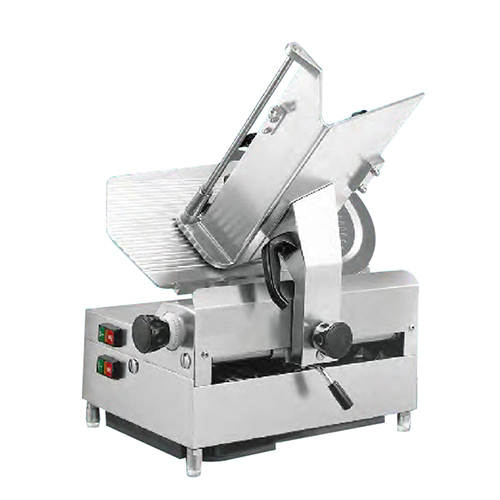
Table of Contents
- 1. How Is a Meat Slicer Designed for Professional Use?
- 2. How Do Key Technical Parameters Affect Slicing Accuracy?
- 3. How Can Meat Slicers Be Applied Across Different Food Operations?
- 4. How Is the Future of Meat Slicer Technology Evolving?
Content Outline
- Product overview and operational purpose
- Core structural components and materials
- Detailed technical parameters and specifications
- Common operational questions and professional answers
- Application scenarios and workflow integration
- Industry standards, safety, and future development
1. How Is a Meat Slicer Designed for Professional Use?
A meat slicer is engineered to deliver uniform slicing results while maintaining efficiency, hygiene, and operational safety. In professional food preparation environments, consistency in portion thickness directly impacts product presentation, cooking time control, and cost management. The central purpose of a meat slicer is to automate repetitive cutting tasks while minimizing manual labor and reducing material waste.
Commercial meat slicers typically consist of a rotating circular blade, a sliding carriage, a thickness adjustment mechanism, and a motor-driven power system. These components work together to ensure precise slicing of raw or cooked meats, cheeses, and processed food products. Structural rigidity and material selection play a critical role in maintaining slicing stability during continuous operation.
In professional settings, meat slicers are often constructed using food-grade aluminum alloys or stainless steel. These materials provide corrosion resistance, structural durability, and ease of sanitation. The design prioritizes smooth surfaces and minimal crevices to reduce residue accumulation and simplify cleaning procedures.
Operational safety is integrated into the design through blade guards, safety interlock systems, non-slip bases, and emergency shutoff controls. These elements are essential in commercial kitchens where high-frequency usage increases exposure risk.
2. How Do Key Technical Parameters Affect Slicing Accuracy?
Technical specifications determine how effectively a meat slicer performs under different workloads. Understanding these parameters allows buyers and operators to align equipment capabilities with production demands.
| Parameter | Specification Range | Operational Significance |
|---|---|---|
| Blade Diameter | 250 mm – 350 mm | Controls maximum slicing width and cutting stability |
| Motor Power | 180 W – 550 W | Determines cutting efficiency for dense or frozen products |
| Slicing Thickness | 0 – 15 mm adjustable | Ensures portion control and visual consistency |
| Material Construction | Aluminum / Stainless Steel | Supports hygiene compliance and durability |
| Carriage Stroke Length | 200 mm – 300 mm | Affects productivity and workflow speed |
Blade diameter directly influences slicing surface area and torque stability. Larger blades are typically used in high-volume operations, while compact blades suit small kitchens with limited space. Motor power determines the slicer’s ability to process tougher meats without stalling or generating uneven cuts.
Thickness adjustment mechanisms allow operators to standardize slices across different menu items. Precision in this parameter is critical for portion cost control and cooking uniformity. Construction materials ensure compliance with food safety standards while extending equipment lifespan.
3. How Can Meat Slicers Be Applied Across Different Food Operations?
Meat slicers are widely applied across foodservice and processing environments due to their versatility. In delicatessens and butcher shops, they enable consistent slicing of cured meats, fresh cuts, and specialty products. Restaurants use slicers to prepare portion-controlled ingredients that support standardized menu execution.
Catering operations rely on meat slicers to manage large batch preparation efficiently. Uniform slices reduce cooking variability and improve plating consistency. In food processing facilities, slicers integrate into semi-automated production lines to support packaging and downstream processing.
Proper integration into workflow requires alignment between slicer capacity and operational demand. Over-specification may lead to unnecessary capital expenditure, while under-specification can cause bottlenecks and premature wear.
Common Meat Slicer Questions and Answers
Q: How does slicing thickness remain consistent during continuous operation?
A: Consistency is achieved through calibrated thickness regulators and stable carriage movement. High-quality adjustment systems maintain fixed blade-to-carriage spacing, preventing deviation even during extended use.
Q: How should a meat slicer be cleaned to meet hygiene standards?
A: Cleaning involves disconnecting power, removing detachable components, sanitizing contact surfaces with food-safe agents, and ensuring complete drying before reassembly. Smooth surface design simplifies residue removal.
Q: How can blade performance be maintained over time?
A: Regular sharpening, proper alignment checks, and avoiding contact with frozen bones or non-food materials help preserve blade sharpness and slicing precision.
4. How Is the Future of Meat Slicer Technology Evolving?
The future development of meat slicers focuses on automation, safety enhancement, and energy efficiency. Manufacturers are integrating digital thickness controls, automated carriage movement, and sensor-based safety systems to improve operational accuracy.
Material innovation is also shaping future designs. Enhanced stainless steel alloys and antimicrobial surface treatments are being adopted to further improve hygiene and durability. Energy-efficient motors reduce power consumption while maintaining cutting performance.
As food safety regulations become more stringent, slicer designs increasingly emphasize compliance with international standards such as NSF and CE guidelines. Modular construction is expected to simplify maintenance and extend service life.
References
- Food Equipment Safety and Sanitation Standards
- Commercial Kitchen Machinery Design Guidelines
- Industrial Food Processing Equipment Manuals
Conclusion and Brand Introduction
Selecting and operating a meat slicer requires a clear understanding of technical parameters, application scenarios, and long-term operational goals. When evaluated correctly, a meat slicer becomes a reliable asset that supports efficiency, hygiene, and consistency in food preparation.
China SYBO specializes in the development and manufacturing of professional food processing equipment, offering meat slicer solutions designed to meet the demands of commercial kitchens and industrial applications. With a focus on precision engineering and compliance with global standards, China SYBO supports businesses seeking dependable and scalable equipment solutions.
For further product information, technical consultation, or customized equipment solutions, please contact us to discuss how professional meat slicer systems can support your operational objectives.