

How Does a Magnetic Separator Shape Industrial Material Purification Today?
2025-12-11
Magnetic separation technology serves as a critical upstream and mid-stream process step across mining, recycling, chemical manufacturing, food processing, ceramics, and metals refining. A Magnetic Separator removes ferrous and weakly magnetic contaminants from bulk materials, protecting downstream equipment, improving product purity, and stabilizing throughput.
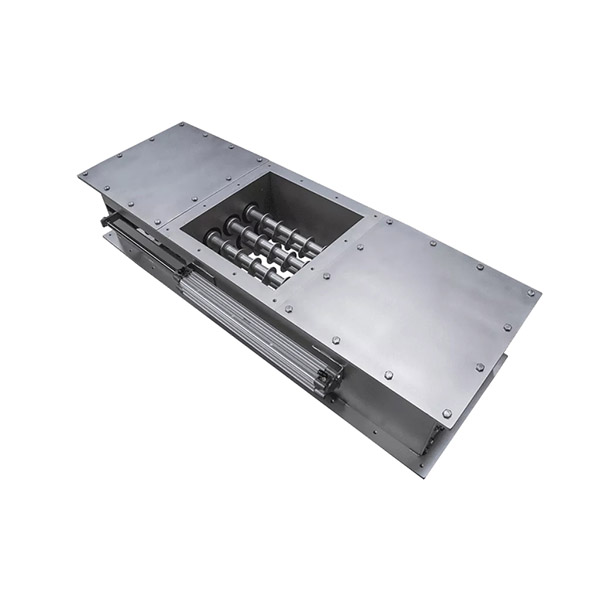
To support buyers conducting specification comparisons, the following technical parameter table reflects the typical performance and configuration envelope for industrial Magnetic Separators used in mineral processing and bulk-material handling:
| Parameter Category | Typical Specification Range |
|---|---|
| Magnetic Intensity (Gauss) | 3,000–15,000 Gauss for dry applications; 8,000–20,000 Gauss for wet high-intensity systems |
| Magnet Type | Ferrite magnets, rare-earth neodymium magnets, electromagnetic coils |
| Material Flow Form | Powder, granular, slurry, chip, flake, and mixed-density streams |
| Separator Formats | Drum, roll, over-belt, plate, drawer, grid, coolant magnetic filters |
| Construction Materials | Stainless steel 304/316L, polymer housings, sealed bearings |
| Capacity | 0.5–350 tons per hour depending on configuration |
| Operating Temperature | -20°C to 120°C based on magnet grade and housing design |
| Power Requirement (if electromagnetic) | 0.2–15 kW depending on coil strength and duty cycle |
| Particle Size Window | 10 microns to 50 mm depending on separator model |
| Compliance | HACCP, GMP, CE, ISO9001-series, food-grade variants |
Overview of Magnetic Separation in Industrial Workflows
Magnetic separation is widely adopted where metallic impurities compromise product integrity or impede equipment longevity. The technology leverages magnetic force differentials to extract ferrous and paramagnetic particles from materials in motion. The operating principle varies by separator form: a drum separator continuously rotates a magnetized shell to lift and remove particles, while over-belt separators suspend magnets above conveyor lines, capturing tramp metal before it damages crushers or grinders. High-intensity wet magnetic separators are often installed in mineral processing plants to recover fine magnetic minerals or remove iron from nonmetallic ores.
The strategic placement of Magnetic Separators in a processing line often dictates yield, equipment lifetime, and regulatory compliance. In food and pharmaceutical environments, separators mitigate recall risks by providing a reliable foreign-material control measure. In abrasive applications such as steel slag recycling, rare-earth magnets deliver enhanced longevity and consistent pull force under harsh conditions.
Performance Drivers and Configuration Selection
Selecting an appropriate Magnetic Separator requires integration of particle behavior, material rheology, and operational constraints. Magnetic field strength, gradient orientation, induced flux density, magnet-surface geometry, and dwell time collectively determine capture efficiency. For high-throughput plants, consistent magnetic force along the working width prevents bypass and ensures stable performance during peak flow.
Primary performance determinants include:
Magnetic Field Gradient
For fine powder (<200 microns), the gradient—the rate of change in field intensity—is more important than absolute Gauss value. High-gradient surfaces with optimized pole configurations improve contaminant retention even where particles exhibit weak magnetic susceptibility.
Magnetic Material Composition
Rare-earth magnets (NdFeB) provide superior flux density and are the standard for industries requiring micro-contaminant removal. Ferrite magnets, while lower in intensity, offer durability and lower cost for coarse-contaminant scenarios.
Flow Dynamics
Free-flowing granular materials behave differently from sticky or moisture-laden powders. Vibratory or pneumatic conveying systems require separators engineered for consistent exposure to the magnetic field. Slurry systems require corrosion-resistant housings and magnetic matrices engineered for high surface contact.
Maintenance Accessibility
Drawer-style separators facilitate fast cleaning in packaging lines. Self-cleaning drum and belt systems reduce downtime in mining and recycling applications. Coil-based electromagnetic systems require routine thermal and insulation checks.
Industry Use Cases and Operational Considerations
Magnetic Separators operate as an integral risk-reduction and value-creation component across multiple sectors:
Mining and Mineral Processing
Separators concentrate magnetite, remove iron from feldspar and quartz, and protect crushers from tramp metal. Plants handling high volumes rely on automatic discharge mechanisms to maintain uninterrupted flow.
Recycling and Waste Management
In electronic waste, magnetic separation isolates ferrous components for downstream sorting. Shredded vehicle scrap is processed through over-belt separators to remove steel prior to nonferrous metal recovery.
Food and Beverage
Grain mills, dairy operations, spice processors, and confectionery manufacturers utilize rare-earth magnetic grids to prevent metallic contamination. Hygienic design requirements ensure smooth surfaces, minimal collection points, and compliance with audit standards.
Chemical, Plastics, and Ceramics
Powdered pigments, polymers, and clay feedstocks require iron removal to prevent color shift, defect generation, and finishing inconsistencies.
Adoption trends focus on modular separator designs, predictive maintenance sensors, and improved magnetic shielding to protect operators and sensitive equipment. Automation, real-time contamination monitoring, and adaptive field-control systems increasingly appear in next-generation separators, reflecting a shift toward Industry 4.0-aligned purification lines.
Common Questions About Magnetic Separators
Below is a concise FAQ segment that addresses frequently encountered operational questions.
Question: How can the required magnetic intensity for a specific application be determined?
Answer: Evaluate the particle size distribution, magnetic susceptibility, and contamination level. Fine or weakly magnetic particles generally require high-intensity rare-earth systems exceeding 7,000 Gauss. Coarse tramp metal often requires only 1,000–3,000 Gauss. Matching intensity with residence time and flow characteristics ensures efficient extraction.
Question: What factors commonly reduce the efficiency of a Magnetic Separator during continuous operation?
Answer: Demagnetization from excessive heat, accumulation of contaminants reducing active surface area, misalignment with the material stream, and insufficient field gradient are common causes. Regular cleaning, correct installation geometry, appropriate magnet grade selection, and matching separator format to material behavior significantly reduce efficiency loss.
Conclusion and Contact Path
Magnetic Separator technology continues to function as a foundational component of industrial contamination control. Its relevance persists across legacy and emerging industries due to its non-intrusive operation, energy efficiency, and compatibility with increasingly complex material streams. As facilities adopt more automated and data-driven systems, demand intensifies for magnetic separation units delivering stronger field uniformity, better heat resistance, scalable modules, and enhanced wear protection. These developments enable manufacturers and processors to meet stricter quality requirements while safeguarding equipment and maximizing yield.
Within this evolving landscape, New-Mag supports global industrial operators with engineering-grade Magnetic Separator solutions designed for durability, configurability, and process reliability. To obtain tailored specifications, engineering support, or procurement guidance, contact us for detailed consultation.