

Article Summary: A bronze bushing is a critical mechanical component used to support rotating or oscillating shafts, reduce friction, manage wear, and improve the service life of industrial equipment. Choosing the wrong bushing material, tolerance, lubrication method, or load capacity can lead to excessive wear, overheating, shaft damage, unexpected downtime, and repeated maintenance costs. This guide explains how bronze bushings work, why bronze is widely selected for demanding applications, how to choose the right material and design, and how precision manufacturing can improve reliability. It also examines common failure causes, installation considerations, maintenance practices, and the advantages of working with an experienced manufacturer such as Fengquan.
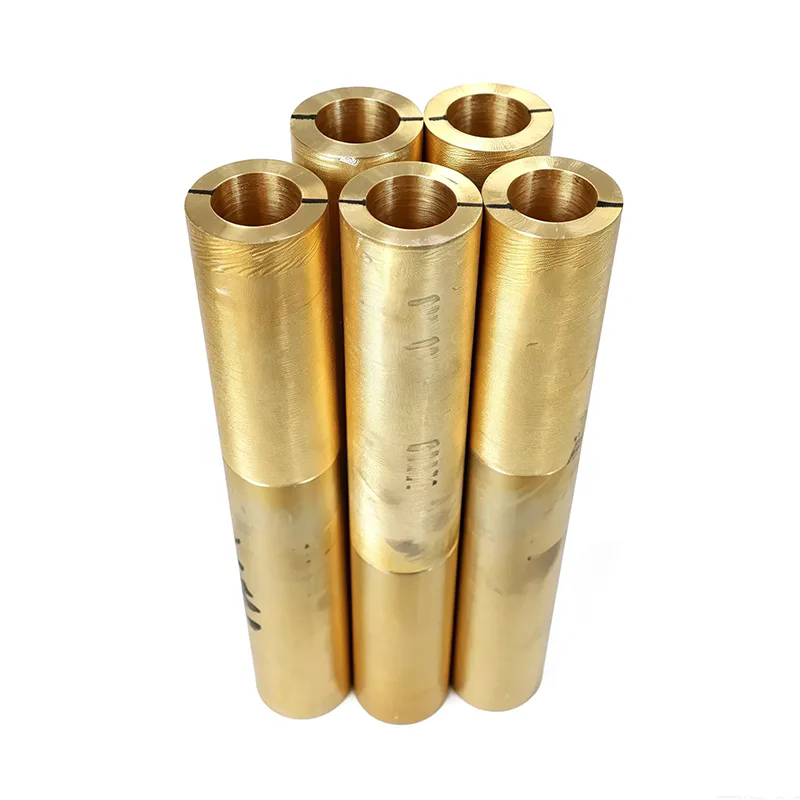
Table of Contents
- 1. What Is a Bronze Bushing?
- 2. How Does a Bronze Bushing Work?
- 3. Why Is Bronze Used for Bushings?
- 4. Which Bronze Material Is Suitable for a Bushing?
- 5. How Should You Select a Bronze Bushing?
- 6. How Does Manufacturing Quality Affect Bushing Performance?
- 7. Where Are Bronze Bushings Commonly Used?
- 8. What Problems Can a Bronze Bushing Solve?
- 9. How Should a Bronze Bushing Be Installed?
- 10. How Can You Extend Bronze Bushing Service Life?
- 11. What Causes Bronze Bushing Failure?
- 12. Why Consider Fengquan for Bronze Bushings?
- 13. Frequently Asked Questions
- 14. Conclusion
Article Outline
- Understanding the function and construction of bronze bushings.
- Explaining friction, load support, heat generation, and wear control.
- Comparing important bronze alloy characteristics.
- Identifying the factors that determine bushing selection.
- Explaining the role of casting, machining, dimensional control, and inspection.
- Reviewing industrial applications and common operating challenges.
- Providing practical installation and maintenance recommendations.
- Explaining common failure modes and preventive measures.
- Introducing Fengquan's manufacturing and customization capabilities.
- Answering frequently asked questions from industrial buyers.
1. What Is a Bronze Bushing?
A bronze bushing is a cylindrical or specially shaped bearing component designed to provide a controlled sliding surface between moving parts. It is commonly installed between a shaft, pin, spindle, or other moving component and the surrounding housing. Instead of allowing two primary machine components to rub directly against each other, the bushing creates a replaceable wear surface that can absorb friction and mechanical stress.
Bronze is particularly useful for this purpose because it combines mechanical strength, wear resistance, dimensional stability, and good compatibility with many lubrication systems. Depending on the alloy and operating conditions, bronze bushings can be used in machinery exposed to high loads, repeated motion, vibration, moisture, corrosive environments, or demanding production cycles.
For equipment manufacturers and maintenance teams, the value of a bronze bushing is not simply its purchase price. A properly designed bushing can protect a much more expensive shaft or housing, reduce unplanned maintenance, and help maintain stable equipment performance over time.
The bushing therefore needs to be treated as an engineered component rather than a generic metal sleeve. Its material, dimensions, clearance, surface finish, hardness, lubrication conditions, and installation method all influence actual service performance.
2. How Does a Bronze Bushing Work?
The operating principle of a bronze bushing is relatively simple: it provides a controlled interface between a stationary housing and a moving shaft or pin.
When the shaft rotates or oscillates, the bushing supports the applied load while allowing relative movement. The bronze surface is designed to withstand repeated contact and distribute pressure across the working area instead of allowing concentrated metal-to-metal contact.
Several mechanical factors are involved:
- Load support: The bushing transfers radial or, in some designs, axial forces into the surrounding housing.
- Friction control: The working surface reduces direct metal contact and helps maintain smoother movement.
- Wear management: The bushing is designed to absorb controlled wear so that the shaft and housing are better protected.
- Heat management: Proper material selection, clearance, surface finish, and lubrication help limit friction-generated heat.
- Alignment support: Accurate dimensions help maintain the intended relationship between the shaft and housing.
In practice, performance depends on the complete tribological system rather than the bronze material alone. Load, speed, temperature, lubrication, shaft hardness, surface roughness, contamination, and alignment all interact with the bushing.
3. Why Is Bronze Used for Bushings?
Industrial machinery can expose bearing surfaces to substantial mechanical stress. A bushing material must therefore withstand repeated sliding contact without rapidly deforming or wearing away.
Bronze is widely selected because it offers a useful balance of properties that can be difficult to obtain from a single alternative material.
| Property | Benefit in Bushing Applications |
|---|---|
| Wear resistance | Helps withstand repeated sliding and oscillating movement. |
| Mechanical strength | Allows the bushing to support demanding mechanical loads. |
| Dimensional stability | Helps maintain the designed clearance and operating geometry. |
| Machinability | Supports precision machining of internal and external dimensions. |
| Corrosion resistance | Provides useful performance in selected humid or corrosive environments. |
| Material versatility | Different bronze alloys can be selected for different loads and environments. |
However, not every bronze alloy behaves identically. A bushing designed for heavy mechanical loads may require a different alloy from one intended for moderate loads and continuous rotation. The material must therefore be matched to the actual operating conditions.
4. Which Bronze Material Is Suitable for a Bushing?
One of the most important purchasing decisions is selecting the appropriate bronze alloy. Common industrial choices include tin bronze, aluminum bronze, brass-based copper alloys, and manganese bronze grades.
Tin bronze is often considered when good wear characteristics, sliding performance, and stable mechanical behavior are required. It can be suitable for many conventional bearing and bushing applications.
Aluminum bronze can be advantageous when higher mechanical strength, wear resistance, or demanding environmental resistance is required. Certain grades are used for heavy-duty machinery and applications where ordinary bearing materials may experience excessive wear.
Manganese bronze is associated with high-strength applications and can be considered for components exposed to substantial loads and mechanical stress.
Brass-based copper alloys may be selected where the required combination of strength, machinability, wear behavior, corrosion resistance, and cost makes them appropriate.
The correct choice should never be based solely on the alloy name. Engineers should evaluate the complete working environment before specifying a material.
5. How Should You Select a Bronze Bushing?
Choosing a bronze bushing based only on outside diameter and inside diameter is a common procurement mistake. A reliable selection process should consider the mechanical and environmental conditions in which the component will operate.
Start with the following factors:
- Operating load: Determine the radial and axial forces acting on the bushing.
- Movement type: Identify whether the shaft rotates continuously, oscillates, reciprocates, or moves intermittently.
- Operating speed: Consider rotational or sliding speed because higher speed can increase friction and heat generation.
- Temperature: Check both normal operating temperature and potential peak temperature.
- Lubrication: Determine whether oil, grease, solid lubricant, or another lubrication approach will be used.
- Environment: Account for water, dust, chemicals, salt spray, abrasive particles, and other contaminants.
- Shaft condition: Review shaft material, hardness, surface roughness, diameter, and alignment.
- Dimensional requirements: Define bore diameter, outside diameter, length, tolerance, and required clearance.
- Installation method: Determine whether the bushing will be press-fitted, mechanically retained, or installed using another method.
- Maintenance strategy: Consider whether replacement intervals and lubrication access are important to the equipment design.
A simple specification sheet can help prevent expensive misunderstandings between the buyer and manufacturer.
| Specification | Information to Confirm |
|---|---|
| Material | Bronze alloy grade or required mechanical properties |
| Dimensions | Inside diameter, outside diameter, length, and critical features |
| Tolerances | Required dimensional and geometric accuracy |
| Load | Normal and peak operating loads |
| Speed | Rotational, sliding, or oscillating speed |
| Lubrication | Lubricant type, lubrication frequency, and operating method |
| Environment | Temperature, moisture, chemicals, dust, and contamination |
6. How Does Manufacturing Quality Affect Bushing Performance?
Even a theoretically suitable bronze alloy can perform poorly if the component is manufactured inaccurately. Bushing performance is strongly influenced by casting quality, machining accuracy, surface condition, and dimensional consistency.
For larger industrial bushings, casting is often used to create the basic component before machining establishes the final dimensions. Centrifugal casting can be particularly useful for producing cylindrical copper-alloy components with controlled material distribution.
After casting, machining operations may include turning, boring, facing, milling, and CNC processing. The objective is to produce the required geometry while controlling the dimensions that directly influence shaft fit and operating clearance.
Material verification is another important step. Spectral or equivalent material analysis can help verify alloy composition before the component enters further production. Mechanical and dimensional inspections can then be used to identify unacceptable deviations.
For customers purchasing customized bronze bushings, quality control should therefore cover the entire manufacturing chain rather than relying only on a final visual inspection.
7. Where Are Bronze Bushings Commonly Used?
Bronze bushings can be found in many types of industrial machinery because they provide a practical solution for controlled sliding movement and load support.
- Industrial machinery and production equipment
- Heavy-duty mechanical systems
- Construction and material-handling equipment
- Mining and mineral-processing machinery
- Marine and port equipment
- Hot-dip galvanizing equipment
- Large rotating machinery
- Hydraulic and mechanical assemblies
- Transportation-related mechanical systems
- Custom engineering equipment
Large bronze bushings are especially useful where a standard off-the-shelf bearing cannot meet the required diameter, length, load rating, material specification, or installation configuration.
8. What Problems Can a Bronze Bushing Solve?
Many equipment failures begin with a seemingly minor problem at a moving interface. A poorly selected or incorrectly manufactured bushing can gradually create additional damage throughout the machine.
A properly engineered bronze bushing can help address several common customer pain points:
Problem 1: Excessive Wear
Repeated sliding contact can gradually damage unprotected metal surfaces. A suitable bronze bushing creates a dedicated wear surface that can be replaced more easily than the main shaft or housing.
Problem 2: Shaft Damage
Direct contact between poorly matched components can produce scoring, galling, or accelerated surface deterioration. Proper material selection and clearance help reduce these risks.
Problem 3: Frequent Maintenance
A bushing that does not match the actual load, speed, lubrication, or environment may require frequent replacement. Selecting the correct material and geometry can improve maintenance intervals.
Problem 4: Dimensional Instability
Poorly controlled manufacturing tolerances can create excessive clearance or interference. Precision machining and inspection help maintain the intended fit.
Problem 5: Difficult Customization
Industrial machinery often uses non-standard dimensions. A manufacturer capable of producing components from engineering drawings can provide a more practical solution than forcing a standard component into an unsuitable application.
9. How Should a Bronze Bushing Be Installed?
Correct installation is essential because even a high-quality bronze bushing can fail prematurely if it is installed incorrectly.
Before installation, inspect the housing and shaft carefully. Remove dirt, burrs, old lubricant, corrosion products, and other contaminants. Confirm that the shaft diameter and housing bore match the approved engineering specifications.
During installation:
- Verify the bushing orientation when the design is directional.
- Use suitable installation equipment rather than uncontrolled impact force.
- Prevent damage to the internal working surface.
- Confirm that lubrication passages remain correctly aligned when applicable.
- Check the final shaft movement after installation.
- Inspect for abnormal resistance, binding, or excessive clearance.
For interference-fit designs, the required fit should be determined by engineering specifications rather than guessed during assembly. Excessive interference can distort the bushing, while insufficient interference may allow unwanted movement between the bushing and housing.
10. How Can You Extend Bronze Bushing Service Life?
Long service life is not determined by material selection alone. Operating practices have a major influence on bushing performance.
- Maintain appropriate lubrication: Use the lubricant and lubrication interval recommended for the specific application.
- Keep contaminants away: Dust, metal particles, sand, and abrasive materials can accelerate wear.
- Monitor temperature: Unexpected temperature increases may indicate friction, inadequate lubrication, excessive load, or alignment problems.
- Inspect the shaft: A damaged shaft can rapidly destroy a replacement bushing.
- Check alignment: Misalignment can concentrate loads on one area of the bushing.
- Monitor clearance: Excessive operating clearance can indicate wear and may affect machine accuracy.
- Replace damaged components promptly: Continued operation with a severely worn bushing can transfer damage to more expensive components.
Maintenance teams should also record operating conditions and replacement history. These records can reveal patterns that help engineers improve the next bushing specification.
11. What Causes Bronze Bushing Failure?
When a bronze bushing fails earlier than expected, replacing it without identifying the root cause may simply repeat the problem.
| Failure Symptom | Possible Cause | Recommended Investigation |
|---|---|---|
| Rapid surface wear | Insufficient lubrication, excessive load, contamination, or unsuitable material | Check operating conditions and material selection |
| Overheating | Excessive friction, poor clearance, high speed, or inadequate lubrication | Measure temperature and review fit and lubrication |
| Uneven wear | Misalignment or uneven load distribution | Inspect shaft and housing alignment |
| Cracking or deformation | Excessive load, unsuitable alloy, or installation stress | Review load calculations and material grade |
| Loose fit | Housing wear, incorrect dimensions, or excessive operating temperature | Measure housing and bushing dimensions |
| Shaft scoring | Contamination, inadequate lubrication, poor surface condition, or severe bushing wear | Inspect both shaft and bushing as a complete system |
The most effective troubleshooting approach is to examine the bushing, shaft, housing, lubricant, load, speed, temperature, and operating environment together.
12. Why Consider Fengquan for Bronze Bushings?
For industrial buyers, the challenge is often not simply finding a bronze bushing supplier. The more important question is whether the manufacturer can consistently deliver the material, dimensions, quality, and customization required by the application.
Fengquan focuses on non-ferrous metal casting and precision machining and provides bronze bushings and bearings for industrial customers. Its product range covers multiple copper-alloy options, including tin bronze, aluminum bronze, brass-based alloys, and other grades selected according to application requirements.
Fengquan's manufacturing approach combines casting with subsequent machining and inspection. This is particularly valuable for large or customized bushings where final dimensional accuracy cannot be achieved through casting alone.
For buyers with non-standard requirements, an engineering drawing can provide the foundation for discussing dimensions, alloy selection, machining allowances, tolerances, and production requirements. This approach can reduce the risk of purchasing a nominally similar component that does not actually fit the machine.
Fengquan also emphasizes material verification and product inspection. For industrial customers, this type of process control is important because bushing reliability depends on consistency from raw material through finished machining.
Another practical advantage is the ability to discuss customized solutions directly with a manufacturer. Instead of modifying the equipment around an unsuitable standard bushing, buyers can work toward a component designed around the actual shaft, housing, load, movement, and operating environment.
13. Frequently Asked Questions
Q1: What is the main purpose of a bronze bushing?
A bronze bushing provides a controlled sliding interface between moving and stationary components. It supports loads, reduces direct metal-to-metal contact, manages wear, and can help protect shafts and housings from premature damage.
Q2: Is bronze suitable for heavy-duty applications?
Yes. Certain bronze alloys are suitable for high-load and demanding industrial applications. However, the correct grade must be selected according to load, speed, temperature, lubrication, environment, and shaft conditions.
Q3: Are all bronze bushings the same?
No. Different bronze alloys have different combinations of strength, hardness, wear resistance, corrosion resistance, machinability, and operating characteristics. The alloy should be matched to the application.
Q4: Can a bronze bushing be customized?
Yes. Industrial bronze bushings can be customized in dimensions, material grade, geometry, machining details, tolerances, and other characteristics according to engineering requirements.
Q5: Why does a bronze bushing wear out quickly?
Common causes include excessive load, insufficient lubrication, contamination, misalignment, unsuitable clearance, high operating temperature, excessive speed, poor shaft condition, or an inappropriate material grade.
Q6: How do I know which bronze alloy to choose?
Start by documenting the load, movement, speed, temperature, lubrication, environment, shaft material, shaft hardness, dimensions, and expected service life. A qualified manufacturer can then help identify an appropriate alloy.
Q7: Can Fengquan manufacture non-standard bronze bushings?
Yes. Fengquan provides customized bronze bushings and bearings based on customer drawings and technical requirements, making it possible to address applications where standard dimensions are insufficient.
Q8: What information should I provide when requesting a quotation?
Provide the drawing or dimensional specification, material requirement, quantity, operating load, movement type, speed, temperature, lubrication method, working environment, tolerance requirements, and any special surface or machining requirements.
14. Conclusion
A bronze bushing is a relatively compact component, but its influence on machine reliability can be substantial. When correctly specified, manufactured, installed, and maintained, it can help control friction, accommodate mechanical loads, protect shafts and housings, reduce wear, and minimize unnecessary maintenance.
The most reliable approach is to select the bushing as part of a complete mechanical system. Material grade, dimensions, tolerance, clearance, shaft condition, lubrication, load, speed, temperature, and environmental exposure should all be considered before production.
For standard as well as customized industrial requirements, working with an experienced manufacturer can also reduce procurement risk. Fengquan combines non-ferrous metal casting, machining, material selection, inspection, and customization capabilities to support customers looking for bronze bushings suited to specific equipment requirements.
Need a bronze bushing designed for your equipment? Share your drawing, dimensions, material requirements, or operating conditions with Fengquan. For reliable bronze components, customized manufacturing support, and practical engineering assistance, contact us today to discuss your application and request a suitable solution.