

Window hardware is more than a practical accessory. It contributes to the overall appearance of a room, influences how curtains move, and needs to remain dependable through everyday use. When a window is particularly wide, these considerations become even more important. A 120 Inch Curtain Rod with Round Balls brings together an extended rod length and a distinctive end detail, offering a combination of visual balance and everyday functionality for residential and commercial interiors.
1. Why Does Design Matter in Curtain Hardware?
Curtains are often selected according to color, texture, privacy requirements, and light-control needs. However, the hardware that holds them can either support or weaken the intended design. A rod that looks too small for a wide window may appear out of proportion, while an overly decorative finial can compete with patterned curtains or detailed furniture.
A well-proportioned curtain rod creates a visual connection between the window, the curtain fabric, and the surrounding interior. Its length establishes a horizontal line, while its finish and decorative ends contribute smaller details that can coordinate with other furnishings.
For designers and buyers, the goal is not simply to choose an attractive product. The rod should also fit the installation area, support the intended curtain arrangement, and remain practical to use. Considering appearance and function together helps avoid purchasing hardware that looks suitable in a product photograph but does not perform well in the actual space.
2. The Importance of a 120-Inch Proportion
A 120-inch curtain rod is intended for a relatively wide installation area. Its extended length can help create a continuous window treatment across broad windows or selected patio-door arrangements. It may also be useful when a project requires a consistent visual line across a large wall.
Length is only one part of the specification, however. A long rod must be considered together with its diameter, material, construction, support points, and connection method. Two rods with the same nominal length may have different performance characteristics because their tube dimensions and mounting systems differ.
Buyers should also distinguish between the pole length and the complete assembled length. Finials, connectors, and adjustable sections may affect the final dimensions. A product drawing or detailed specification is more reliable than relying on a single headline measurement.
3. How Do Round Ball Finials Shape the Appearance?
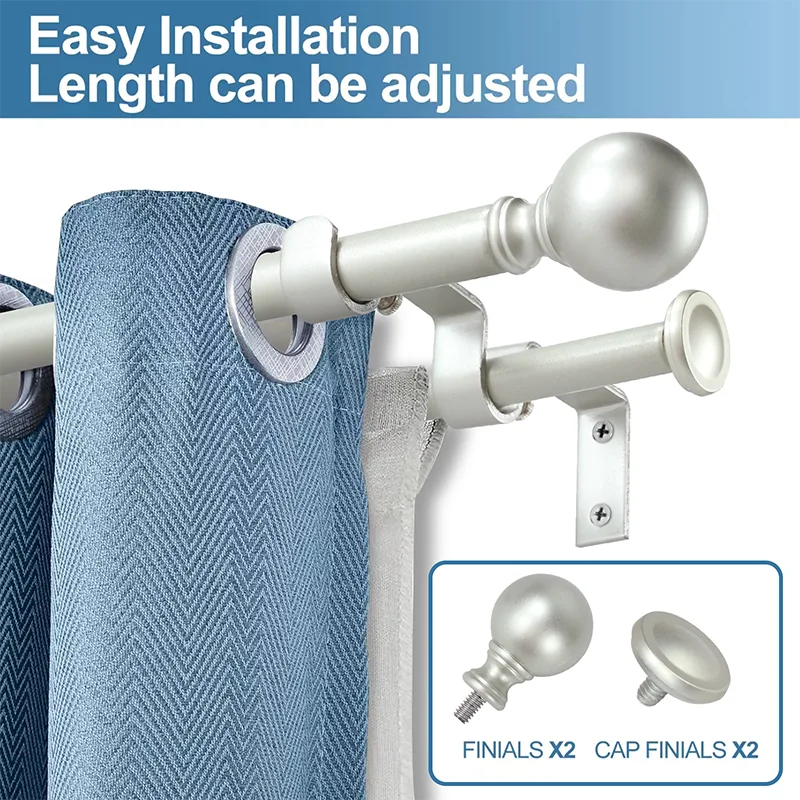
Round ball finials provide a recognizable finishing detail at both ends of the rod. Their smooth, curved shape creates a softer visual contrast with the long horizontal line of the pole. This simple geometry makes them adaptable to different decorative settings.
A balanced decorative profile
In a minimalist room, a modest round finial can add definition without making the window treatment look overly ornate. In a more traditional setting, a larger ball-shaped end can create a stronger decorative accent. The relationship between finial size and rod diameter is important: the end piece should look intentional rather than disproportionate.
A coordinated appearance
Round finials can be paired with simple curtain fabrics, subtle patterns, or more formal drapery. Their finish can also coordinate with door handles, cabinet hardware, lamp bases, and other metal details. Consistency across these elements helps create a more unified interior.
A practical end detail
Depending on the product design, finials may also help prevent curtain rings or compatible hanging components from sliding off the end of the rod. Buyers should check how each finial attaches and whether it can be removed for curtain installation or replacement.
4. Material Selection and Construction
Material selection influences the rod's appearance, handling, durability, and suitability for different curtain weights. Metal is a common choice for curtain hardware because it can provide a clean profile and a range of surface finishes. The specific characteristics depend on the material grade and the construction method.
When evaluating a long curtain rod, look beyond the material name. Tube diameter, wall thickness, straightness, joint design, and bracket compatibility all contribute to the finished product. A specification that lists these details gives buyers a clearer basis for comparison.
| Product Detail | What Buyers Should Examine | Practical Importance |
|---|---|---|
| Rod material | Material type and stated specification | Helps assess suitability for the intended environment and use |
| Tube dimensions | Diameter and wall thickness | Influences appearance and structural characteristics |
| Finial construction | Shape, size, attachment, and fit | Determines the end appearance and assembly method |
| Bracket design | Mounting style and support configuration | Helps ensure appropriate installation and stability |
| Surface finish | Color consistency and surface condition | Supports visual coordination and product presentation |
| Connections | Joint alignment and fitting method | Can affect assembly and curtain movement |
5. How to Choose a Suitable Surface Finish
The finish is one of the first details people notice when looking at curtain hardware. It should complement the room rather than be selected in isolation. A dark finish may create contrast against pale walls, while a lighter metallic appearance can blend with neutral interiors and other bright hardware.
Common finish preferences include black, white, silver-toned, and bronze-toned appearances, although actual availability depends on the product range. When coordinating multiple items for one project, buyers should confirm that the color and surface appearance are consistent across rods, finials, and brackets.
Photographs can help with initial selection, but they may not show the exact appearance of a finish. Lighting, display settings, and image processing can influence perceived color. For projects with strict color requirements, request a physical sample or confirm the approved finish specification before mass ordering.
6. Functional Details That Affect Daily Use
Visual design matters, but curtain hardware is handled regularly. The rod should allow the selected curtain system to move as intended without unnecessary friction or interference.
Rod diameter and curtain movement
The rod diameter must match the hanging system. Grommets, rings, and rod pockets have different clearance requirements. A mismatch can make installation difficult or cause curtains to move unevenly.
Bracket clearance
Bracket depth and shape determine how far the rod sits from the wall. This clearance can be important when curtains need to pass around window trim, handles, blinds, or other nearby features. Check the installed projection before selecting the final configuration.
Support across a long span
A long rod needs a suitable support arrangement. Curtain weight, rod construction, and mounting conditions should all be considered when determining bracket positions. If a center support is required, confirm whether the curtain system can pass it or whether the arrangement needs to be divided into separate panels.
7. Which Curtain Styles Work with This Rod?
A 120-inch rod with round ball finials can be paired with several curtain heading styles, provided the rod diameter and accessories are compatible.
- Grommet curtains: Offer a structured appearance with visible folds. The grommet opening must be large enough for the pole.
- Rod-pocket curtains: Create a softer, gathered look. Confirm that the pocket dimensions suit the rod and end fittings.
- Tab-top curtains: Use fabric loops that sit over the rod. They allow the pole to remain visible as part of the design.
- Ring curtains: Use separate rings to connect the curtain fabric to the rod. Check ring size and bracket clearance.
- Clip-top curtains: Provide flexible hanging positions, but the clips and rings must be appropriate for the fabric weight.
For layered window treatments, buyers should also consider the number of rods required. A single rod may not be sufficient when combining sheer curtains with heavier drapes. The project may require a separate track or a double-rod arrangement.
8. How to Evaluate Product Quality Before Buying
Product quality should be evaluated through clear specifications and, where possible, physical inspection. A polished photograph does not reveal every detail of construction. Buyers sourcing curtain rods for resale or large projects should request information that can be checked consistently across samples and production batches.
Inspect the visible components
Check whether the rod surface is even and free from obvious dents, scratches, or inconsistent finishing. Examine the finials for clean edges, consistent shape, and a secure connection to the pole. Brackets should be checked for alignment and suitable fitting dimensions.
Review dimensional consistency
Confirm the nominal length, usable pole length, diameter, and relevant accessory dimensions. If a project uses multiple rods, consistent measurements are important for a uniform installation.
Ask about product testing and specifications
Where load capacity or other performance figures are important, request documented information from the supplier. Avoid assuming that all rods of a similar appearance have the same weight rating. Actual suitability depends on the product's construction and the installation method.
9. Applications in Residential and Commercial Projects
The extended length and decorative end design make this style relevant to different furnishing applications. In homes, it may be used in living rooms, bedrooms, dining areas, and rooms with wide windows. In hotels and serviced apartments, a consistent hardware design can help maintain a coordinated appearance across guest rooms.
Interior designers may consider this rod style when a project needs a simple decorative detail without an elaborate finial profile. Retailers and distributors may also evaluate it as part of a curtain hardware range, especially when customers require products for wider window openings.
For commercial projects, consistency and installation planning are particularly important. Before ordering, confirm the dimensions and finish requirements for every installation area. If the project contains different window widths, check whether one rod size is appropriate for all locations or whether multiple lengths are required.
10. Customization and Wholesale Considerations
Wholesale buyers often need more than a standard product description. They may require particular lengths, finishes, finial styles, packaging arrangements, or accessory combinations. The feasibility of these requirements depends on the manufacturer's production capabilities and available product range.
When discussing a project with a supplier, provide the required dimensions and describe the intended installation. Reference photographs, technical drawings, and sample specifications can reduce misunderstandings. If the product will be sold through retail channels, packaging presentation and clear installation information may also be relevant.
Jm Sunway Hatdware Products Co., Ltd. can be considered by buyers evaluating curtain rod products for different supply requirements. When communicating with the supplier, provide the intended quantity, preferred finish, rod dimensions, finial design, and any accessory requirements so the product configuration can be reviewed more accurately.
11. A Practical Sourcing Checklist
A structured checklist makes it easier to compare products from different suppliers. Before confirming an order, review the following points:
- Is the 120-inch measurement the pole length or the overall assembled length?
- What are the rod diameter and material specifications?
- Are the round ball finials included, and how are they attached?
- Which surface finishes are available?
- Are brackets, screws, anchors, and other accessories included?
- What support arrangement is recommended for the intended curtain weight?
- Are the rod and curtain accessories compatible?
- Can the supplier provide product drawings or detailed measurements?
- What are the minimum order quantity, packaging options, and lead time?
- Can samples be reviewed before a larger order is placed?
Clear answers to these questions help buyers compare products based on more than appearance. They also make it easier to plan installation, manage inventory, and communicate requirements to contractors or end customers.
12. Frequently Asked Questions
Q1: What makes a 120-inch curtain rod different from a standard-length rod?
Its extended nominal length makes it suitable for some wider window arrangements. However, the rod's construction, diameter, support requirements, and actual usable length must also be considered.
Q2: Are round ball finials suitable for modern interiors?
Yes. Their simple geometric shape can work well in modern, transitional, and traditional spaces. The overall effect depends on the finial size, finish, rod profile, and surrounding decor.
Q3: Can the finials be changed to another style?
This depends on the rod's end connection and the manufacturer's design. If interchangeable finials are important, confirm the fitting dimensions and attachment method before ordering.
Q4: Does a longer curtain rod always need a center bracket?
Not in every case. The required support arrangement depends on the rod construction, curtain weight, span, and installation conditions. Follow the product's support recommendations rather than relying on length alone.
Q5: How can buyers check whether the finish will match their project?
Request a finish sample or confirm the approved finish specification. Product photographs are useful for reference but may not reproduce the exact color under different lighting conditions.
Q6: What information is needed for a wholesale quotation?
Provide the required quantity, rod length, diameter, material preference, finish, finial style, bracket configuration, packaging needs, and destination market. Drawings or reference images can make the request clearer.
Q7: Can this rod be used with heavy drapes?
It may be suitable when its construction and mounting system are appropriate for the total curtain weight. Ask the supplier for load guidance and confirm that the wall fixings and bracket arrangement are suitable.
Q8: How should curtain rods be cleaned?
Use a soft cloth to remove dust. For marks, follow the care instructions for the specific finish. Avoid abrasive cleaners or tools that could scratch the surface or damage its coating.
Discuss Your Curtain Hardware Requirements
A suitable curtain rod should meet the project's dimensional requirements while providing a coordinated appearance and practical installation. Paying attention to materials, finishes, finial details, and support components can help buyers make more informed sourcing decisions.
Jm Sunway Hatdware Products Co., Ltd. welcomes inquiries from distributors, retailers, contractors, and furnishing project buyers. If you are looking for curtain rod products or need to discuss specifications for a particular order, contact us to share your requirements and explore suitable product options.