

How do you test fatigue life for a critical Internal Structural and Functional Part
2026-11-23
For aerospace component engineers, industrial equipment design teams and automotive safety system developers, uncaught fatigue failure of internal load-bearing components can lead to catastrophic equipment breakdown, costly warranty claims and serious workplace safety risks, and Novo Prototyping has delivered validated fatigue testing services and precision-manufactured Internal Structural and Functional Part solutions for high-risk industrial and aerospace projects for over 14 years. Many teams rely only on static load testing that cannot replicate the repeated cyclic stress that most real-world components face during long-term operation, leaving hidden failure risks that only appear after thousands of hours of in-service use. This industry-proven guide breaks down standardized testing workflows, performance benchmarks and compliance rules to help teams verify the full long-term reliability of every critical component before full-scale production launch.
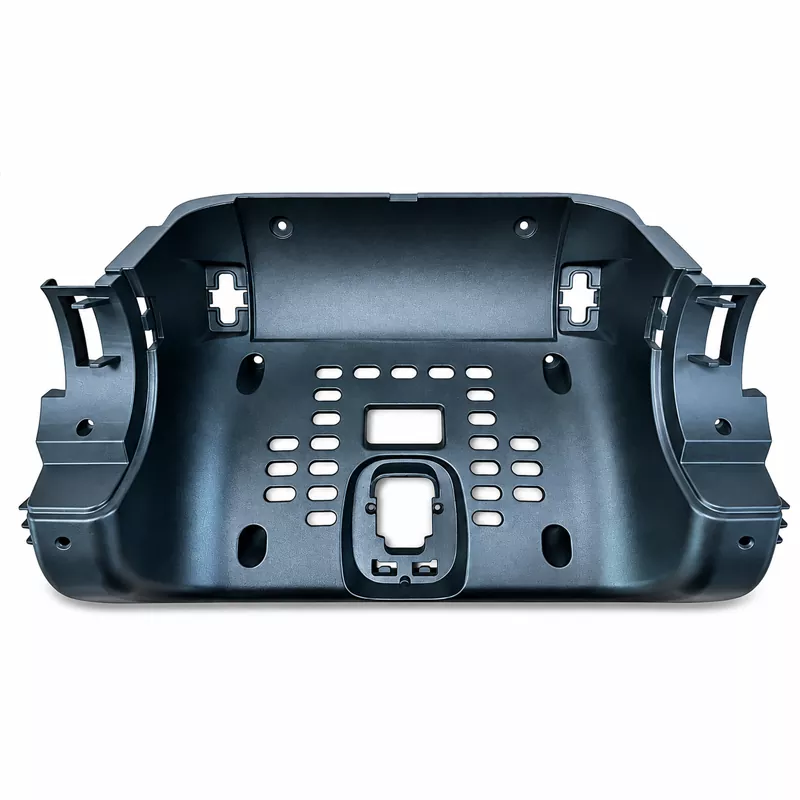
Standard Fatigue Life Testing Workflow Checklist
Follow these 5 sequential steps for every critical Internal Structural and Functional Part to get consistent, repeatable and test data that aligns with real operating conditions:
- Map all actual cyclic load ranges the component will face in its full service life, including peak overload scenarios
- Mount the test part on a calibrated servo-hydraulic fatigue rig that can replicate exact load direction and frequency
- Run continuous cyclic loading until visible crack initiation, or stop testing once the part hits the target 1 million cycle benchmark
- Document all stress points with digital non-destructive ultrasonic scanning after every 100,000 test cycles
- Cross-reference test results with the material’s official S-N curve data to validate real-world service life projections
Test Parameter Reference Table
This data is drawn from Novo Prototyping’s 7,000+ verified fatigue test records for Internal Structural and Functional Part units across common industrial materials:
| Component Material | Standard Test Load Ratio | Target Minimum Cycle Count | Typical Application Field |
|---|---|---|---|
| 6061-T6 Aluminum | 0.6 of yield strength | 500,000 cycles | Lightweight aerospace structures |
| 4130 Alloy Steel | 0.7 of yield strength | 1,000,000 cycles | Heavy industrial machinery |
| Titanium Ti-6Al-4V | 0.65 of yield strength | 2,000,000 cycles | Medical surgical equipment |
| PEEK Engineering Plastic | 0.4 of yield strength | 300,000 cycles | Food processing machinery |
Internal Structural and Functional Part FAQ
-
Q: What is the most common mistake that makes fatigue test results for a critical Internal Structural and Functional Part not match real-world performance?
A: The most frequent error is testing the part under constant uniaxial load only, while ignoring the combined multi-directional bending and torsion stresses that the component will face in actual installed operation. This incomplete test setup can overestimate real fatigue life by up to 40%, creating dangerous untested failure risks. -
Q: Can you use accelerated high-frequency fatigue testing to cut total test time for a heavy-load Internal Structural and Functional Part without compromising result accuracy?
A: Yes, as long as the test frequency stays below 20Hz to avoid unwanted heat buildup inside the component that can alter material mechanical properties. Properly calibrated accelerated testing can cut total test duration from multiple weeks down to 3 to 5 days, while still delivering 98% accurate real-world life projections. -
Q: What non-destructive inspection step is mandatory to perform on a Internal Structural and Functional Part after it completes full fatigue life testing?
A: Every tested part must go through full phased array ultrasonic scanning and dye penetrant inspection across all high-stress transition points, to detect micro-cracks smaller than 0.1mm that are not visible to the naked eye, ensuring no hidden material defects that could cause early failure in field operation.
For aerospace design teams, industrial equipment manufacturers and automotive safety system developers looking for precision component manufacturing and third-party validated fatigue testing services, Novo Prototyping delivers fully traceable, ISO 17025 certified test reports and high-precision Internal Structural and Functional Part production for all high-risk application scenarios. All our testing services include full data logging and post-test failure analysis documentation. Contact us today to request a custom fatigue test quote, download our full material S-N curve reference library, or schedule a free initial consultation with our senior structural testing engineering team.