

How do you reduce tooling costs in small part metal stamping without compromising quality
2026-04-14
Tooling is often the most expensive upfront investment in Small Part Metal Stamping, yet it directly determines product precision and consistency. Nuote specializes in helping manufacturers lower these tooling expenses while maintaining the highest quality standards. This guide explores practical strategies to achieve both goals.
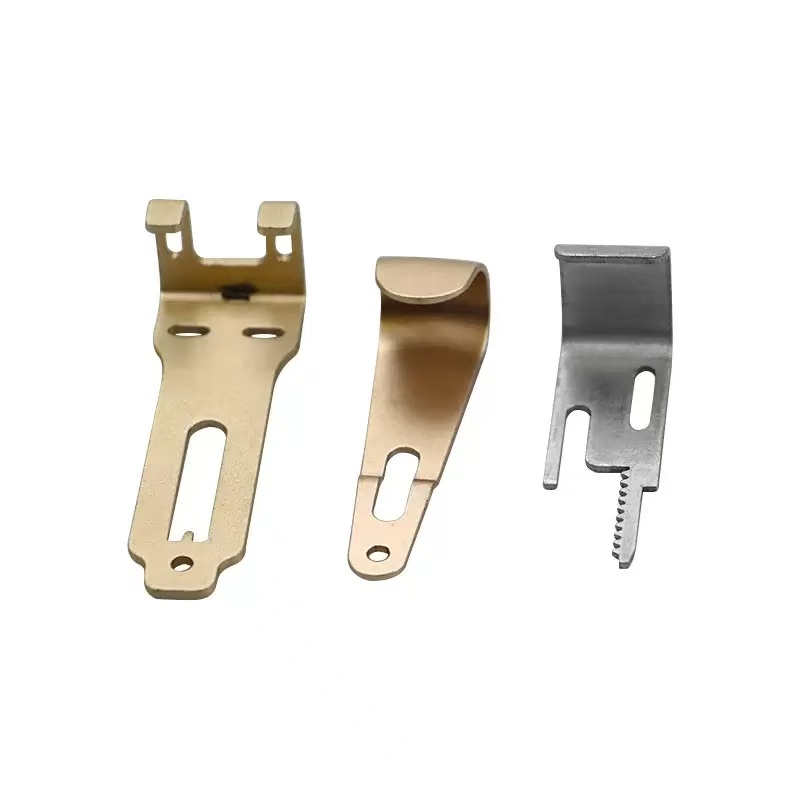
Core Strategies to Lower Tooling Costs
| Strategy | Impact on Cost | Impact on Quality |
|---|---|---|
| Optimized part design for simpler tool geometry | High reduction | Neutral or positive |
| Modular tooling systems | Medium reduction | Maintained |
| High-quality tool steel with longer lifespan | Higher upfront, lower long-term | Enhanced |
| In-die sensors for real-time wear monitoring | Medium reduction | Improved |
| Standardized tool inserts | Significant reduction | Maintained |
Key design principles to follow:
-
Reduce side actions and lifters – complex features increase tool cost exponentially.
-
Use larger corner radii – sharp corners accelerate wear and require expensive EDM work.
-
Maintain uniform material thickness – avoids multi-stage forming steps.
-
Avoid ultra-tight tolerances unless necessary – every ±0.01mm adds tooling complexity.
Nuote applies these principles during the quoting phase, often cutting tooling costs by 30–50% without changing final part function.
Small Part Metal Stamping FAQ
What is the most common cause of high tooling costs in small part metal stamping?
The most common cause is over-engineered part features that require additional tool stations, side actions, or secondary operations. Examples include unnecessary undercuts, extremely sharp internal corners, and tight tolerances on non-critical dimensions. By reviewing the part’s functional requirements, engineers often remove 20–40% of tooling complexity. Nuote offers a free design review to identify such savings opportunities before tool fabrication begins.
Can using cheaper tool steel reduce initial costs without hurting quality?
No. Lower-grade tool steel leads to faster wear, increased downtime, and inconsistent part dimensions. While it reduces upfront expense, the total cost of rework, scrap, and tool repairs quickly exceeds any initial savings. Nuote recommends tool steels like D2 or powder metallurgy grades for long-run Small Part Metal Stamping, paired with proper heat treatment. This approach increases tool life by 3–5 times, lowering the per-part cost dramatically.
How does tool maintenance affect long-term stamping quality and cost?
Poor maintenance is the hidden driver of quality failures. Even a well-designed tool will produce burrs, dimensional drift, and surface defects if not cleaned, lubricated, and sharpened regularly. Nuote implements scheduled preventive maintenance based on stroke count, typically every 50,000 to 100,000 strokes. This practice maintains consistent part quality, reduces unexpected downtime, and extends tool life by over 200%. The maintenance cost is usually less than 5% of tool replacement expense.
Real-World Application
A medical device manufacturer reduced tooling costs by 42% after applying Nuote’s design-for-stamping guidelines. The original design had 11 tool stations; after optimization, only 7 stations were needed. Quality metrics improved because fewer stations introduced fewer variation points.
Nuote also uses standardized tool inserts across multiple part families. Instead of building a new die for every component, interchangeable die sections allow reuse of 60–70% of the tooling. This strategy works exceptionally well for high-mix, low-volume Small Part Metal Stamping projects.
Contact Us
Ready to lower your tooling costs without sacrificing a single micron of quality Nuote provides a complete analysis of your Small Part Metal Stamping process, from part geometry to tool steel selection and maintenance planning. Contact our engineering team today for a no-obligation design review and a fixed-cost tooling quote.