

How Do You Install a Built-In Stainless Steel Niche in a Tiled Shower Without Damaging the Waterproofing
2026-06-24
Installing a Built-In Stainless Steel Niche in a tiled shower is one of the most rewarding upgrades you can make—but it is also one of the most risk-prone. The waterproofing membrane behind your tiles is the only barrier between shower moisture and your home’s structural framing. A single puncture, improper seal, or compression error can lead to hidden rot, mold, and costly tear-outs. That is why professionals treat niche installation as a waterproofing exercise first, and a framing exercise second. With the right prep, tools, and a high-quality unit like those from Xinbangye, you can achieve a watertight, elegant recess that lasts decades. This guide walks through every critical step, from planning to final seal, without compromising the integrity of your shower pan or backer board.
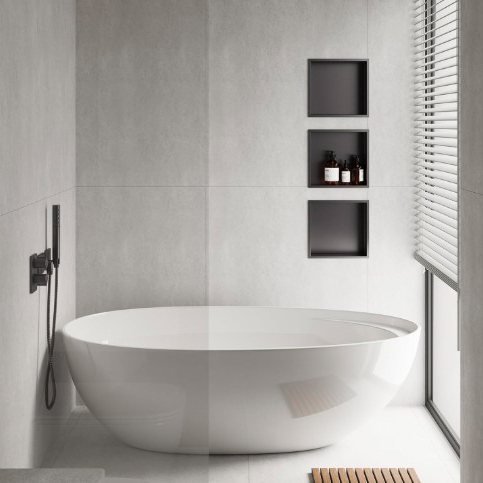
Phase 1: Pre-Installation Planning (The 80/20 Rule)
Eighty percent of success happens before you cut a single hole. Start by selecting your Built-In Stainless Steel Niche dimensions. Standard widths (12″, 16″, 24″) align with stud spacing (16″ or 24″ on center), but always verify your actual stud bay. Use a stud finder and mark both edges of the cavity.
Critical pre-check checklist:
| Task | Tool Required | Why It Matters |
|---|---|---|
| Confirm stud-to-stud clearance | Tape measure | Prevents forced fitting that bows the niche body |
| Identify plumbing/electrical runs | Stud finder with AC detection | Avoids drilling into pipes or wires |
| Check tile thickness + thinset buildup | Caliper + tile sample | Ensures flange sits flush with finished surface |
| Verify slope direction (if floor-mounted) | Level | Directs condensate toward drain, not wall |
Xinbangye recommends dry-fitting the niche against the backer board before any cutting. Mark the outline with painter’s tape, then score the cement board with a utility knife—do not use a grinder, as dust can compromise the membrane later.
Phase 2: Cutting the Opening – Membrane-Safe Technique
The highest-risk moment is cutting through the waterproofing layer (liquid-applied or sheet membrane like Kerdi). Do not cut from the front after waterproofing is applied. Instead:
-
Cut the backer board before applying waterproofing.
-
Use a jigsaw with a carbide-grit blade or an oscillating multi-tool with a diamond-grit blade.
-
Cut ⅛″ larger than the niche body on all sides to allow for expansion and sealant thickness.
After cutting, vacuum all dust. Apply a liquid waterproofing membrane (e.g., Laticrete Hydro Ban or RedGard) to the exposed cut edges of the cement board, extending 2″ beyond the cut line. Let it cure fully—typically 2–4 hours depending on humidity.
Pro tip from Xinbangye: Apply a second coat in the corners of the cutout. Corners are where capillary action pulls water behind the flange.
Phase 3: Flange Integration – The Mechanical Seal
A Built-In Stainless Steel Niche typically comes with a pre-welded flange (1″ to 1.5″ wide). This flange must sit on top of the waterproofing layer, not behind it. Insert the niche into the opening, ensuring the flange overlaps the waterproofed surface by at least ¾″ on all sides.
Apply sealant in this order:
| Layer | Material | Application |
|---|---|---|
| 1 – Bedding | 100% silicone (neutral-cure) | Continuous bead along the back of the flange |
| 2 – Mechanical | Stainless steel screws (countersunk) | Fasten through flange into studs – use rubber washers |
| 3 – Top coat | Hybrid polymer sealant (e.g., NP-1) | Tooled over screw heads and flange edge |
Do not over-tighten screws. Overtorquing distorts the flange and creates gaps. Tighten until the rubber washer just compresses—about ¼ turn past finger-tight.
Phase 4: Tiling Up to and Over the Flange
Tile installation is where most DIYers damage waterproofing by scraping thinset or using sharp trowel edges against the membrane. Work from the niche outward:
-
Apply thinset only to the tile back, not directly over the flange.
-
Use a notched trowel with rounded edges (U-notch, not V-notch).
-
Leave a ⅛″ gap between tile and the niche body for expansion.
-
After thinset cures (24 hours), fill that gap with 100% sanitary silicone—not grout. Grout is rigid and will crack; silicone accommodates thermal movement.
The flange will now be hidden behind the tile, but it remains the primary water-shedding surface. Any water hitting the niche runs down the flange and onto the tile surface—never behind it.
Phase 5: Final Water Test – Before Grouting
Before you apply grout, perform a simple flood test: tape a plastic sheet over the niche interior, fill with 1″ of water, and mark the level. Wait 2 hours. If the water drops more than 1/16″, re-inspect the flange seal. This single test saves thousands in future repairs.
Frequently Asked Questions About Built-In Stainless Steel Niche Installation
Q: Can I install a Built-In Stainless Steel Niche on an exterior wall with insulation behind it?
A: Yes, but you must maintain the insulation’s vapor barrier. Cut the insulation to fit around the niche body, leaving no voids. Then, seal the niche’s back wall with a closed-cell foam gasket (supplied by Xinbangye for exterior applications) to prevent condensation from forming on the cold stainless steel surface. Additionally, ensure the niche is not recessed deeper than the wall cavity—it should sit flush with the stud face to avoid compressing the insulation, which reduces R-value.
Q: How do I handle the bottom shelf of a Built-In Stainless Steel Niche to prevent water pooling and soap scum buildup?
A: The shelf must have a built-in downward slope of at least 2° (roughly ⅛″ per foot) toward the shower interior. Most premium units from Xinbangye come pre-sloped. If yours does not, you can create a slope by applying a wedge-shaped bed of epoxy mortar under the shelf before tightening the flange screws. Never use a leveling compound that is water-soluble. After installation, verify the slope with a digital angle gauge. For cleaning, choose a matte or brushed finish—mirror finishes show every droplet, while brushed hides water spots and simplifies daily wipe-downs.
Q: Is it safe to use a Built-In Stainless Steel Niche in a steam shower with temperatures above 140°F?
A: Absolutely, provided the niche is made from 304 or 316 stainless steel with a minimum thickness of 1.2 mm. Xinbangye uses 304-grade with a welded corner construction—no folded seams—which eliminates stress fractures from thermal expansion. However, the sealant around the flange must be rated for high-temperature exposure (look for ASTM C920, Class 50, with a service range of -40°F to 250°F). Standard silicone degrades above 120°F, so upgrade to a specialty steam-shower sealant. Also, leave a 3/16″ expansion gap around the niche body, not ⅛″, to accommodate the extra thermal movement in steam environments.
Final Checklist for a Lasting Installation
| Step | Critical Action | Common Mistake |
|---|---|---|
| 1 | Cut backer before waterproofing | Cutting after membrane = guaranteed puncture |
| 2 | Overlap flange on top of membrane | Tucking flange behind membrane = water channel into wall |
| 3 | Use silicone, not grout, at the body-tile joint | Grout cracks and wicks moisture |
| 4 | Flood-test before grouting | Skipping test = hidden leak until rot appears |
| 5 | Slope shelf outward | Flat shelf = standing water and bacterial growth |
A correctly installed Built-In Stainless Steel Niche transforms your shower into a spa-like space while adding tangible resale value. The process demands precision, but every step protects the waterproofing system that keeps your home safe. Xinbangye engineers each niche with pre-drilled flange holes, laser-welded corners, and a standard 2° slope—reducing installation variables and giving you confidence from the first cut to the final silicone bead.
For custom sizes, angled backsplashes, or commercial-grade 316L options, Xinbangye provides technical drawings and on-call support for contractors and homeowners alike. Visit our product catalog or reach out directly for a site-specific installation checklist.
Contact us today at [email protected] or through our website live chat—share your shower dimensions, and we will reply within 4 business hours with a tailored flange layout and sealant specification sheet. Your waterproofing is too important to leave to guesswork. Let Xinbangye supply the niche, and we will help you install it with zero compromises.