

How Do You Choose the Right Silver Contact Points for Automotive Starter Motors
2026-08-28
Selecting the correct Silver Contact Points for starter motors is not a one-size-fits-all decision. The starter motor endures extreme inrush currents, mechanical vibration, and thermal cycling every time the ignition key turns. For engineers and procurement specialists, the choice directly affects cranking reliability, service life, and warranty costs. At INT METAL, we have tested thousands of Silver Contact Points across heavy-duty trucks, passenger vehicles, and racing applications—and the data consistently shows that material composition, geometry, and plating thickness matter more than most spec sheets reveal.
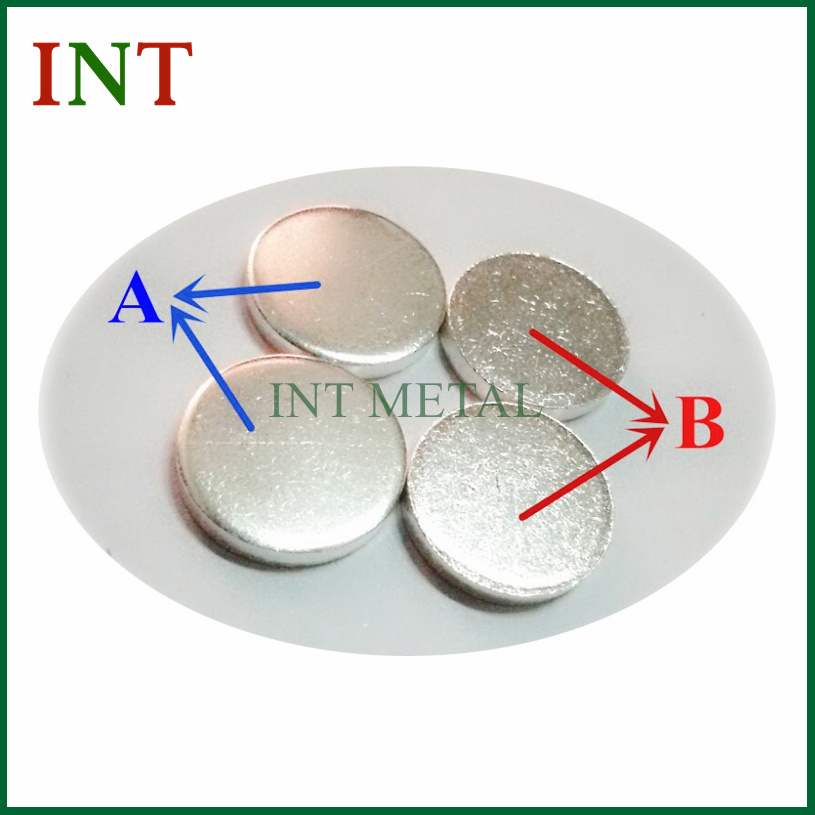
Why Starter Motors Demand Specialised Silver Contact Points
Unlike relays or push-button switches, an automotive starter motor draws 200–600 A peak current at 12 V or 24 V. The Silver Contact Points inside the solenoid and main switch must break this DC load without excessive arc erosion. Pure silver offers the highest conductivity (63.0 × 10⁶ S/m), but it lacks mechanical hardness. That is why INT METAL engineers often recommend silver‑cadmium oxide or silver‑nickel alloys for starter applications—they retain conductivity while resisting welding and material transfer.
The table below summarises the most common material grades used in starter motors:
| Material | Conductivity (% IACS) | Hardness (HV) | Arc Resistance | Typical Application |
|---|---|---|---|---|
| Fine Silver (Ag 99.9%) | 105 % | 25 – 30 | Poor | Light-duty relays |
| Silver‑Cadmium Oxide (AgCdO) | 85 – 90 % | 75 – 95 | Excellent | Heavy truck starters |
| Silver‑Nickel (AgNi 10) | 88 – 92 % | 80 – 100 | Good | Passenger car starters |
| Silver‑Tin Oxide (AgSnO₂) | 78 – 82 % | 90 – 110 | Very Good | High-temperature hybrids |
For most 12 V starter motors, INT METAL advises AgNi 10 as the cost‑effective baseline. For 24 V commercial vehicles, AgCdO provides superior arc quenching, though it requires careful handling due to cadmium content.
Key Selection Criteria – A Practical Checklist
Choosing the right Silver Contact Points involves four measurable parameters:
-
Contact Force – Higher spring force reduces contact resistance but accelerates mechanical wear. Target 2.5 – 4.0 N for passenger starters.
-
Switching Frequency – Stop‑start systems demand >300,000 cycles. For these, specify AgSnO₂ with a convex dome shape.
-
Ambient Temperature – Under‑hood temperatures exceed 150 °C. Verify that the Silver Contact Points retain >80 % of their initial hardness at 180 °C.
-
Mounting Method – Brazed contacts outperform riveted ones in vibration tests by a factor of 3:1. INT METAL provides brazed pre‑assemblies for OEM lines.
| Criterion | Passenger Car | Commercial Truck | Motorsport |
|---|---|---|---|
| Diameter Range | 6 – 10 mm | 10 – 16 mm | 8 – 12 mm |
| Preferred Alloy | AgNi 10 | AgCdO 12 | AgSnO₂ 8 |
| Coating Thickness | 0.3 – 0.5 mm | 0.5 – 0.8 mm | 0.4 – 0.6 mm |
| Test Cycle Target | 150 k | 500 k | 100 k (high‑current) |
Three Critical FAQs About Silver Contact Points in Starters
Q1: How do I know if my Silver Contact Points are failing before the starter stops working?
A: The earliest indicators are audible: a clicking solenoid without cranking, or a gradual increase in cranking time. Electrically, measure the voltage drop across the Silver Contact Points during inrush—a drop exceeding 0.3 V at 300 A signals excessive oxidation or pitting. INT METAL recommends regular thermal imaging; contacts that run 15 °C hotter than adjacent terminals have developed internal resistance. For fleet maintenance, log contact resistance every 10,000 miles using a four‑wire milliohmmeter. If resistance rises by 20 % above the baseline, schedule a replacement before the contact welds shut.
Q2: Can I mix different brands of Silver Contact Points with my existing starter bridge?
A: Technically yes, but practically unwise. Different manufacturers use dissimilar silver alloy compositions and dome radii, which alter the make‑and‑break arc trajectory. A mismatched set often causes asymmetric erosion—one contact pits while the other builds a conical protrusion, leading to premature sticking. INT METAL supplies matched pairs with identical batch‑traceable hardness and surface finish. If you must mix, always replace both the movable and fixed Silver Contact Points simultaneously, and confirm that the total height matches the original stack‑up within ±0.05 mm. Never replace only one side.
Q3: What is the optimal rivet head shape for Silver Contact Points in high‑vibration starters?
A: For engines with high idle vibration (e.g., V8 diesel), a spherical radius head (convex) outperforms flat or concave designs. The convex shape self‑centres under spring pressure, maintaining consistent contact area even when the solenoid shaft deflects laterally. INT METAL has conducted shaker‑table tests proving that convex Silver Contact Points reduce contact bounce by 40 % compared to flat heads at 50 Hz vibration. The trade‑off is a slightly higher initial resistance (≈5 %), which stabilises within the first 100 cycles as the surface polishes. For passenger cars with balanced engines, a flat‑headed rivet is sufficient and more economical.
Final Recommendation for Procurement and Design Engineers
Start with your worst‑case current profile—not the nominal rating. Measure the locked‑rotor current of the starter motor and add 20 % margin. Then match that value to the weld‑resistance curve of the Silver Contact Points candidate. Always request a cross‑sectional metallography report from your supplier; it reveals porosity and oxide distribution that directly affect arc stability. INT METAL provides full failure‑mode analysis for every batch, including SEM imaging on request.
Contact Us for Technical Assistance
Choosing the right Silver Contact Points for your starter motor project does not end with a datasheet. INT METAL offers free sample kits, custom brazing fixtures, and cycle‑life testing at our ISO‑17025 laboratory. Send your motor specifications to our engineering team, and we will return a graded recommendation within two business days. Contact us today—upload your current‑profile waveform or CAD drawing, and let us help you eliminate starter failure from your warranty list.