

How Do You Choose the Right High Tensile Quick Link for Your Chain Sling
2026-07-03
Selecting the correct High Tensile Quick Link for your chain sling is not a casual decision—it is a critical engineering choice that directly impacts workplace safety, load security, and operational efficiency. Whether you are rigging heavy steel beams, lifting marine equipment, or securing cargo in logistics, the wrong quick link can lead to catastrophic failure. At Dowson, we have spent decades engineering and supplying High Tensile Quick Link solutions that meet the most demanding industrial standards. This guide walks you through the essential selection criteria, from grade identification to environmental compatibility, ensuring your choice delivers both performance and peace of mind.
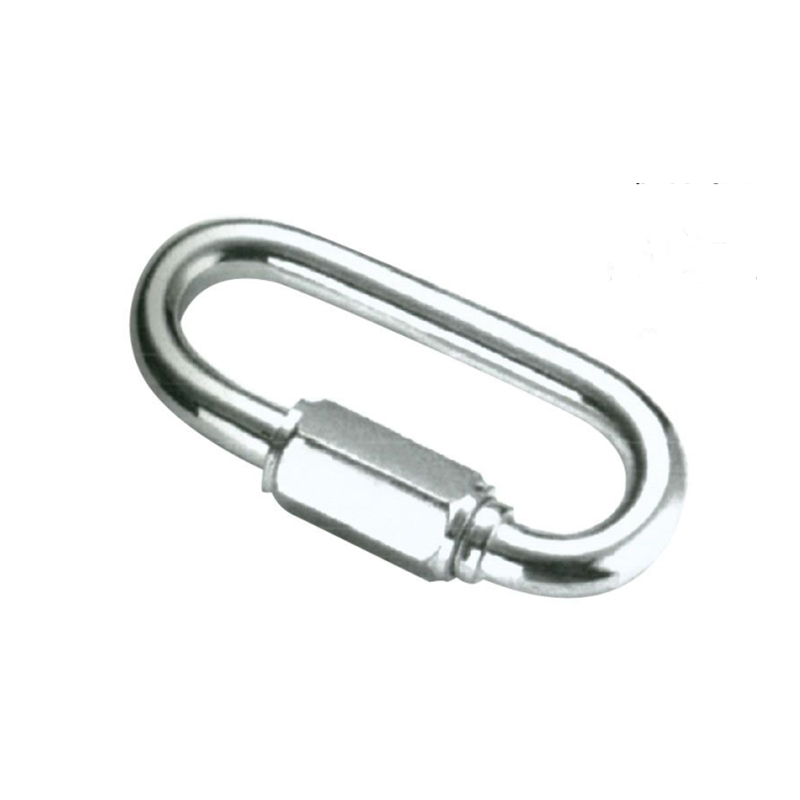
1. Understand the Grade Marking and Material Standard
Every High Tensile Quick Link is stamped with a grade number that defines its minimum breaking strength and fatigue resistance. The two most common grades for chain sling applications are Grade 80 and Grade 100.
| Grade | Minimum Breaking Strength | Typical Use Case | Colour Code |
|---|---|---|---|
| Grade 80 | 4x WLL (Working Load Limit) | General overhead lifting | Yellow or red |
| Grade 100 | 4.5x WLL | Heavy-duty, high-cycle lifting | Orange or brown |
| Grade 120 | 5x WLL | Extreme precision lifting | Purple (rare) |
Dowson recommends Grade 100 for frequent-use chain slings, as it offers higher fatigue life with a lighter link weight, reducing operator strain.
2. Match the Working Load Limit (WLL) to Your Sling Capacity
The High Tensile Quick Link must have a Working Load Limit (WLL) that equals or exceeds the chain sling’s rated capacity—never the other way around. Always check the sling’s identification tag and calculate the total load including shock forces, angle factors, and rigging hardware weight.
Practical rule from Dowson engineering:
-
For vertical lifts: WLL (link) ≥ WLL (sling)
-
For choker or basket hitches: multiply sling capacity by the appropriate angle factor (typically 1.4–2.0), then select a link with WLL at least 20% above that figure as a safety buffer.
3. Evaluate the Eye Size and Inner Width Compatibility
A common oversight is selecting a link with an eye opening too narrow for the chain or fitting. The High Tensile Quick Link must freely accommodate the chain link or master link without binding, which can induce side loading and premature wear.
-
Measure the chain link’s outer width and thickness.
-
Compare with the quick link’s inner length and inner width.
-
Ensure at least 2–3 mm clearance for articulation.
Dowson produces quick links in over 15 dimensional variants, allowing precise matches for both European and American chain standards (DIN 5688, EN 1677, and ASTM A973).
4. Consider the Environmental Exposure
Corrosion, temperature extremes, and chemical exposure significantly degrade a High Tensile Quick Link over time.
| Environment | Recommended Coating / Material | Dowson Solution |
|---|---|---|
| Indoor, dry | Plain steel or oil-baked finish | Standard Grade 80 |
| Marine / coastal | Hot-dip galvanised or stainless steel | Dowson Galva+ series |
| High humidity + chemicals | Zinc-nickel alloy plating | Dowson DuraShield |
| Extreme heat (>200°C) | Alloy steel with tempering | Dowson HT-Heat range |
Always de-rate the WLL if operating above 100°C—consult Dowson’s technical data sheets for precise temperature de-rating curves.
5. Inspect the Locking Mechanism and Gate Clearance
Quick links feature either a screw-nut collar or a spring-loaded twist-lock. For chain slings, the screw-nut collar is preferred because it provides a positive mechanical lock that resists vibration-loosening during dynamic lifts.
-
Check that the collar thread engages fully with at least 3 full rotations.
-
Verify the gate opening is wide enough to insert the chain connection point without forcing.
Dowson quick links are individually proof-tested at 2.5x WLL and come with a stamped batch number for full traceability—a requirement for any OSHA-compliant or ASME B30.26 lifting operation.
6. Factor in Inspection and Replacement Intervals
Even the best High Tensile Quick Link has a finite service life. Establish a regular inspection schedule:
-
Daily visual check: cracks, deformation, thread damage, corrosion.
-
Monthly dimensional check: measure inner width and throat opening against original specifications.
-
Annual proof-load test (or after any overloading event).
Dowson supplies replacement wear gauges and maintains a global service network to support your inspection protocols.
Frequently Asked Questions About High Tensile Quick Link Selection
Q: Can I use a High Tensile Quick Link that has a higher WLL than my chain sling?
A: Yes, absolutely. Using a High Tensile Quick Link with a higher Working Load Limit than the chain sling is not only permitted but often recommended by Dowson engineers. The sling itself remains the weakest link in the assembly, so a stronger quick link does not compromise safety. However, ensure the physical dimensions (eye width and gate opening) still match the sling’s connection points. Oversized links may not seat properly, leading to point-loading and accelerated wear. Always check the manufacturer’s compatibility chart before installation.
Q: How often should I replace a High Tensile Quick Link used in daily lifting operations?
A: There is no fixed calendar date—replacement depends on usage frequency, load magnitude, and environmental conditions. As a general industry rule, Dowson recommends replacing any High Tensile Quick Link after 500–1,000 lifting cycles at full WLL, or immediately if you observe any of these signs: visible thread galling, more than 10% wear on the bearing surface, permanent deformation (bending or elongation), or cracks detected by dye-penetrant or magnetic particle inspection. For critical lifts (e.g., personnel platforms), replace every 6 months regardless of visible condition. Keep a logbook to track cycle counts.
Q: Are Grade 80 and Grade 100 High Tensile Quick Links interchangeable on the same chain sling?
A: Mechanically, yes—they share the same dimensional standards (DIN or EN), so a Grade 100 link will physically fit where a Grade 80 link was used. However, Dowson advises against mixing grades in the same load path unless you de-rate the entire assembly to the lowest grade’s WLL. For example, if your chain sling is Grade 80 and you add a Grade 100 High Tensile Quick Link, the assembly’s total WLL remains at Grade 80 level—the higher-grade link offers no capacity benefit. Moreover, Grade 100 steel has different fatigue characteristics; mixing can cause uneven load distribution during dynamic shocks. Always match the grade of the quick link to the sling’s original certification, or consult Dowson’s technical team for a mixed-grade risk assessment.
Final Checklist Before Purchase
| Selection Factor | Checkpoint |
|---|---|
| Grade marking | Visible stamp on link body |
| WLL rating | ≥ sling capacity + angle factor |
| Inner dimensions | Fits chain link without binding |
| Coating / material | Suited for working environment |
| Locking collar | Smooth thread engagement |
| Traceability | Batch number and test certificate |
Why Dowson Stands Behind Every High Tensile Quick Link
With over 40 years in the lifting and rigging industry, Dowson combines metallurgical expertise with real-world application knowledge. Every High Tensile Quick Link we supply is manufactured in ISO 9001 and EN 1677-certified facilities, with 100% dimensional inspection and magnetic particle crack detection. Our engineering team provides free load-calculation support, custom dimension drawings, and same-day technical responses to clients across 60 countries.
Ready to specify the right High Tensile Quick Link for your chain sling?
Contact Dowson today for a no-obligation consultation. Send your sling specifications, working load requirements, and environmental conditions to our engineering support team—we will respond within 4 business hours with a detailed recommendation, including CAD drawings and test certificates. Do not leave your lifting safety to chance—reach out to Dowson now.