

How Do Thermal Management Tubes Influence the Levelized Cost of Storage in Utility-Scale Battery Projects
2026-03-26
As the global energy transition accelerates, the economic viability of utility-scale battery storage hinges on a single metric: the Levelized Cost of Storage (LCOS) . For developers and asset owners, reducing LCOS means extending system lifespan, maximizing efficiency, and minimizing operational expenditures. Central to this equation is the role of Energy Storage Thermal Management Tubes. At Sinupower, we have observed that precision thermal management is no longer just a safety feature—it is a direct financial lever. By maintaining optimal cell temperatures, these tubes directly reduce degradation rates and parasitic energy losses, fundamentally lowering the total cost of ownership for grid-scale assets.
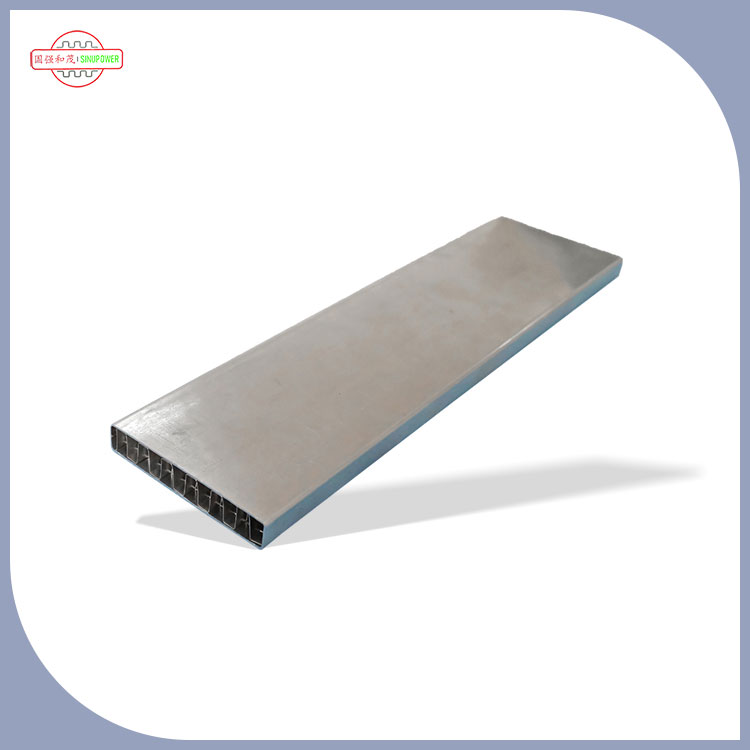
The Financial Impact of Thermal Control
The influence of Energy Storage Thermal Management Tubes on LCOS can be categorized into three primary financial drivers: capital expenditure (CAPEX) reduction, operational expenditure (OPEX) minimization, and enhanced revenue generation through longevity. Traditional air-cooling systems often struggle with thermal uniformity, leading to “hot spots” that accelerate capacity fade. In contrast, liquid-cooled thermal management tubes provide precise, uniform temperature control.
| Financial Factor | Influence of Thermal Management Tubes | Impact on LCOS |
|---|---|---|
| System Longevity | Maintains cells within optimal temperature ranges (25-35°C), reducing degradation rates by up to 30%. | Lower due to extended asset life and delayed repowering costs. |
| Energy Efficiency | Reduces parasitic load; liquid pumping consumes less energy than high-velocity air fans for large-scale cooling. | Lower due to reduced auxiliary power consumption during operation. |
| Safety & Downtime | Prevents thermal runaway propagation, significantly lowering insurance premiums and unplanned downtime risks. | Lower due to minimized risk of catastrophic failure and business interruption. |
| Installation Density | Allows for higher energy density containers (e.g., 20ft containers with 5+MWh), reducing civil works and land costs. | Lower due to improved CAPEX efficiency per megawatt-hour deployed. |
Engineering Efficiency for Grid-Scale Economics
To achieve a competitive LCOS, utility-scale projects require components engineered for reliability over 15-to-20-year lifespans. Sinupower specializes in high-performance aluminum multi-port extruded tubes and serpentine cooling plates that maximize surface area contact with prismatic or pouch cells. The thermal conductivity of these solutions ensures that the delta-T (temperature differential) across the entire battery rack remains under 3°C. This uniformity is critical; for every 10°C increase in operating temperature, the electrochemical degradation rate of lithium-ion cells approximately doubles. By stabilizing these temperatures, Energy Storage Thermal Management Tubes effectively decouple the battery’s chemical aging from environmental stressors, ensuring that the asset achieves its projected cycle life.
Frequently Asked Questions: Energy Storage Thermal Management Tubes
What is the primary mechanism by which thermal management tubes reduce LCOS compared to traditional air cooling?
The primary mechanism is thermal uniformity and heat rejection efficiency. Traditional air cooling relies on convection, which often creates temperature gradients between cells at the front and back of a rack, leading to inconsistent aging. Energy Storage Thermal Management Tubes utilize liquid cooling with high thermal mass. By routing coolant directly adjacent to cell surfaces (via cold plates or wrap-around tubes), they achieve a heat transfer coefficient 10 to 15 times higher than forced air. This precision prevents accelerated degradation in “weak” cells, ensuring the entire battery string ages at the same rate. Consequently, the system avoids premature end-of-life triggered by the weakest cell, directly lowering the LCOS by extending the usable life of the entire asset by 2 to 4 years.
How do thermal management tubes affect the parasitic energy consumption of a 100MWh grid storage facility?
In a 100MWh facility, parasitic loads represent a significant operational expense. Energy Storage Thermal Management Tubes typically reduce parasitic energy consumption by 30% to 50% compared to air-cooled alternatives. This efficiency gain stems from the thermodynamic principle that liquid is approximately 3,500 times more efficient at transferring heat than air. Therefore, while air systems require high-speed fans running continuously during peak loads, liquid systems using tubes can operate with variable-speed pumps that run at lower average speeds. For a utility-scale project, this reduction in auxiliary power translates directly to higher round-trip efficiency (RTE), meaning more megawatt-hours are sold back to the grid rather than consumed by the facility’s own cooling infrastructure.
What design specifications should developers look for to ensure thermal management tubes support high C-rate applications?
For high C-rate applications (such as frequency regulation requiring 2C to 4C discharge), developers must prioritize pressure drop optimization and burst strength. Energy Storage Thermal Management Tubes used in these scenarios must feature multi-channel or micro-channel geometries to maximize surface area while minimizing hydraulic resistance. At Sinupower, we recommend tubes manufactured from 3003 or 6063 aluminum alloys with a minimum wall thickness capable of withstanding system pressures up to 10 bar. Additionally, the tube-to-header joint integrity is critical; developers should look for brazed assemblies that guarantee leak-proof performance under thermal cycling. A robust design ensures that even during rapid charge/discharge events—which generate peak thermal loads—the cooling system maintains temperature stability without risking leakage, which is a leading cause of system downtime.
Maximizing ROI Through Strategic Integration
Beyond the hardware, the integration strategy of Energy Storage Thermal Management Tubes influences LCOS through simplified maintenance. Modular tube designs allow for individual component replacement without draining the entire coolant loop or disassembling the entire rack. This serviceability reduces mean time to repair (MTTR) from days to hours. For utility-scale operators, every hour of downtime represents lost revenue. By utilizing corrosion-resistant materials and standardized connection interfaces, Sinupower ensures that the thermal management system contributes to uptime guarantees exceeding 98%.
Conclusion
In the competitive landscape of utility-scale energy storage, the battle to lower LCOS is won through meticulous thermal engineering. Energy Storage Thermal Management Tubes are not merely ancillary components; they are strategic assets that dictate financial performance. By enhancing safety, ensuring thermal uniformity, and drastically reducing parasitic loads, these systems enable developers to bid lower prices in capacity markets while securing higher returns over the asset’s lifecycle.
Contact us today to speak with our engineering team about optimizing your next utility-scale project. At Sinupower, we provide customized thermal management solutions designed to maximize your ROI and ensure operational excellence for the decades to come.