

How Do Stainless Steel Condenser Pipes Support Stable Heat Exchange Performance in Industrial Cooling Systems?
2025-12-17
Stainless steel condenser pipes are critical components widely used in industrial heat exchange, power generation, petrochemical processing, HVAC systems, refrigeration units, desalination plants, and marine engineering. Their primary role is to facilitate efficient thermal transfer by allowing hot vapor or fluid to release heat and condense into a liquid state while maintaining structural integrity under demanding operating conditions.
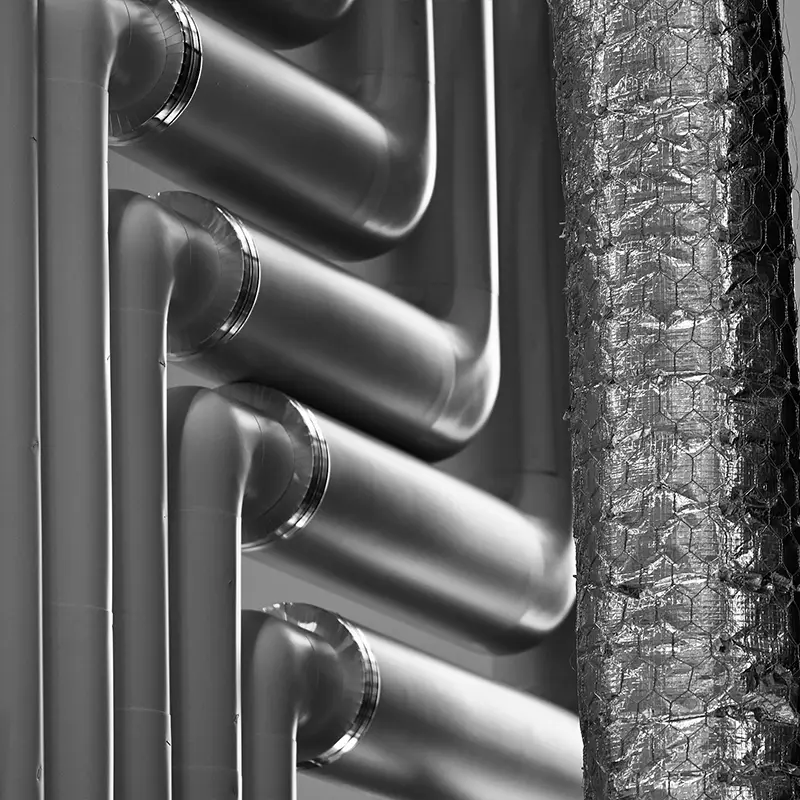
Manufactured using high-grade stainless steel alloys, condenser pipes are engineered to withstand continuous exposure to high temperatures, fluctuating pressures, and corrosive media such as seawater, chemical vapors, or treated industrial fluids. Their internal surface smoothness, wall thickness consistency, and metallurgical composition directly influence heat transfer efficiency and system lifecycle cost.
Typical Product Parameters of Stainless Steel Condenser Pipes
| Parameter Category | Common Specifications |
|---|---|
| Material Grades | ASTM A249 TP304, TP304L, TP316, TP316L |
| Outer Diameter Range | 12.7 mm – 50.8 mm |
| Wall Thickness | 0.7 mm – 2.5 mm |
| Length Options | Fixed lengths or custom-cut |
| Manufacturing Process | Cold drawn, solution annealed |
| Surface Finish | Bright annealed, pickled |
| Heat Transfer Compliance | ASME, ASTM, EN standards |
| Operating Temperature | Up to 600°C (grade dependent) |
| Pressure Rating | Engineered per system design |
The central objective of stainless steel condenser pipes is to maintain consistent thermal conductivity while resisting deformation, scaling, and internal fouling over extended service periods. This balance between mechanical strength and thermal responsiveness makes stainless steel a preferred material choice across industries that require predictable performance and regulatory compliance.
How Do Stainless Steel Condenser Pipes Perform Under Continuous Thermal and Mechanical Stress?
Industrial condenser systems operate under cycles of heating, cooling, pressurization, and depressurization. Stainless steel condenser pipes are specifically designed to handle these stresses without compromising dimensional stability or surface integrity.
The metallurgical structure of stainless steel allows for controlled thermal expansion, reducing the risk of cracking or joint fatigue during temperature fluctuations. Austenitic stainless steel grades, in particular, exhibit high ductility and toughness, which are essential when pipes are subjected to vibration or rapid load changes.
Internally, the smooth bore of stainless steel condenser pipes minimizes turbulence-induced erosion while supporting steady fluid flow. This internal consistency contributes to stable heat exchange coefficients, ensuring predictable system output over time. Externally, resistance to oxidation and environmental corrosion protects the pipe surface in both indoor and outdoor installations.
From a system design perspective, stainless steel condenser pipes integrate effectively with tube sheets, baffles, and shell components. Their weldability and formability allow precise assembly without introducing stress concentrations that could shorten service life.
Common Questions About Stainless Steel Condenser Pipe Performance
Q: How do stainless steel condenser pipes maintain efficiency over long-term operation?
A: Efficiency is maintained through corrosion resistance, stable thermal conductivity, and smooth internal surfaces that reduce fouling and scaling. These characteristics slow performance degradation and reduce the frequency of cleaning or replacement.
Q: How do operating conditions influence material grade selection for condenser pipes?
A: Grade selection depends on fluid composition, operating temperature, pressure, and environmental exposure. For example, TP316L is often selected for chloride-rich environments, while TP304 is suitable for general industrial cooling applications with controlled water chemistry.
By addressing thermal, mechanical, and chemical stress factors simultaneously, stainless steel condenser pipes provide a reliable foundation for condenser systems operating in both steady-state and variable-load conditions.
How Are Stainless Steel Condenser Pipes Integrated Into Evolving Industrial Systems?
As industrial systems evolve toward higher efficiency and stricter regulatory oversight, condenser pipe specifications are becoming increasingly precise. Stainless steel condenser pipes are now expected to meet tighter dimensional tolerances, enhanced surface quality requirements, and traceable quality documentation.
Modern fabrication processes such as cold drawing and solution annealing refine grain structure and improve mechanical uniformity. These processes support consistent heat transfer behavior across large-scale installations, such as power plants or chemical processing facilities, where thousands of pipes may be installed simultaneously.
In addition, compatibility with automated monitoring systems is becoming more relevant. Stainless steel’s material stability supports accurate temperature and pressure sensor readings, which are essential for predictive maintenance and system optimization strategies.
From an engineering standpoint, stainless steel condenser pipes are increasingly specified in modular system designs. Their predictable behavior simplifies simulation modeling and reduces uncertainty during system commissioning. This predictability aligns with industry trends emphasizing lifecycle cost analysis rather than initial procurement cost alone.
Environmental considerations also influence material selection. Stainless steel is fully recyclable and supports compliance with sustainability targets adopted by many industrial operators. Its long service life reduces material turnover and associated downtime, contributing to more stable operational planning.
How Do Stainless Steel Condenser Pipes Fit Into Long-Term Industry Development?
Looking ahead, stainless steel condenser pipes are expected to remain a core component in industrial thermal systems due to their adaptability to new operating environments. As industries adopt higher-efficiency cooling cycles, alternative refrigerants, and closed-loop water systems, material reliability becomes increasingly critical.
Emerging applications such as renewable energy plants, waste heat recovery systems, and advanced marine cooling solutions place new demands on condenser components. Stainless steel’s resistance to mixed-media corrosion and thermal fatigue positions it well for these applications.
Standardization trends are also shaping future requirements. Global alignment of ASTM, EN, and ASME standards simplifies cross-border project execution and procurement. Stainless steel condenser pipes manufactured to these standards support international project scalability without extensive redesign.
In this context, manufacturers with consistent quality control, material traceability, and customization capability become essential partners in industrial supply chains. Stainless steel condenser pipes supplied for modern projects are no longer viewed as interchangeable commodities but as engineered components contributing to overall system reliability.
Shuangsen Pipes operates within this framework by focusing on material consistency, dimensional accuracy, and compliance with recognized international standards. Stainless steel condenser pipes supplied under the Shuangsen Pipes brand are designed to integrate seamlessly into diverse condenser system architectures across multiple industries.
For detailed technical consultation, specification alignment, or project-specific inquiries, interested parties are encouraged to contact us to discuss application requirements and supply capabilities.