

How Do Stainless Steel Ball Valves Work?
2026-06-22
Abstract
Stainless steel ball valves are widely used in industrial piping systems for their durability, corrosion resistance, and reliable shut-off performance. This article explains how these valves work, their internal structure, key advantages, and how to select the right type for different applications. It also addresses common operational challenges and maintenance practices to help users extend service life and reduce system downtime.
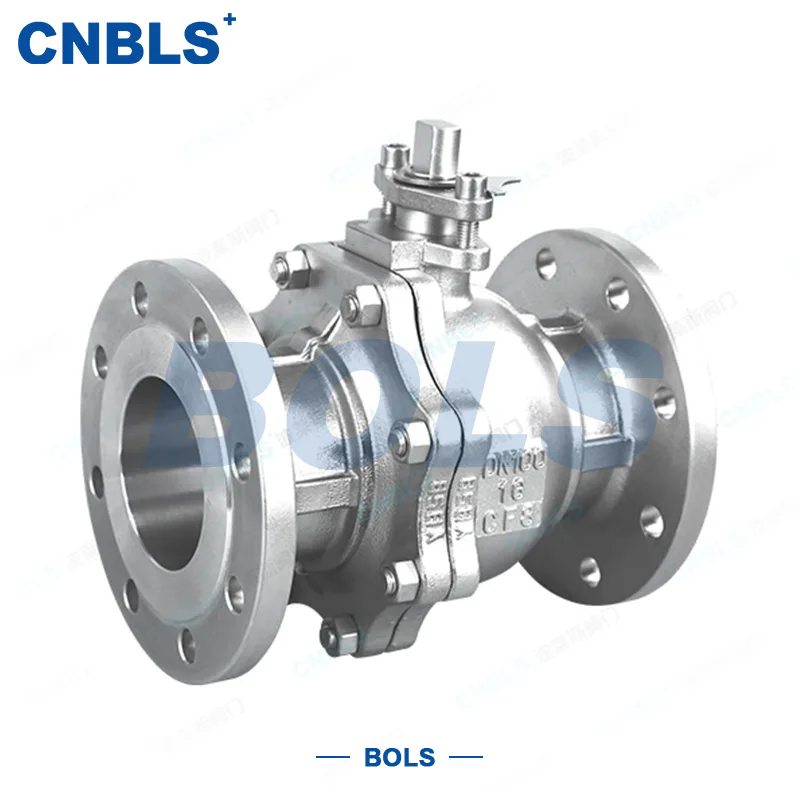
Table of Contents
- 1. Introduction
- 2. What Are Stainless Steel Ball Valves?
- 3. Working Principle
- 4. Key Components
- 5. Types of Stainless Steel Ball Valves
- 6. Applications
- 7. Benefits
- 8. Selection Guide
- 9. Maintenance Tips
- 10. Common Problems & Solutions
- 11. FAQ
- 12. Conclusion
1. Introduction
In modern fluid control systems, reliability and precision are essential. Among the many types of industrial valves, stainless steel ball valves stand out for their simple structure and high-performance sealing capability. They are widely used in industries such as oil and gas, chemical processing, water treatment, and food production.
Their ability to provide fast shut-off and minimal pressure drop makes them a preferred choice in both high-pressure and corrosive environments.
2. What Are Stainless Steel Ball Valves?
A stainless steel ball valve is a quarter-turn valve that uses a hollow, perforated, and pivoting ball to control fluid flow. When the ball’s hole aligns with the pipeline, fluid flows freely. When rotated 90 degrees, the flow is completely blocked.
Stainless steel construction ensures excellent resistance to corrosion, high temperature, and mechanical stress, making these valves suitable for demanding industrial conditions.
- Body material: Typically SS304 or SS316
- Operation: Manual, pneumatic, or electric
- Function: On/off flow control
3. Working Principle
The working principle of stainless steel ball valves is based on rotational motion. A stem connected to the ball allows a 90-degree turn operation.
Flow Control Process:
- Open position: Ball hole aligned with pipeline → fluid passes through
- Closed position: Solid side blocks flow → complete shut-off
This simple mechanism reduces wear and tear and provides excellent sealing performance even after repeated cycles.
4. Key Components
The efficiency of a stainless steel ball valve depends on its structural components:
- Valve body: Main pressure-containing structure
- Ball: Controls flow direction
- Stem: Connects actuator or handle to the ball
- Seats: Provide sealing between ball and body
- Seals & O-rings: Prevent leakage
Each component plays a critical role in ensuring leak-proof and stable operation.
5. Types of Stainless Steel Ball Valves
| Type | Description | Best Use Case |
|---|---|---|
| Floating Ball Valve | Ball is not fixed; pressure pushes it against seat | Low to medium pressure systems |
| Trunnion Mounted Valve | Ball is anchored for stability | High-pressure pipelines |
| 2-Way Valve | Standard on/off flow control | General industrial use |
| 3-Way Valve | Diverts flow between different paths | Mixing or distribution systems |
6. Applications
Stainless steel ball valves are used across multiple industries due to their adaptability and corrosion resistance.
- Oil and gas transmission systems
- Chemical processing plants
- Water treatment facilities
- Food and beverage production lines
- Pharmaceutical manufacturing
Their hygienic properties also make them suitable for sanitary applications where contamination control is critical.
7. Benefits
- Excellent sealing: Minimal leakage risk
- Durability: Long service life under harsh conditions
- Fast operation: Quarter-turn opening/closing
- Low maintenance: Simple internal structure
- Corrosion resistance: Suitable for aggressive media
These advantages make them a cost-effective solution for long-term industrial use.
8. Selection Guide
Choosing the right stainless steel ball valve depends on several technical factors:
- Pressure rating: Ensure compatibility with system pressure
- Temperature range: Match material grade to operating temperature
- Media type: Consider corrosive or viscous fluids
- End connection: Threaded, flanged, or welded
- Automation needs: Manual or actuator-driven
Proper selection reduces operational risks and improves system efficiency.
9. Maintenance Tips
- Regularly inspect seals and seats for wear
- Operate valve periodically to prevent sticking
- Clean internal components in contaminated environments
- Check actuator alignment in automated systems
- Avoid exceeding pressure and temperature limits
Preventive maintenance significantly extends valve lifespan and reduces unexpected downtime.
10. Common Problems & Solutions
| Problem | Possible Cause | Solution |
|---|---|---|
| Leakage | Worn seat or seal damage | Replace sealing components |
| Stiff operation | Debris inside valve | Clean and lubricate internal parts |
| Corrosion | Incompatible media or material grade | Upgrade to higher-grade stainless steel |
| Incomplete shut-off | Misalignment or wear | Inspect ball and stem alignment |
11. FAQ
Q1: Why choose stainless steel ball valves over other valve types?
They provide superior corrosion resistance, fast operation, and reliable sealing performance.
Q2: Can they be used in high-temperature applications?
Yes, depending on the stainless steel grade and seal material used.
Q3: How long do they typically last?
With proper maintenance, they can last many years even in harsh environments.
Q4: Are they suitable for automated systems?
Yes, they can be integrated with electric or pneumatic actuators.
12. Conclusion
Stainless steel ball valves play a crucial role in ensuring safe, efficient, and reliable fluid control across industries. Their robust design, ease of operation, and resistance to harsh environments make them a preferred choice for engineers and system designers.
For high-quality solutions and customized valve systems, Bolaisi provides professional-grade stainless steel ball valves designed to meet diverse industrial requirements.
If you are looking for dependable performance and long-term value, contact us today to discuss your project needs and get expert support from our technical team.