Article Summary
Roller Guide Rails are essential linear motion components designed to provide smooth, accurate, and stable movement for automated equipment, CNC machines, industrial robots, and precision systems. As manufacturers continue to demand higher productivity, lower maintenance costs, and improved positioning accuracy, selecting the right guide rail system has become a critical decision.
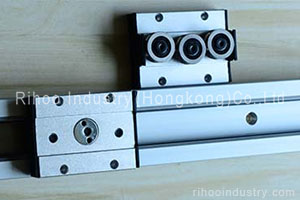
This article explains how Roller Guide Rails work, why they are important, what challenges they solve, and how businesses can choose the right solution for their applications. It also explores common problems caused by poor-quality guide systems and how professional suppliers such as Rihoo Industry (Hongkong) Co.,Limited provide reliable solutions for modern industrial needs.
Article Outline
-
Understanding the structure and operating principles of Roller Guide Rails
-
Analyzing the benefits of using high-quality linear guide systems
-
Identifying common industrial motion problems and solutions
-
Choosing suitable Roller Guide Rails according to application requirements
-
Exploring industrial uses and maintenance methods
What Are Roller Guide Rails?
Roller Guide Rails are precision mechanical components used to control linear movement with high stability and accuracy. Unlike traditional sliding systems that rely on surface contact, Roller Guide Rails use rolling elements such as cylindrical rollers or rollers inside guide blocks to reduce friction during movement.
The main structure usually consists of a hardened rail, a roller carriage, rolling elements, sealing components, and lubrication systems. When the carriage moves along the rail, the rollers distribute loads evenly, allowing equipment to achieve smooth movement while maintaining excellent positioning accuracy.
In industrial environments where machines operate continuously, even small movement errors can affect production quality. Roller Guide Rails help reduce vibration, improve repeatability, and support heavier loads, making them suitable for demanding manufacturing conditions.
How Do Roller Guide Rails Work?
The operating principle of Roller Guide Rails is based on rolling friction. When external force drives the moving component, the roller carriage travels along the fixed rail while the rollers rotate between the contact surfaces.
This rolling motion creates several advantages compared with conventional sliding mechanisms:
-
Lower friction resistance during operation
-
Higher movement accuracy and repeatability
-
Reduced energy consumption
-
Better load distribution
-
Longer operating lifespan
The precision design of the rail and roller system ensures that machines can maintain stable performance even under high-speed operation or heavy working conditions.
Why Are Roller Guide Rails Important for Industrial Equipment?
Modern manufacturing requires equipment that can operate faster while maintaining consistent quality. Any instability in linear movement may result in inaccurate machining, product defects, or unexpected downtime.
High-performance Roller Guide Rails provide several important benefits:
|
Benefit
|
Industrial Value
|
|
High positioning accuracy
|
Ensures precise movement for automated and machining systems
|
|
Large load capacity
|
Supports heavy equipment components and industrial applications
|
|
Low friction operation
|
Improves efficiency and reduces energy loss
|
|
Excellent durability
|
Extends equipment service life and reduces replacement frequency
|
|
Smooth motion performance
|
Reduces vibration and improves product quality
|
For companies investing in automation and precision manufacturing, selecting dependable guide rail components is an effective way to improve machine reliability.
What Problems Can Roller Guide Rails Solve?
Many industrial equipment failures are related to unstable linear motion systems. Poor-quality guide components may create operational challenges that affect production efficiency.
1. Reducing Mechanical Vibration
Excessive vibration can damage machine structures and reduce machining accuracy. Roller Guide Rails provide stable support and controlled movement, helping equipment maintain smoother operation.
2. Improving Positioning Accuracy
In industries such as semiconductor manufacturing, automation, and CNC machining, accurate positioning is essential. Precision guide rails help achieve repeatable movement and minimize positioning errors.
3. Increasing Equipment Reliability
Frequent maintenance and component replacement increase operational costs. Durable Roller Guide Rails reduce wear and provide consistent performance over extended periods.
4. Supporting Heavy Loads
Some industrial systems require linear motion components capable of handling significant loads. Roller-based designs provide strong load capacity while maintaining smooth movement.
How to Select the Right Roller Guide Rails?
Choosing the correct Roller Guide Rails requires careful consideration of machine requirements, operating conditions, and performance expectations.
|
Selection Factor
|
Important Considerations
|
|
Load capacity
|
Determine static and dynamic loads during operation
|
|
Accuracy requirement
|
Select according to positioning precision needs
|
|
Operating environment
|
Consider dust, temperature, moisture, and contamination
|
|
Speed requirement
|
Match guide rail performance with machine movement speed
|
|
Installation space
|
Choose suitable dimensions for equipment design
|
Working with an experienced manufacturer helps companies avoid incorrect selections that may lead to performance issues. Rihoo Industry (Hongkong) Co.,Limited focuses on providing reliable Roller Guide Rails solutions designed for different industrial applications.
Main Applications of Roller Guide Rails
Due to their accuracy and durability, Roller Guide Rails are widely used across many industries.
-
CNC machining equipment: Provides accurate movement for cutting, drilling, and grinding operations.
-
Industrial automation: Supports robotic arms, assembly lines, and automated production systems.
-
Electronic manufacturing: Ensures precise positioning in sensitive production environments.
-
Medical equipment: Enables smooth and reliable movement in precision devices.
-
Packaging machinery: Improves operational speed and repeatability.
-
Inspection equipment: Maintains accurate movement for testing and measurement systems.
Roller Guide Rails vs Other Linear Motion Systems
|
Feature
|
Roller Guide Rails
|
Traditional Sliding Systems
|
|
Friction
|
Low rolling friction
|
Higher sliding friction
|
|
Accuracy
|
Excellent precision performance
|
May experience greater wear over time
|
|
Load capability
|
Suitable for heavy-duty applications
|
Limited in demanding conditions
|
|
Maintenance
|
Requires proper lubrication and inspection
|
Often requires more frequent adjustment
|
For industries requiring high precision and continuous operation, Roller Guide Rails provide a more advanced solution for modern motion control systems.
Maintenance Tips for Longer Service Life
Proper maintenance helps Roller Guide Rails maintain stable performance and prevents unexpected equipment downtime.
-
Regularly check lubrication conditions
-
Keep guide rails clean and protected from contaminants
-
Inspect abnormal noise or vibration during operation
-
Confirm installation alignment and fastening conditions
-
Replace damaged seals or worn components promptly
A preventive maintenance strategy not only extends component lifespan but also improves overall machine productivity.
Frequently Asked Questions
Q1: What is the main purpose of Roller Guide Rails?
Roller Guide Rails are designed to provide smooth, accurate, and stable linear movement for industrial machinery and automation systems.
Q2: Why are Roller Guide Rails better for heavy-load applications?
The roller contact structure distributes loads efficiently, allowing the system to handle higher forces while maintaining smooth operation.
Q3: How can Roller Guide Rails improve machine performance?
They reduce friction, minimize vibration, improve positioning accuracy, and help machines operate more efficiently.
Q4: How often should Roller Guide Rails be maintained?
Maintenance frequency depends on working conditions, operating speed, load levels, and environmental factors. Regular inspection is recommended for continuous industrial operation.
Q5: Why choose Rihoo Industry (Hongkong) Co.,Limited for Roller Guide Rails?
Rihoo Industry (Hongkong) Co.,Limited provides professional linear motion solutions with attention to precision, reliability, and industrial application requirements, helping customers improve equipment performance and operational stability.
Conclusion
Roller Guide Rails play an essential role in improving industrial equipment accuracy, efficiency, and reliability. From CNC machinery to automated production systems, high-quality guide rail solutions help manufacturers overcome challenges related to vibration, positioning errors, maintenance costs, and productivity limitations.
Selecting the right guide rail system requires professional knowledge, precise specifications, and reliable manufacturing support. With advanced solutions from Rihoo Industry (Hongkong) Co.,Limited, businesses can achieve smoother motion control and stronger equipment performance.
If you are looking for dependable Roller Guide Rails customized for your industrial requirements, please contact us today to discuss your application needs and find the ideal linear motion solution.