

How Do Optic Gyroscopes Work and Why Are They Critical in Navigation?
2026-01-06
Abstract: Optic gyroscopes are advanced navigation devices widely used in aerospace, maritime, and industrial applications. This article provides a detailed overview of optic gyroscopes, explores their operational principles, technical specifications, and applications, and addresses the most frequently asked questions about this technology. By the end of this article, readers will understand how optic gyroscopes enhance navigation precision and reliability.
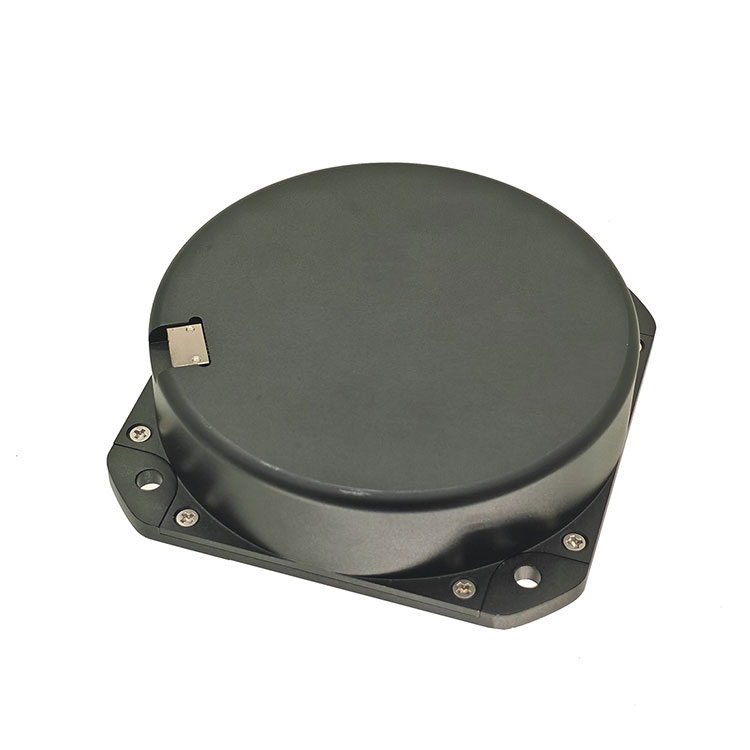
Table of Contents
- Introduction to Optic Gyroscopes
- How Optic Gyroscopes Work
- Applications and Industry Uses
- Frequently Asked Questions
- Conclusion and Brand Information
1. Introduction to Optic Gyroscopes
Optic gyroscopes, also known as fiber optic gyroscopes (FOGs), are precision instruments that measure angular velocity or rotational movement using the principles of light interference. Unlike traditional mechanical gyroscopes, optic gyroscopes contain no moving parts, which allows for higher durability, stability, and accuracy in a wide range of environments.
This article aims to provide a comprehensive understanding of optic gyroscopes by examining their operational principles, technical specifications, applications, and frequently asked questions. By focusing on how these devices operate and why they are critical, readers will gain insight into their value in modern navigation systems.
Technical Parameters of a Typical Optic Gyroscope
| Parameter | Specification |
|---|---|
| Type | Fiber Optic Gyroscope (FOG) |
| Angular Random Walk | 0.001°/√h |
| Bias Stability | 0.01°/h |
| Operating Temperature Range | -40°C to 70°C |
| Input Voltage | 24V DC |
| Weight | 1.5 kg |
| Dimensions | 150mm x 120mm x 100mm |
| Interface | RS-422 / CAN / Ethernet |
2. How Optic Gyroscopes Work
Optic gyroscopes operate based on the Sagnac effect, a principle in physics where a beam of light splits into two paths and travels in opposite directions along a closed loop. When the gyroscope rotates, the travel times of the light beams differ slightly, producing a phase shift. This phase shift is then measured and converted into angular velocity.
Key steps in optic gyroscope operation include:
- Light Generation: A laser source generates coherent light, which is split into two beams.
- Propagation: The two light beams travel in opposite directions within a coiled optical fiber.
- Interference: When recombined, the beams create an interference pattern that shifts proportionally to the rotation rate.
- Signal Processing: The phase shift is detected by photodetectors and processed using specialized algorithms to calculate angular velocity.
The precision of optic gyroscopes is influenced by the quality of the optical fiber, the coherence of the laser source, and environmental factors such as temperature and vibration. The absence of moving parts significantly reduces mechanical wear and enhances long-term reliability.
3. Applications and Industry Uses
Optic gyroscopes are widely used in sectors where precise navigation and orientation are critical:
Aerospace Navigation
Aircraft and spacecraft rely on fiber optic gyroscopes to maintain accurate orientation without dependence on GPS signals, especially in environments where satellite communication is limited or unavailable.
Marine and Submarine Navigation
Ships and submarines use optic gyroscopes to track heading and position underwater, ensuring safe and precise navigation during long voyages or in complex waterways.
Autonomous Vehicles
Advanced driver-assistance systems (ADAS) and autonomous vehicles integrate optic gyroscopes to enhance vehicle stability, route tracking, and orientation awareness, improving overall safety and navigation accuracy.
Industrial Applications
Optic gyroscopes are applied in robotics, precision machinery, and surveying equipment to monitor angular displacement and improve operational accuracy in challenging industrial environments.
4. Frequently Asked Questions about Optic Gyroscopes
Q1: How accurate are optic gyroscopes compared to traditional mechanical gyroscopes?
A1: Optic gyroscopes are generally more accurate than mechanical gyroscopes due to the absence of moving parts. This design minimizes friction-induced errors, mechanical wear, and drift over time. High-end FOGs can achieve bias stability of 0.01°/h and angular random walk as low as 0.001°/√h.
Q2: Can optic gyroscopes function without GPS?
A2: Yes. One of the primary advantages of optic gyroscopes is their ability to provide precise navigation data independently of GPS. This makes them suitable for aerospace, maritime, and military applications where GPS signals may be weak or jammed.
Q3: What are the main limitations of optic gyroscopes?
A3: While highly precise, optic gyroscopes are sensitive to temperature variations and require careful calibration. They are also more expensive than traditional mechanical gyroscopes, which may limit their use in cost-sensitive applications.
5. Conclusion and Brand Information
Optic gyroscopes remain a cornerstone technology in modern navigation, offering unparalleled precision and reliability in multiple industries. With advanced fiber optic designs, they overcome the limitations of traditional mechanical gyroscopes, providing stable performance in extreme environments.
JioptiK is a leading provider of optic gyroscope solutions, combining innovation with decades of engineering expertise to deliver reliable navigation systems for aerospace, maritime, and industrial applications. To explore how JioptiK’s optic gyroscopes can enhance navigation accuracy in your operations, contact us today.