

How Do Lithography Machine Components Improve Semiconductor Manufacturing Precision?
2026-08-19
Article Summary
Lithography machine components are the foundation of modern semiconductor production, directly affecting accuracy, stability, and production efficiency. As chip manufacturers continue to pursue smaller feature sizes and higher performance, the demand for precision-engineered components has increased significantly. This article explains how lithography machine components work, why they are critical, what challenges manufacturers face when selecting these parts, and how professional machining solutions from Wu Hai help customers achieve reliable performance in advanced semiconductor equipment applications.
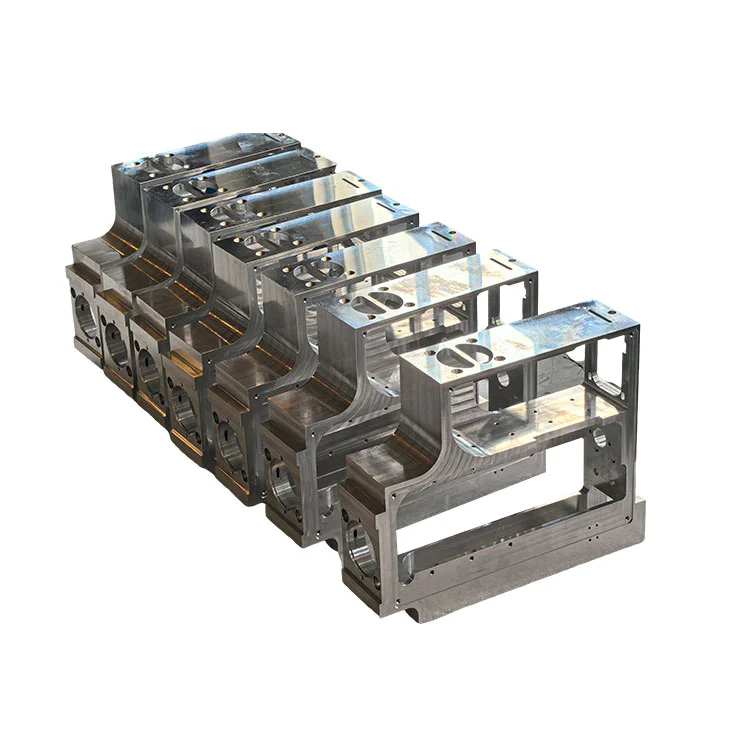
Table of Contents
- Why Are Lithography Machine Components Important?
- What Challenges Do Manufacturers Face in Lithography Component Production?
- How Does Precision Manufacturing Improve Lithography Performance?
- Which Materials Are Commonly Used for Lithography Machine Components?
- How Can Companies Choose the Right Lithography Machine Component Supplier?
- Where Are Lithography Machine Components Applied?
- Frequently Asked Questions About Lithography Machine Components
Why Are Lithography Machine Components Important?
The semiconductor industry depends on extreme precision. Every integrated circuit, microprocessor, memory chip, and advanced electronic device requires multiple manufacturing processes where accuracy determines final product quality. Among these processes, lithography is one of the most critical stages because it transfers microscopic patterns onto semiconductor wafers.
A lithography machine contains thousands of carefully designed parts that must work together with exceptional stability. Lithography machine components include structural parts, precision mechanical assemblies, positioning elements, optical support components, vacuum-related parts, and customized metal components. Even a small deviation in machining accuracy or surface quality can influence alignment performance and reduce manufacturing yield.
High-quality components help lithography equipment maintain:
- Ultra-high positioning accuracy during wafer exposure
- Long-term operational stability under continuous production conditions
- Reduced vibration and thermal deformation
- Improved equipment reliability and service life
- Consistent semiconductor production quality
For semiconductor equipment manufacturers, selecting dependable component suppliers is not only a purchasing decision but also a key factor affecting overall machine performance. Companies need manufacturing partners that understand strict tolerances, advanced materials, and complex machining requirements.
What Challenges Do Manufacturers Face in Lithography Component Production?
Producing lithography machine components requires much more than conventional machining. These components often need extremely tight dimensional control, excellent surface finishes, and outstanding mechanical stability. Manufacturers must overcome several technical challenges during production.
- Extremely tight tolerances: Lithography equipment operates at microscopic levels, requiring components to meet highly accurate dimensional specifications.
- Complex geometries: Many parts contain intricate structures, fine holes, special curves, or difficult-to-machine surfaces.
- Material difficulties: Advanced materials such as aluminum alloys, stainless steel, titanium, and special engineering materials may require specialized machining processes.
- Clean manufacturing requirements: Semiconductor-related components must avoid contamination that could affect wafer processing.
- Thermal and mechanical stability: Components must maintain performance despite temperature changes and continuous operation.
A supplier without sufficient machining experience may produce parts that appear acceptable but fail during actual equipment operation. Issues such as inaccurate dimensions, poor surface treatment, or insufficient structural strength can create costly downtime and production losses.
Wu Hai focuses on precision manufacturing solutions for advanced industrial applications, helping customers address these challenges through professional machining capabilities and strict quality management processes.
How Does Precision Manufacturing Improve Lithography Performance?
Precision manufacturing plays a decisive role in improving lithography machine performance. Since lithography systems require extremely accurate movement and alignment, every component must meet strict engineering requirements.
Advanced machining technologies allow manufacturers to produce components with:
- High dimensional accuracy
- Excellent repeatability
- Low surface roughness
- Stable mechanical properties
- Reliable assembly compatibility
Computer numerical control (CNC) machining, precision grinding, surface finishing, and advanced inspection technologies are commonly used during lithography component production. These processes ensure that each part matches the original design requirements.
For example, positioning components inside lithography equipment must maintain accurate movement without unwanted deviation. If a component experiences excessive tolerance variation, it may affect exposure accuracy and create defects on semiconductor wafers.
Precision manufacturing also improves maintenance efficiency. Components produced with consistent quality are easier to replace, integrate, and maintain, reducing equipment downtime and helping manufacturers achieve continuous production.
Which Materials Are Commonly Used for Lithography Machine Components?
Material selection is a major factor in lithography component performance. Different applications require different combinations of strength, weight, thermal stability, and corrosion resistance.
- Aluminum alloys: Lightweight, corrosion-resistant, and suitable for components requiring excellent dimensional stability.
- Stainless steel: Provides durability, strength, and resistance to harsh working environments.
- Titanium alloys: Used where high strength-to-weight ratio and superior performance are required.
- Ceramic materials: Suitable for applications requiring thermal stability and electrical insulation.
- Engineering plastics: Applied in special situations requiring low friction or chemical resistance.
The correct material choice depends on the component function, operating environment, and performance requirements. Professional suppliers must understand both machining characteristics and final application demands to provide suitable solutions.
How Can Companies Choose the Right Lithography Machine Component Supplier?
Selecting a reliable lithography machine component supplier is a critical decision for semiconductor equipment manufacturers. Because these components directly influence equipment accuracy and production stability, companies need partners with strong engineering capabilities, manufacturing experience, and consistent quality control.
A professional supplier should provide more than basic machining services. The ideal partner should understand the relationship between component design, manufacturing processes, material characteristics, and final equipment performance.
When evaluating a lithography machine component supplier, companies should consider the following factors:
- Advanced machining capability: The supplier should have modern CNC equipment and precision manufacturing technologies capable of producing complex components with strict tolerances.
- Engineering support: Experienced engineers can help optimize designs, select suitable materials, and improve manufacturing efficiency.
- Quality inspection procedures: Professional inspection equipment and detailed quality management systems ensure that every component meets customer requirements.
- Customization ability: Semiconductor equipment often requires customized parts rather than standard products, so flexible production capability is essential.
- Industry experience: Suppliers familiar with precision industries can better understand demanding applications and provide effective solutions.
Wu Hai provides precision machining solutions for customers requiring high-performance lithography machine components. With attention to manufacturing details, material selection, and processing accuracy, Wu Hai helps customers develop components that meet demanding industrial requirements.
What Manufacturing Processes Are Used for Lithography Machine Components?
The production of lithography machine components involves multiple advanced manufacturing processes. Each process contributes to achieving the required accuracy, surface quality, and reliability.
- CNC Precision Machining: CNC technology enables manufacturers to produce complex structures with excellent dimensional accuracy and repeatability.
- Precision Grinding: Grinding improves surface quality and helps achieve extremely accurate dimensions for critical parts.
- Surface Treatment: Special surface processes improve wear resistance, corrosion resistance, and functional performance.
- Inspection and Measurement: Advanced measuring equipment verifies component accuracy before delivery.
- Prototype Manufacturing: Prototype machining allows customers to test designs and optimize performance before mass production.
A complete manufacturing process ensures that each component performs reliably in demanding semiconductor environments. From initial material preparation to final inspection, every stage affects the final quality of the product.
Where Are Lithography Machine Components Applied?
Lithography machine components are widely used throughout semiconductor manufacturing and related precision industries. Their applications extend beyond traditional chip production because many advanced technologies depend on highly accurate manufacturing systems.
Common application areas include:
- Semiconductor wafer fabrication: Precision components support wafer exposure equipment and ensure accurate pattern transfer.
- Integrated circuit production: Reliable mechanical parts help maintain stable manufacturing processes for advanced chips.
- Microelectronics manufacturing: Components are used in equipment producing sensors, electronic modules, and miniature devices.
- Research and development equipment: Precision parts support testing and development of next-generation semiconductor technologies.
- Optical and precision industries: Similar requirements exist in industries requiring accurate positioning and contamination control.
As semiconductor technology continues to advance, the requirements for lithography equipment become increasingly demanding. Smaller chip structures require better accuracy, higher stability, and more reliable component performance.
How Do High-Quality Lithography Components Reduce Production Risks?
In semiconductor manufacturing, unexpected equipment failures can result in significant financial losses. High-quality lithography machine components help reduce operational risks by improving equipment reliability and minimizing maintenance requirements.
Reliable components provide several advantages:
- Lower equipment downtime: Durable parts reduce unexpected failures and improve production continuity.
- Better product consistency: Accurate components help maintain stable wafer processing conditions.
- Reduced maintenance frequency: High-quality manufacturing extends component service life.
- Improved production efficiency: Stable equipment operation allows manufacturers to achieve higher productivity.
- Enhanced system reliability: Precision components support the overall performance of complex lithography systems.
For manufacturers operating in competitive semiconductor markets, improving equipment reliability is essential. Investing in quality components helps create a stronger foundation for long-term production success.
What Makes Wu Hai a Reliable Partner for Lithography Machine Components?
Wu Hai understands the demanding requirements of precision manufacturing industries. Producing lithography machine components requires careful attention to every detail, from material selection and machining accuracy to final inspection.
The company focuses on providing customized machining solutions designed around customer requirements. By combining manufacturing expertise with strict attention to quality, Wu Hai supports customers who need reliable components for advanced equipment applications.
Key advantages of working with Wu Hai include:
- Professional experience in precision component manufacturing
- Ability to handle complex customized component requirements
- Focus on accuracy, consistency, and production reliability
- Support from design evaluation to final manufacturing
- Commitment to meeting demanding industrial standards
For companies developing or maintaining semiconductor-related equipment, choosing an experienced manufacturing partner can improve product performance, shorten development cycles, and reduce production challenges.
Frequently Asked Questions About Lithography Machine Components
Q1: What are lithography machine components?
Lithography machine components are precision-engineered parts used inside lithography equipment for semiconductor manufacturing. They include mechanical structures, positioning parts, support components, and customized precision assemblies that help maintain accurate operation.
Q2: Why is precision important for lithography components?
Precision is important because lithography processes involve extremely small patterns and high-accuracy positioning. Even minor dimensional errors may affect exposure accuracy and reduce semiconductor production quality.
Q3: What materials are suitable for lithography machine components?
Common materials include aluminum alloys, stainless steel, titanium alloys, ceramics, and engineering plastics. The appropriate material depends on mechanical requirements, thermal conditions, and application environment.
Q4: Can lithography machine components be customized?
Yes. Many lithography components require customized designs based on equipment structure and performance requirements. Professional manufacturers can provide customized machining solutions according to drawings, specifications, and application needs.
Q5: How can manufacturers ensure component quality?
Manufacturers can ensure quality through advanced machining equipment, strict process control, professional measurement tools, and comprehensive inspection procedures throughout production.
Q6: What industries use lithography machine components?
These components are mainly used in semiconductor manufacturing, microelectronics, optical equipment, precision machinery, and research applications that require high accuracy and stability.
Conclusion: How Do Lithography Machine Components Support Future Semiconductor Development?
The continuous development of semiconductor technology requires manufacturing equipment with higher accuracy, greater stability, and stronger reliability. Lithography machine components play an essential role in meeting these requirements because they directly influence equipment performance, production efficiency, and final product quality.
As semiconductor manufacturers continue moving toward smaller structures, advanced packaging technologies, and more complex electronic applications, the importance of precision-engineered components will continue to increase. Components must maintain exceptional accuracy under demanding conditions while supporting continuous and stable operation.
Choosing an experienced manufacturing partner helps companies overcome challenges related to material selection, complex machining, strict tolerances, and customized requirements. With professional precision manufacturing capabilities, Wu Hai delivers reliable lithography machine component solutions designed to support advanced industrial applications.
Whether you need customized precision parts, complex machining services, or professional support for semiconductor equipment applications, Wu Hai is ready to provide dependable solutions that match your technical requirements.
Looking for high-quality lithography machine components with excellent precision and reliability? Contact us today to discuss your project requirements and discover how Wu Hai can support your next manufacturing challenge.