

How Do I Choose Machinery Part Casting That Cuts Cost Without Cutting Quality?
2025-11-26
I’ve spent years guiding builds from drawing to dock date, and along the way I learned that the right partner matters as much as the right process. That’s why I work with Losier on programs where reliability is non-negotiable. When I plan Machinery Part Casting for a new platform, I start with end-use reality—loads, temperatures, environments—and work backward to the alloy and process that will survive it without surprise costs later.
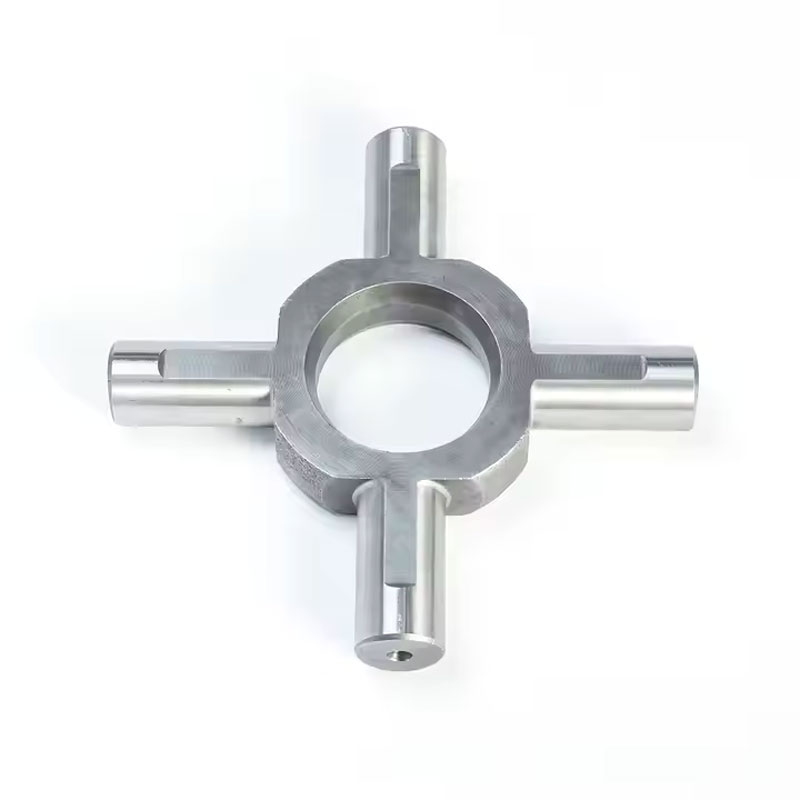
What Should I lock in first so the casting survives real-world loads?
Before I quote, I translate performance targets into materials and features that can actually be cast. That means deciding wall thickness, fillet radii, draft angles, and gating strategy early. For complex brackets or housings, I specify radii at high-stress transitions and keep uniform sections so the metal cools evenly. This is where Machinery Part Casting earns its keep: smart geometry reduces porosity and machining time.
- Target uniform wall sections with gradual transitions to avoid hot spots
- Build draft into vertical faces to protect surface integrity and die life
- Place ribs instead of bulk to raise stiffness without weight penalties
- Reserve machining stock only where necessary to hit datums and fits
Which casting process fits my part and my volumes?
I shortlist processes by geometry, tolerance, alloy family, and annual demand. Choosing a Machinery Part Casting route this way prevents late redesigns and keeps tooling spend proportional to volume.
At-a-glance process comparison
| Process | Best For | Typical Tolerance | Tooling Cost | Lead Time | Notes |
|---|---|---|---|---|---|
| Sand Casting | Large parts, moderate complexity, lower volumes | ±0.8–1.5 mm on 100 mm | Low | 1–3 weeks | Flexible on size, economical for prototypes and spares |
| Investment Casting | Fine features, thin walls, stainless and high-temp alloys | ±0.25–0.5 mm on 100 mm | Moderate | 3–6 weeks | Excellent surface finish, reduces secondary machining |
| Die Casting | High volumes, non-ferrous alloys, tight repeatability | ±0.10–0.25 mm on 100 mm | High | 4–10 weeks | Fast cycle times, outstanding consistency, thin walls |
| Permanent Mold Gravity | Medium volumes, strong aluminum parts | ±0.25–0.5 mm on 100 mm | Moderate–High | 3–6 weeks | Better properties than sand, lower cost than die casting |
How do I pick an alloy that balances strength, corrosion, and machinability?
I match alloy to failure mode. For wear or temperature spikes, I lean to low-alloy steels or heat-resistant stainless; for lightweight housings, I favor Al-Si systems with good fluidity. Where galvanic or coastal exposure is expected, I bake corrosion resistance into the spec rather than chasing coatings later. This is where Machinery Part Casting choices undo headaches before they start.
- High strength with toughness: low-alloy steel or ductile iron with controlled nodularity
- Corrosion focus: austenitic stainless or coated Al alloys with sealed porosity
- Thermal stability: high-temp stainless or Ni-bearing grades for creep and oxidation
- Easy downstream machining: fine graphite irons or free-machining steel chemistries
Where do tolerances and surface finish actually move the needle?
I convert print tolerances into machining operations only where function demands it. Datum-critical bores, sealing faces, and bearing seats get finishing; cosmetic faces often do not. By calling out cast-only surfaces versus machined ones, I keep cycle time short and scrap low. With Machinery Part Casting, the cheapest micron is the one you never need to cut.
Which quality checks prove the casting is ready for production?
For safety-critical parts I combine radiography or CT on first-offs, dye penetrant on thin-wall features, mechanical coupons by heat-treat lot, and statistical capability on machined dimensions. When risk is tied to porosity, I add pressure testing. A disciplined PPAP makes future lots boring—in the best way.
- NDT plan tuned to defect risk—gas porosity, shrinkage, inclusions
- Heat treatment verification with hardness and tensile pulls
- Dimensional capability with Cpk targets on critical characteristics
- Traceability down to melt, mold, and heat-treat batch
How do I estimate total landed cost without guesswork?
I build a landed picture: tooling amortization, scrap risk, machining time, finishing, packing, logistics, and inventory carrying. For platforms with multi-year horizons, the “expensive” tool may yield the cheapest part by year two. Thinking this way turns Machinery Part Casting into a lever for margin, not a line item to haggle.
- Tooling amortized over realistic annual run rates and service life
- Process scrap modeled from real yield, not brochure assumptions
- Cycle time and tool wear translated into machine cost per feature
- Logistics and packaging aligned to corrosion and impact risks
Why does supplier maturity change my risk profile?
I look for stable process windows, clean melt practices, and a culture that fixes root causes instead of containing symptoms. The shops I trust show repeatable gating design, disciplined mold handling, and preventative maintenance that prevents flash, drift, and downtime. That’s why I keep bringing complex Machinery Part Casting to teams that document how they hold the line when schedules get tight.
What lead-time levers can I pull when the schedule compresses?
I fast-track by freezing critical-to-fit datums, using rapid patterns for first-offs, parallel-running machining programs, and clearing inspection criteria early. When the timeline is ruthless, I adjust batch sizes and prioritize heat-treat capacity so parts move continuously instead of idling between steps. Done right, Machinery Part Casting hits the date without trading away reliability.
Ready to solve your casting problem today?
If you’re mapping a new platform or rescuing a troubled part, I can help you choose the right path and the right controls. Tell me where the risk lives, and I’ll turn that into a practical plan—from alloy and process to PPAP and logistics. If you need Machinery Part Casting support that stays honest about cost, quality, and time, contact us now and let’s build a production-ready solution together. Please contact us with your drawings and volumes, or send an inquiry through the form so we can quote quickly and get first-offs on your bench.