

How do I choose a Stud Link Offshore Mooring Chain that actually lowers risk?
2025-12-09
When I audit offshore mooring failures, patterns jump out long before metal does. Working with Zhoushan Zhongnan, I learned to frame decisions around proof—not promises—and to translate field constraints into practical specifications. In this guide I share how I decide whether a Stud Link Offshore Mooring Chain genuinely reduces operational risk while keeping total cost of ownership under control.
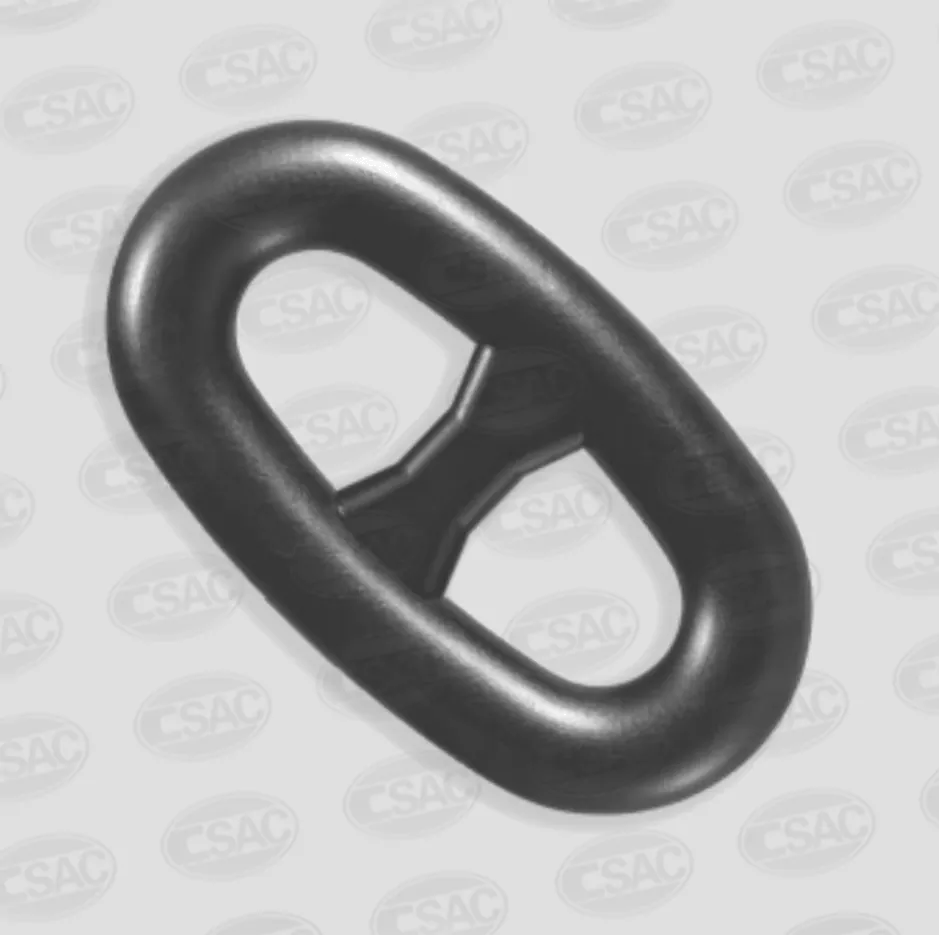
What makes a Stud Link Offshore Mooring Chain dependable in harsh seas?
I start with fundamentals and verify them with certificates and traceability. A dependable chain is not just about grade; it is about how consistently each link was formed, treated, and inspected.
- Material pedigree you can trace from melt to link, including mill test reports and heat numbers
- Controlled stud-to-side-plate fit to prevent stud loosening and link ovalization under cyclic loads
- Heat treatment that delivers strength without brittleness, validated by impact and hardness checks
- Proof load and breaking load testing with third-party witness where the project’s risk profile demands it
- Coating system matched to service environment, not “one finish fits all”
When these boxes are ticked, a Stud Link Offshore Mooring Chain stops being a commodity and becomes a predictable asset.
Why do studs matter when fatigue sneaks up on a mooring?
Studs keep the link geometry stable so the load path remains where it should be. Without that stability, wear accelerates at the crown and bends concentrate stress where cracks love to begin. I also look at how the chain interfaces with fairleads and windlasses; good geometry on paper means little if the system around it chews up the links.
Where does a Stud Link Offshore Mooring Chain fit inside the whole system?
A chain never works alone. I check the neighbors and the way load moves through them:
- Connectors and shackles with compatible pin diameters and bend radii
- Swivels that prevent torsion buildup during storms
- Anchors or piles sized for soil and load path, not just catalog pull-out numbers
- Windlass pockets and gypsies that match link pitch to avoid tooth-to-link abuse
How do I compare options without betting the project on guesswork?
I make trade-offs visible. A quick snapshot like the one below keeps the conversation practical and helps non-engineering stakeholders see why my recommendation makes sense.
| Selection factor | What I verify | Why it matters on site |
|---|---|---|
| Base material and heat treatment | Certificates, heat numbers, impact and hardness results | Predictable strength and toughness in cold, cyclic, or splash-zone service |
| Stud integrity | Fit, weld quality (if applicable), visual and NDT records | Prevents link deformation and premature wear under cyclic loads |
| Dimensional control | Pitch, diameter, tolerance reports, pocket fit checks | Smooth running through windlass/fairlead; reduced tooth impact |
| Surface protection | Coating system, DFT readings, salt-spray or field-proven evidence | Slows corrosion, keeps inspection intervals reasonable |
| Traceability and testing | Proof/break tests, third-party witness, serial marking | Confidence in each batch; easier root-cause analysis if issues arise |
What documentation do I request before placing an order?
- Mill test reports linked to heat numbers and final markings
- Dimensional inspection records across random samples, not just one link
- Proof and break test summaries with load curves where available
- Coating specification with DFT and cure logs
- NDT reports for critical welds or suspect geometries
This paperwork sounds tedious until a storm shows up. Then it becomes the reason your Stud Link Offshore Mooring Chain performs exactly as predicted.
How do I keep service life long without inflating downtime?
My rule is simple: light, frequent checks beat heroics after damage spreads.
- Visual inspections focused on crown wear, stud loosening, and pitting in the splash zone
- Wear measurements with calipers at the same index marks to build trend lines
- Magnetic particle testing or equivalent where crack suspicion is non-zero
- Coating touch-ups scheduled with weather windows to avoid rushed work
- Accurate logs that travel with the chain, not with the shift supervisor’s memory
What pitfalls should I avoid when buying a Stud Link Offshore Mooring Chain?
- Choosing by upfront price and then paying for extra inspections and early replacements
- Ignoring pocket compatibility and discovering “mystery” tooth damage offshore
- Accepting vague coating specs that do not match temperature and salinity realities
- Skipping traceability because “it is just a chain” and losing root-cause visibility later
How does working with Zhoushan Zhongnan change the day-to-day?
With Zhoushan Zhongnan, I see process discipline show up in small places—clear link markings, tidy inspection logs, and practical packaging that keeps the first meters of chain from arriving scarred. That discipline scales into better uptime, which is the real reason I specify a Stud Link Offshore Mooring Chain from a supplier that treats every batch like it will be audited in a storm.
Why does total cost of ownership favor a quality Stud Link Offshore Mooring Chain?
Strong links save money twice: fewer interventions and faster, cleaner inspections. When corrosion slows and geometry stays true, teams spend less time fighting seized connectors and more time keeping the field productive. That is how a higher-grade Stud Link Offshore Mooring Chain turns into a lower lifetime bill.
Ready to secure your project with fewer surprises?
If you want a practical recommendation—diameter, pitch compatibility, coating stack, and a documentation checklist tailored to your site—tell me your water depth, target design life, and handling gear. I will map options so you can pick a Stud Link Offshore Mooring Chain that earns its keep from day one. For specifications or a fast quotation, contact us and I will help you translate real-world constraints into a chain that simply works.