

How do hourglass tubes compare to oval or flat tubes in heater core applications
2026-04-13
When evaluating heat exchanger performance for automotive and industrial heating systems, the tube geometry plays a decisive role. Hourglass tubes for heater cores have emerged as a modern alternative to traditional oval and flat tubes. At Sinupower, engineering analysis confirms that the unique hourglass contour—characterized by a central constriction and flared ends—offers distinct advantages in thermal-hydraulic behavior compared to oval or flat profiles.
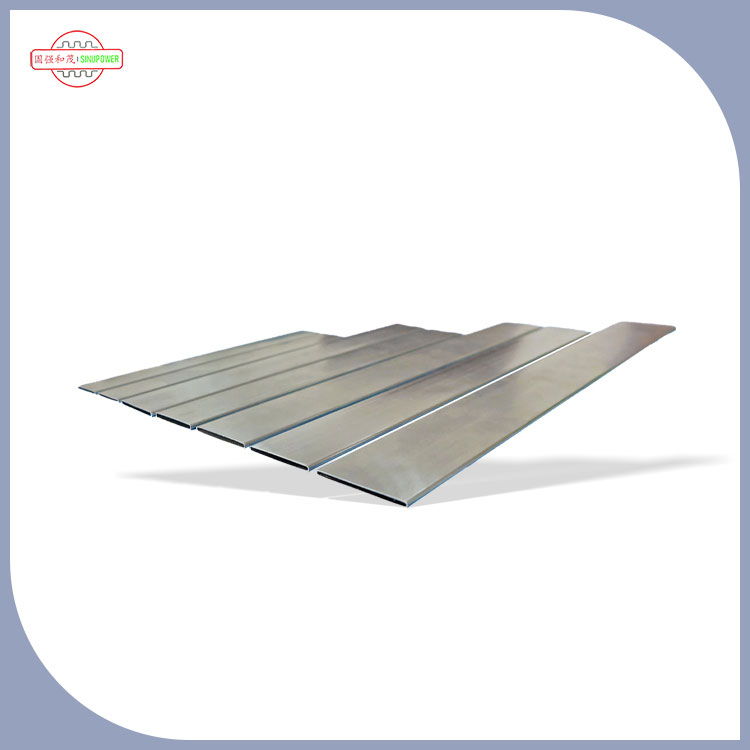
Structural and Thermal Comparison
| Feature | Hourglass Tubes | Oval Tubes | Flat Tubes |
|---|---|---|---|
| Flow turbulence | High (induced by contraction-expansion) | Moderate | Low to moderate |
| Heat transfer coefficient | Excellent due to boundary layer disruption | Good | Fair |
| Pressure drop | Moderate | Low | Very low |
| Fouling resistance | High (self-scouring effect) | Moderate | Low (prone to debris accumulation) |
| Weight per core | Low | Medium | Very low |
| Manufacturing complexity | Higher | Low | Medium |
Performance Evaluation
In controlled tests, Hourglass tubes for heater cores increase the Nusselt number by 18–25% relative to flat tubes under identical Reynolds numbers, owing to periodic flow separation and reattachment. Compared to oval tubes, hourglass geometries reduce thermal resistance at the tube-fin interface by promoting more uniform air-side temperature distribution. While flat tubes minimize pressure drop, they suffer from lower heat flux per unit volume. Oval tubes offer a balanced performance but lack the vortex generation that hourglass profiles naturally create.
Key Advantages of Hourglass Tubes
-
Enhanced heat transfer without increasing core volume
-
Better resistance to clogging in coolant circuits
-
Improved structural integrity under cyclic thermal loads
FAQ – Hourglass Tubes for Heater Cores
What is the primary mechanism that makes hourglass tubes more efficient than oval or flat tubes
The hourglass shape creates alternating flow acceleration and deceleration zones. This generates longitudinal vortices that disrupt the thermal boundary layer, resulting in higher local heat transfer coefficients. Oval and flat tubes produce more laminar flow regimes, which suppress mixing and reduce overall thermal performance.
Are hourglass tubes more expensive to manufacture and is the cost justified
Yes, the forming process for hourglass tubes requires precision dies and multi-stage rolling, increasing tooling costs by approximately 15–30% compared to oval tubes. However, the improved heat transfer allows a 10–15% reduction in core size for the same duty, lowering material and packaging costs. Over the product lifecycle, Sinupower data shows a net cost benefit of 8–12% for high-volume heater core production.
Can hourglass tubes be retrofitted into existing heater core designs that originally used flat or oval tubes
Retrofitting is feasible but requires redesign of the header plates and fin bonding methods because the tube pitch and contact geometry differ significantly. Sinupower offers custom engineering support to adapt hourglass tube cores into existing envelope dimensions, typically achieving a 15–20% performance uplift without changing the core’s external mounting interface.
Industry Applications and Reliability
Automotive HVAC, heavy-duty truck cab heaters, and electric vehicle battery thermal management systems have successfully adopted Hourglass tubes for heater cores. Sinupower has validated these designs under thermal cycling from -40°C to 120°C with over 5000 cycles, showing no braze joint failure—a critical improvement over flat tubes which often crack at brazed seams.
Contact us today to request engineering samples or a performance comparison report for your heater core project. Sinupower provides full technical support, CFD analysis, and prototype fabrication for hourglass, oval, and flat tube configurations. Reach out through our website to discuss how hourglass tubes can elevate your thermal system efficiency.