

How Do Different Types of Wire Rope Clips Meet Industrial Fastening Requirements?
2026-11-27
A maintenance team at a steel mill re-terminates a crane hoist rope with a set of Wire Rope Clips taken from the general stores. The rope is 16 millimeters in diameter, and the clips are marked for 16 millimeters. Three weeks later, the rope pulls through the termination under a shock load. The investigation finds that the clips were the U-bolt type, installed with the saddle on the wrong side, and tightened to a torque value taken from a different product. The clip did not fail. The selection and the installation did. For an industrial fastening requirement, the clip type, the material grade, the torque, and the turn-back length must all match the rope and the duty. This guide compares the main clip types and explains how our factory supports the specification. Haiyan Dowson’s Fasteners Co,.Ltd. has been manufacturing wire rope clips for over 12 years.
1. Why Does the Clip Type Determine the Load Path in a Wire Rope Termination?
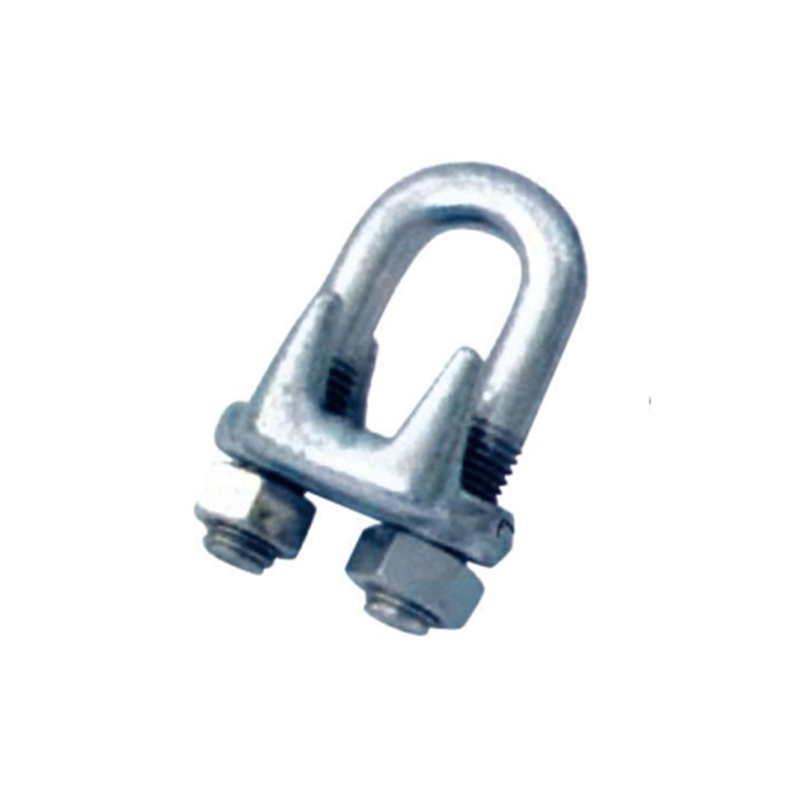
A wire rope termination converts the rope tension into a clamp load between the clip and the rope surface. The clip type determines how that clamp load is distributed. A U-bolt clip presses the rope between a U-shaped bolt and a saddle. The saddle must sit on the live end of the rope, and the U-bolt must sit on the dead end. If the clip is reversed, the U-bolt crushes the live end and the termination loses capacity. A twin-base clip presses the rope between two identical base plates. Both plates are symmetrical, so the installation is less sensitive to orientation, and the clamp load is distributed over a longer length of rope. The table below compares the main clip types on the parameters that matter for industrial fastening.
| Clip type | Clamp distribution | Orientation sensitivity | Typical rope size range | Typical industrial use |
| U-bolt clip (malleable or forged) | Concentrated under the saddle | High (saddle on live end) | 6 to 40 mm | General rigging, temporary guying |
| Twin-base clip | Spread over two base plates | Low (symmetrical) | 8 to 50 mm | Permanent termination, lifting |
| Fist grip / swage-style clip | Even around the rope circumference | Low | 6 to 32 mm | Where a low profile is required |
In our factory, the U-bolt clip is produced with a forged or malleable body and a saddle that is marked with the rope size and the torque value. The twin-base clip is produced with two identical bases and a longer bolt pattern. The orientation sensitivity of the U-bolt clip is the reason our installation sheet shows the saddle position with a photograph, not only with a drawing. Haiyan Dowson’s Fasteners Co,.Ltd. supplies both types and recommends the twin-base clip for any termination that will be inspected by a third party.
2. How Does the U-Bolt Clip Compare With the Twin-Base Clip in Slippage Resistance?
Slippage resistance is the ability of the termination to hold the rope without the rope pulling through. The U-bolt clip relies on the saddle contact area, which is relatively small, and on the number of clips in the set. The twin-base clip relies on the longer contact length of the two base plates and on the even clamp load along that length. For the same number of clips, the twin-base design usually shows a higher slippage resistance on a dynamic load test, but it also requires a longer turn-back length and a larger space. The table below shows the typical number of clips and the turn-back length for a 16 millimeter rope in a static and a dynamic application.
| Clip type and duty | Number of clips | Minimum turn-back length | Typical torque |
| U-bolt clip, static | 3 | 6 times rope diameter | 40 Nm |
| U-bolt clip, dynamic | 4 | 10 times rope diameter | 40 Nm |
| Twin-base clip, static | 2 | 6 times rope diameter | 55 Nm |
| Twin-base clip, dynamic | 3 | 10 times rope diameter | 55 Nm |
Fastening engineer's note: The number of clips and the turn-back length are not interchangeable between the two types. A twin-base set with two clips does not replace a U-bolt set with three clips. The turn-back length must also be measured from the thimble or the eye, not from the end of the rope. In our factory, the installation sheet lists the number of clips and the turn-back length for each rope diameter and each clip type, and the values are based on the load test, not on a rule of thumb. Haiyan Dowson’s Fasteners Co,.Ltd. provides the load test report for each clip size on request.
3. What Role Does Material Grade and Thread Strength Play in Dynamic Load Applications?
The clip body and the bolt must carry the clamp load without yielding. A malleable iron clip is suitable for static guying and for light duty, but it can deform under a dynamic load. A forged steel clip has a higher yield strength and resists deformation. A stainless steel clip is used where corrosion resistance is required, but the stainless grade must be selected for the environment, because some stainless grades are susceptible to chloride stress corrosion. The table below shows the common material grades and their typical application.
| Material grade | Typical tensile strength | Corrosion resistance | Typical application |
| Malleable iron | 350 to 450 MPa | Low (requires coating) | Static guying, temporary works |
| Forged carbon steel | 600 to 800 MPa | Low (requires coating) | Lifting, dynamic load |
| Stainless steel 304 | 500 to 700 MPa | Moderate | Food, clean environment |
| Stainless steel 316 | 500 to 700 MPa | High | Marine, chemical |
The thread strength is the other factor. The bolt must be able to develop the clamp load without stripping the thread. A clip that is marked with a torque value is only valid if the bolt and the nut are the ones supplied with the clip. A replacement bolt of a lower grade can strip before the torque is reached. In our factory, the bolt and the nut are matched to the clip body and are marked with the grade. We recommend that the maintenance team keep the clip and the bolt as a set and not mix parts from different suppliers. The spiral bevel gear principle of matched components applies here as well: a strong body with a weak bolt is not a strong termination.
4. Why Does Installation Torque and Turn-Back Length Decide Whether the Termination Holds?
The clamp load is generated by the bolt torque. If the torque is too low, the clip does not grip the rope and the rope slips. If the torque is too high, the bolt yields, the clip deforms, and the rope is crushed. The correct torque is the value that produces the clamp load without yielding the bolt, and it is different for each clip size and material. The turn-back length is the length of rope that extends beyond the last clip. If the turn-back is too short, the rope can pull through the last clip before the first clip has developed its full grip. The installation should also include a re-tightening step after the first load cycle, because the rope settles and the clamp load drops. The table below shows the torque and the turn-back for the common rope sizes.
| Rope diameter | U-bolt torque | Twin-base torque | Minimum turn-back |
| 8 mm | 15 Nm | 20 Nm | 80 mm |
| 12 mm | 30 Nm | 40 Nm | 120 mm |
| 16 mm | 40 Nm | 55 Nm | 160 mm |
| 20 mm | 60 Nm | 80 Nm | 200 mm |
| 24 mm | 80 Nm | 100 Nm | 240 mm |
Installation supervisor's note: The most common installation error is to tighten the clips by feel instead of with a torque wrench. A clip that is tightened by feel is often under-tightened, and the rope slips under the first load. The second most common error is to forget the re-tightening step after the first load cycle. In our factory, the installation sheet lists the torque, the turn-back, and the re-tightening step, and we supply a torque tag that the installer can attach to the termination. Haiyan Dowson’s Fasteners Co,.Ltd. recommends that the termination be inspected and re-torqued after the first lift and again after the first week of service.
5. How Should Buyers Specify and Verify Wire Rope Clips for an Industrial Fastening Requirement?
The specification should include the rope diameter, the rope construction, the clip type, the material grade, the bolt grade, the torque value, the number of clips, the turn-back length, and the coating. The verification should include the dimensional check, the material certificate, the proof load test on a sample, and the installation record. Our factory provides the dimensional report, the material certificate, and the proof load report with each lot. We also provide the installation sheet in the language of the destination market, with the torque and the turn-back values in a table that the installer can read at the site. A buyer who specifies only the rope diameter and the clip size leaves the termination capacity to chance. A buyer who specifies the full set of parameters can verify the termination before it goes into service.
We recommend that the buyer request a sample termination and pull it to the proof load before the main order. The pull test shows whether the clip type, the torque, and the turn-back work together on the actual rope. A sample that passes the pull test is a better guarantee than a catalog rating. Our factory can prepare the sample termination and provide the pull test report with the shipment.
Frequently Asked Questions About Wire Rope Clips for Industrial Fastening
Summary and Recommendation: Different types of Wire Rope Clips meet industrial fastening requirements when the clip type, the material grade, the bolt grade, the torque, and the turn-back length are specified together. The U-bolt clip is suitable for general rigging and requires careful orientation. The twin-base clip distributes the clamp load over a longer length and is preferred for permanent and inspected terminations. The forged steel clip is preferred for dynamic loads. The buyer should verify the dimensional report, the material certificate, the proof load report, and the installation record before the termination goes into service. Haiyan Dowson’s Fasteners Co,.Ltd. manufactures Wire Rope Clips in malleable iron, forged steel, and stainless steel, and provides the load test and installation documentation for each lot.