

How Do Box Collar Lugs Improve Secure Mechanical Connections?
2026-02-10
Abstract
Box collar lugs are widely used in mechanical transmission and fastening systems where reliability, load stability, and precise alignment are required. However, many buyers and engineers face challenges such as unclear structural advantages, inconsistent quality standards, and uncertainty about application scenarios. This article provides a comprehensive explanation of how box collar lugs work, what problems they solve, and how to select the right specification for long-term performance. The content focuses on practical engineering concerns, installation considerations, and real-world use cases to help decision-makers reduce risk and improve system efficiency.
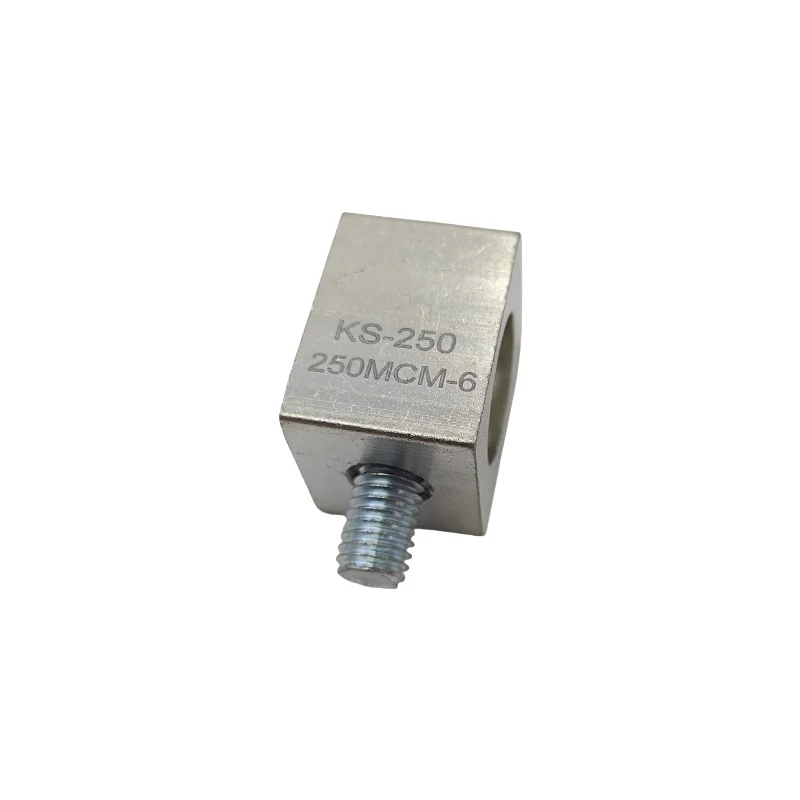
Table of Contents
- Article Outline
- What Are Box Collar Lugs?
- Common Customer Pain Points
- How Box Collar Lugs Work
- Key Structural and Functional Advantages
- Typical Application Scenarios
- How to Choose the Right Box Collar Lugs
- Box Collar Lugs vs. Other Lug Types
- Installation and Maintenance Considerations
- Frequently Asked Questions
- Conclusion and Contact Information
Article Outline
- Definition and structural overview of box collar lugs
- Analysis of user challenges in mechanical fastening systems
- Functional principles and load transfer mechanisms
- Advantages in strength, alignment, and service life
- Industry-specific applications
- Selection criteria and technical parameters
- Comparison with alternative lug designs
- Installation, inspection, and maintenance guidance
What Are Box Collar Lugs?
Box collar lugs are precision-engineered mechanical components designed to provide secure axial positioning and torque transmission between shafts, rods, or structural assemblies. Their defining feature is a box-shaped collar structure that encloses or supports a connection point, allowing forces to be distributed evenly across the contact surface.
Unlike open or flat lugs, box collar lugs offer enhanced rigidity and resistance to deformation. This makes them particularly suitable for heavy-duty machinery, industrial equipment, and systems where vibration, cyclic loading, or misalignment may occur.
Common Customer Pain Points
When sourcing or specifying box collar lugs, customers often encounter several recurring issues:
- Unclear load-bearing limits and safety margins
- Premature wear due to poor material selection
- Installation difficulties caused by dimensional inaccuracies
- Inconsistent performance under vibration or shock loads
- Limited compatibility with existing mechanical systems
Addressing these concerns requires a clear understanding of both the design logic and the operational environment of box collar lugs.
How Box Collar Lugs Work
The working principle of box collar lugs is based on controlled force distribution and positive mechanical engagement. The collar structure surrounds the connection area, reducing localized stress concentrations and improving overall stability.
When installed, the lug transfers axial and radial loads through its reinforced walls, ensuring that connected components remain aligned even under dynamic conditions. This design minimizes slippage and reduces the risk of fatigue failure over extended service periods.
Key Structural and Functional Advantages
- High Load Capacity: The box-style enclosure increases contact area and structural strength.
- Improved Alignment: Maintains precise positioning of shafts and connectors.
- Enhanced Durability: Resistant to wear, vibration, and repeated stress cycles.
- Design Flexibility: Available in multiple sizes, materials, and configurations.
Typical Application Scenarios
Box collar lugs are commonly used in:
- Industrial machinery and automated production lines
- Power transmission and drive systems
- Heavy equipment and construction machinery
- Custom mechanical assemblies requiring high precision
Their adaptability makes them suitable for both standard and customized engineering solutions.
How to Choose the Right Box Collar Lugs
Selecting the correct box collar lug involves evaluating several technical factors:
| Selection Factor | Key Consideration |
|---|---|
| Material | Steel, alloy steel, or stainless steel depending on load and environment |
| Dimensional Tolerance | Must match shaft or connection interface precisely |
| Load Requirement | Consider both static and dynamic forces |
| Operating Environment | Temperature, corrosion, and vibration exposure |
Box Collar Lugs vs. Other Lug Types
Compared with traditional flat lugs or split collars, box collar lugs offer superior rigidity and load distribution. Flat lugs may be easier to install but often lack the structural reinforcement required for demanding applications. Box collar lugs strike a balance between installation practicality and long-term reliability.
Installation and Maintenance Considerations
Proper installation is essential to maximize performance:
- Ensure all mating surfaces are clean and free from debris
- Verify alignment before final tightening
- Apply torque according to specified values
- Conduct periodic inspections for wear or loosening
Routine maintenance helps extend service life and prevents unexpected downtime.
Frequently Asked Questions
What makes box collar lugs suitable for high-load applications?
Their enclosed structure distributes forces evenly, reducing stress concentration and improving load capacity.
Can box collar lugs be customized?
Yes, many manufacturers offer customization in size, material, and finish to meet specific engineering requirements.
Are box collar lugs suitable for environments with vibration?
They are specifically designed to maintain stability and alignment under vibration and cyclic loads.
Conclusion and Contact Information
Box collar lugs play a critical role in ensuring secure, stable, and durable mechanical connections across a wide range of industries. By understanding their structure, advantages, and selection criteria, engineers and procurement teams can significantly reduce operational risks and improve system reliability.
Kangshuai provides professionally manufactured box collar lugs with consistent quality and engineering support. For detailed specifications, customization options, or technical consultation, contact us to discuss how the right box collar lug solution can support your project requirements.