

How Do Auto Parts LED Headlights Shape Vehicle Lighting Standards?
2026-01-07
Abstract
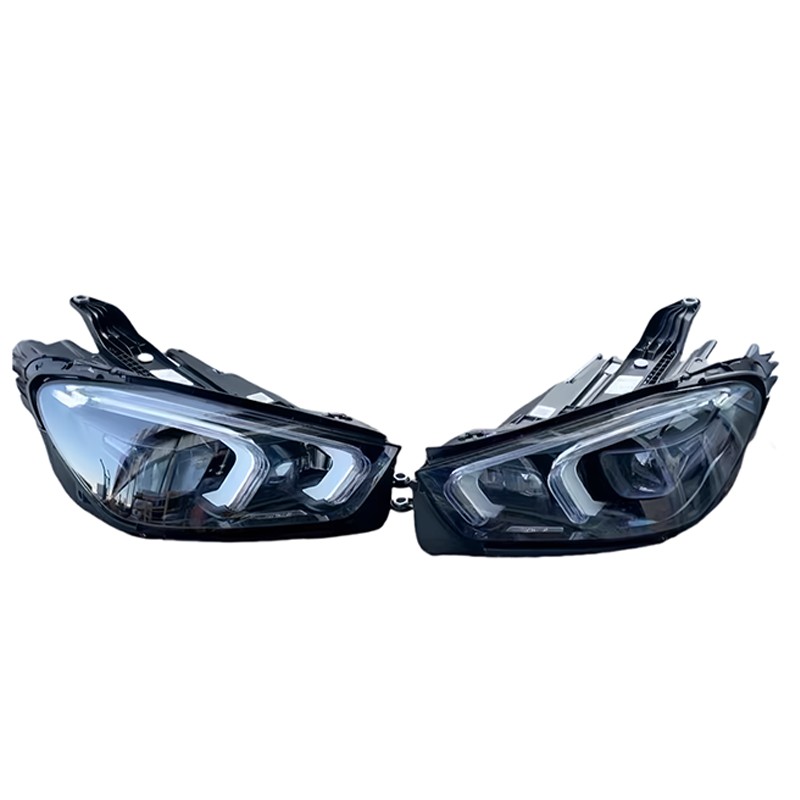
Auto Parts LED Headlights have become a defining component of modern automotive lighting systems, driven by efficiency requirements, safety regulations, and evolving consumer expectations. This article provides a structured and in-depth examination of how Auto Parts LED Headlights function, how to evaluate their technical parameters, and how they align with future mobility trends. The discussion integrates product specifications, application logic, regulatory context, and practical questions frequently raised by buyers and distributors. The objective is to present a technically grounded and search-optimized reference for decision-makers in the automotive aftermarket and OEM supply chain.
Outline
- Introduction to Auto Parts LED Headlights
- How Do Auto Parts LED Headlights Work?
- How Should Technical Parameters Be Evaluated?
- How Are Auto Parts LED Headlights Applied Across Vehicle Types?
- Common Questions About Auto Parts LED Headlights
- How Will Auto Parts LED Headlights Evolve in the Future?
- Brand Perspective and Contact Information
Table of Contents
- 1. Introduction to Auto Parts LED Headlights
- 2. How Do Auto Parts LED Headlights Work?
- 3. How Should Technical Parameters Be Evaluated?
- 4. Applications and Compatibility
- 5. Auto Parts LED Headlight FAQs
- 6. Future Development Trends
- 7. Brand Introduction and Contact Us
1. Introduction to Auto Parts LED Headlights
Auto Parts LED Headlights are semiconductor-based lighting devices designed to replace or complement traditional halogen and HID headlamp systems. They are widely used in passenger vehicles, commercial fleets, and off-road applications due to their stable illumination output and adaptable design structures. The central focus of this article is to explain how Auto Parts LED Headlights integrate optical engineering, thermal management, and electrical control into a unified lighting solution that supports long-term vehicle operation.
From an SEO and market perspective, Auto Parts LED Headlights represent a high-search-volume product category because they intersect safety compliance, aftermarket upgrades, and intelligent vehicle development. Understanding their technical framework is essential for buyers, installers, and distributors operating in international markets.
2. How Do Auto Parts LED Headlights Work?
Auto Parts LED Headlights operate by converting electrical energy into light through light-emitting diodes mounted on a metal-core printed circuit board (MCPCB). When current flows through the semiconductor junction, electrons release energy in the form of photons. Optical lenses and reflectors then shape this light into compliant beam patterns.
Unlike filament-based systems, Auto Parts LED Headlights rely on electronic drivers to regulate voltage and current. These drivers ensure consistent illumination even under fluctuating automotive electrical conditions. Thermal management components, such as aluminum heat sinks or active cooling fans, dissipate excess heat to maintain junction stability.
3. How Should Technical Parameters Be Evaluated?
Evaluating Auto Parts LED Headlights requires attention to standardized technical parameters rather than visual brightness alone. The following table outlines commonly referenced specifications used by manufacturers and buyers.
| Parameter | Typical Range | Evaluation Purpose |
|---|---|---|
| Input Voltage | 9V–32V DC | Compatibility with vehicle electrical systems |
| Luminous Flux | 3,000–12,000 lumens | Illumination output measurement |
| Color Temperature | 5,500K–6,500K | Visual clarity and road contrast |
| Beam Pattern | Low Beam / High Beam | Road coverage and glare control |
| Ingress Protection | IP65–IP68 | Resistance to dust and moisture |
| Operating Temperature | -40°C to +85°C | Environmental adaptability |
These parameters collectively determine whether Auto Parts LED Headlights meet regulatory standards and real-world operating conditions.
4. How Are Auto Parts LED Headlights Applied Across Vehicle Types?
Auto Parts LED Headlights are engineered for diverse vehicle categories, including sedans, SUVs, trucks, and industrial vehicles. Application-specific designs consider mounting dimensions, beam cutoff requirements, and vibration resistance. In commercial transportation, LED headlights are valued for reduced maintenance cycles and consistent performance during extended operation.
In the aftermarket sector, compatibility with existing headlamp housings is a primary concern. Adapter systems and plug-and-play designs allow Auto Parts LED Headlights to be installed without extensive modification.
5. Common Questions About Auto Parts LED Headlights
Q: How long do Auto Parts LED Headlights typically last?
A: Under normal operating conditions, Auto Parts LED Headlights can achieve service lifespans exceeding 30,000 hours, depending on thermal management quality and driving patterns.
Q: How do Auto Parts LED Headlights affect vehicle electrical systems?
A: LED headlights draw lower current than halogen systems. Integrated drivers stabilize power input, reducing electrical load while maintaining consistent illumination.
Q: How can glare be controlled when using Auto Parts LED Headlights?
A: Proper beam pattern design, correct installation angle, and compliant optical lenses are critical factors in minimizing glare for oncoming traffic.
6. How Will Auto Parts LED Headlights Evolve in the Future?
Future development of Auto Parts LED Headlights is closely aligned with intelligent vehicle systems and regulatory harmonization. Adaptive beam technology, sensor integration, and modular lighting architectures are expected to become standard features. As autonomous and connected vehicles advance, headlights will increasingly serve both illumination and communication functions.
From a supply chain perspective, demand for standardized yet customizable LED headlight modules will continue to grow, particularly in emerging markets seeking cost-effective compliance solutions.
7. Brand Introduction and Contact Us
Within the global automotive lighting industry, Changhua Intelligent Electric Appliance Co., Ltd. has established a manufacturing framework focused on precision assembly, quality control, and application-driven design. The company’s Auto Parts LED Headlight solutions are developed to align with international standards while supporting diverse vehicle platforms.
For detailed product specifications, technical documentation, or cooperation opportunities related to Auto Parts LED Headlights, inquiries are welcome. Contact the Changhua Intelligent Electric Appliance Co., Ltd. team to discuss application requirements, customization options, and long-term supply solutions.