

How Do Alumina Ceramic Plates Enhance Industrial Performance?
2026-02-28
Article Summary
Alumina ceramic plates are critical components in high-temperature and wear-resistant applications across various industries. Their exceptional hardness, thermal stability, and chemical resistance make them ideal for manufacturing, electronics, metallurgy, and machinery. This comprehensive guide explores the technical characteristics, selection criteria, processing methods, and practical applications of alumina ceramic plates. Additionally, it highlights common challenges faced by users and solutions provided by reliable suppliers such as Shandong Qishuai, ensuring optimal performance, durability, and cost efficiency.
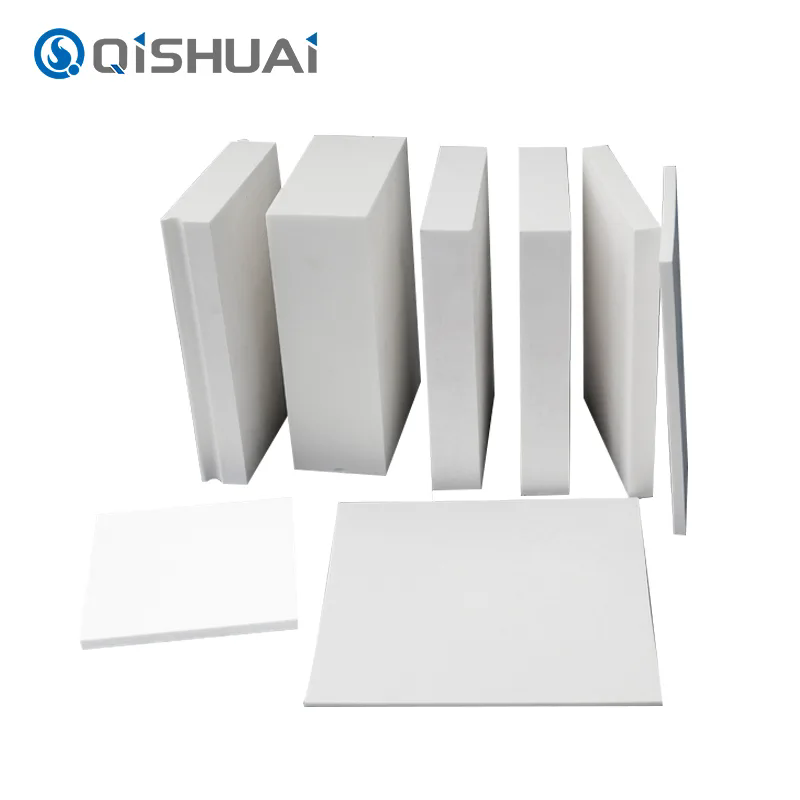
Table of Contents
- Overview of Alumina Ceramic Plates
- Common Customer Pain Points
- Key Properties and Advantages
- Different Types of Alumina Ceramic Plates
- How to Choose the Right Alumina Ceramic Plate
- Manufacturing and Processing Methods
- Alumina Ceramic Plate Comparison Table
- Application Scenarios
- Frequently Asked Questions
- Conclusion and Contact Us
Overview of Alumina Ceramic Plates
Alumina ceramic plates are advanced engineering ceramics primarily composed of aluminum oxide (Al₂O₃). They offer a unique combination of mechanical strength, chemical stability, and wear resistance, making them suitable for harsh industrial environments. Alumina ceramics are widely used in applications that require high-temperature resistance, low thermal expansion, and excellent electrical insulation.
Shandong Qishuai provides a range of high-quality alumina ceramic plates tailored for industrial and commercial applications, ensuring reliability and longevity even under extreme operating conditions.
Common Customer Pain Points
While alumina ceramic plates provide exceptional benefits, customers often face specific challenges during selection, installation, or operational use. Recognizing these pain points helps prevent production inefficiencies and premature wear.
- Unexpected breakage or cracking during high-stress operations
- Inconsistent thickness or surface flatness affecting equipment performance
- Poor thermal conductivity or insulation for specific applications
- Difficulty in machining or fitting to customized dimensions
- High procurement costs without reliable suppliers
Shandong Qishuai addresses these challenges by offering precision-manufactured ceramic plates, strict quality control, and technical support for optimized industrial performance.
Key Properties and Advantages
Alumina ceramic plates are valued for their combination of physical and chemical properties, which enhance industrial performance:
- High Hardness: Provides excellent wear and abrasion resistance
- Chemical Stability: Resistant to corrosion from acids, alkalis, and solvents
- Thermal Resistance: Withstands high temperatures up to 1700°C
- Electrical Insulation: Ideal for electronic and electrical applications
- Low Thermal Expansion: Maintains dimensional stability under rapid temperature changes
Different Types of Alumina Ceramic Plates
Alumina ceramic plates are manufactured in various grades and specifications to meet different industrial needs:
- High-Purity Alumina Plates (≥99.5% Al₂O₃): Superior hardness and wear resistance, used in precision machinery
- Medium-Purity Alumina Plates (95%-99% Al₂O₃): Balanced cost-performance ratio for general industrial applications
- Low-Purity Alumina Plates (85%-95% Al₂O₃): Economical option for less demanding environments
- Customized Alumina Plates: Tailored dimensions, shapes, and thicknesses for specialized machinery
How to Choose the Right Alumina Ceramic Plate
Selecting the right alumina ceramic plate depends on operational requirements, environmental conditions, and mechanical demands. Key factors include:
- Operating temperature range and thermal cycling conditions
- Load-bearing and impact resistance requirements
- Chemical exposure during processing or production
- Required thickness, size, and surface flatness
- Compatibility with equipment and ease of installation
Shandong Qishuai offers technical consultation to help customers select optimal plate grades and dimensions, reducing operational risks and improving equipment longevity.
Manufacturing and Processing Methods
The production of alumina ceramic plates involves several advanced techniques to ensure consistent quality and mechanical performance:
- Powder Preparation: Selection and homogenization of high-purity alumina powders
- Pressing: Hydraulic or isostatic pressing to form uniform plate shapes
- Sintering: High-temperature sintering to achieve hardness and density
- Surface Finishing: Polishing or grinding to achieve required flatness and smoothness
- Quality Inspection: Dimensional checks, hardness testing, and visual inspection for cracks or defects
Alumina Ceramic Plate Comparison Table
| Grade | Al₂O₃ Content | Hardness | Typical Applications |
|---|---|---|---|
| High-Purity | ≥99.5% | Extremely Hard | Precision machinery, electronics, wear-resistant linings |
| Medium-Purity | 95%-99% | Very Hard | General industrial equipment, protective plates |
| Low-Purity | 85%-95% | Hard | Less demanding wear-resistance applications |
| Customized | Variable | Tailored | Specialized equipment and custom machinery |
Application Scenarios
Alumina ceramic plates are utilized across multiple industries due to their durability and versatility:
- Wear-resistant linings in metallurgy and mining equipment
- High-temperature insulating components in furnaces and kilns
- Precision parts in electronics and semiconductor equipment
- Protective and abrasion-resistant surfaces in machinery
- Custom industrial components in automated manufacturing
Frequently Asked Questions
What makes alumina ceramic plates resistant to wear?
Their high hardness and dense microstructure provide excellent abrasion resistance, extending service life under heavy load and friction.
Can alumina ceramic plates withstand high temperatures?
Yes, they maintain structural integrity at temperatures up to 1700°C, making them ideal for high-temperature industrial applications.
Are alumina ceramic plates easy to machine?
While harder than metals, they can be precision-machined using diamond tools for customized shapes and sizes.
Which grade is best for heavy-duty applications?
High-purity alumina plates are recommended for extreme wear and mechanical stress environments.
Conclusion and Contact Us
Alumina ceramic plates provide unmatched performance in wear resistance, thermal stability, and chemical durability. Selecting the right grade, proper dimensions, and reliable supplier is crucial for ensuring optimal industrial performance and cost-effectiveness.
Shandong Qishuai specializes in high-quality alumina ceramic plates for diverse industrial applications. To enhance your equipment’s reliability and achieve superior performance, contact us today and let our technical experts guide you in selecting the ideal alumina ceramic plates for your projects.
