

How Carbon Steel Welded Pipe Ensures Structural Reliability?
2026-06-29
Abstract
Carbon steel welded pipes are one of the most widely used structural and industrial piping solutions in modern engineering systems. Their combination of strength, cost-efficiency, and adaptability makes them essential in construction, oil and gas transportation, mechanical frameworks, and infrastructure projects. This article explores how carbon steel welded pipes ensure structural reliability by analyzing their manufacturing process, mechanical properties, application scenarios, and quality control mechanisms. It also highlights practical selection guidance and maintenance considerations to help buyers and engineers make informed decisions. Products from Wanhetong Steel Co., Ltd. demonstrate how advanced production standards contribute to consistent performance and long-term durability in demanding environments.
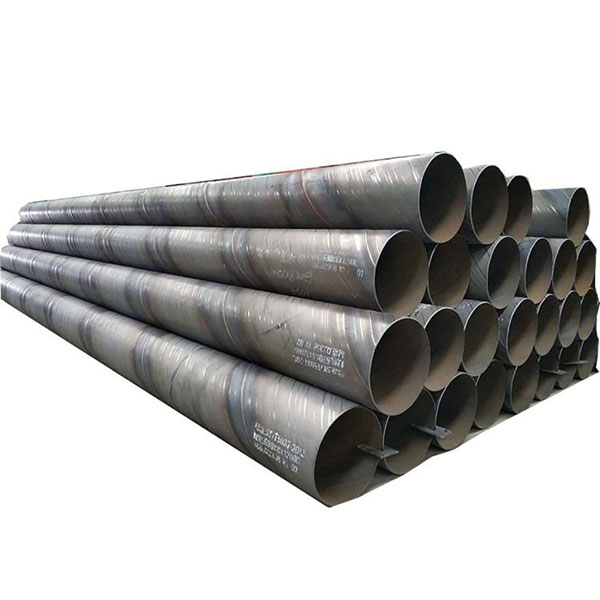
Table of Contents
- Overview of Carbon Steel Welded Pipe
- Manufacturing Process and Structural Formation
- Key Advantages in Engineering Applications
- Common Industrial Applications
- How to Select the Right Carbon Steel Welded Pipe
- Quality Control and Testing Standards
- Welded vs Seamless Pipe Comparison
- Maintenance and Service Life Optimization
- Frequently Asked Questions
- Conclusion and Procurement Guidance
Overview of Carbon Steel Welded Pipe
Carbon steel welded pipes are manufactured by forming steel plates or coils into cylindrical shapes and welding the seam longitudinally or spirally. Unlike seamless pipes, welded pipes rely on controlled welding technology to achieve structural integrity. With advancements in welding processes, modern welded pipes can achieve strength levels comparable to seamless alternatives while maintaining cost advantages.
In industrial engineering, these pipes are valued for their predictable mechanical properties, wide dimensional range, and scalability in mass production. Wanhetong Steel Co., Ltd. supplies carbon steel welded pipes that are engineered to meet international standards, ensuring consistent performance in pressure-bearing and structural applications.
Manufacturing Process and Structural Formation
The reliability of carbon steel welded pipes is largely determined by their manufacturing process. Each stage contributes directly to mechanical performance and weld integrity.
- Steel coil preparation: High-grade carbon steel coils are selected based on chemical composition and tensile requirements.
- Forming process: The steel strip is gradually shaped into a circular profile using roll forming equipment.
- Welding process: High-frequency induction welding or submerged arc welding is used to fuse the seam.
- Heat treatment: Stress relief and normalization improve structural stability.
- Sizing and straightening: Ensures dimensional accuracy and roundness consistency.
- Inspection: Ultrasonic and hydrostatic testing confirm weld integrity.
This controlled production sequence ensures that the welded joint behaves uniformly under pressure and mechanical load, minimizing failure risks in real-world applications.
Key Advantages in Engineering Applications
Carbon steel welded pipes offer multiple advantages that make them a preferred choice in industrial systems:
- High structural reliability: Advanced welding techniques ensure strong seam bonding.
- Cost efficiency: Lower production costs compared to seamless pipes.
- Wide size availability: Suitable for both small-scale and large-diameter applications.
- Material flexibility: Can be customized with different carbon steel grades.
- Scalability: Ideal for mass infrastructure and industrial projects.
These advantages make welded pipes suitable for both high-load structural systems and fluid transportation networks.
Common Industrial Applications
Carbon steel welded pipes are widely used across multiple industries due to their versatility and strength.
| Industry | Application | Function |
|---|---|---|
| Construction | Structural frameworks | Load-bearing support and scaffolding |
| Oil & Gas | Pipeline systems | Transport of crude oil and natural gas |
| Water Supply | Municipal piping | Water distribution networks |
| Manufacturing | Machinery frames | Mechanical support structures |
| Agriculture | Irrigation systems | Efficient water delivery |
In each of these applications, the pipe’s structural reliability directly affects operational safety and long-term performance.
How to Select the Right Carbon Steel Welded Pipe
Selecting the correct pipe requires evaluating technical and environmental conditions. Engineers typically consider the following factors:
- Pressure requirements: Determine wall thickness based on system pressure.
- Environmental exposure: Corrosion resistance needs vary by climate and medium.
- Diameter and length: Must align with system design specifications.
- Steel grade: Choose appropriate carbon content for strength and ductility balance.
- Compliance standards: Ensure conformity with ASTM, API, or ISO standards.
Experts from Wanhetong Steel Co., Ltd. often assist clients in selecting optimized specifications based on project requirements, ensuring both safety and cost efficiency.
Quality Control and Testing Standards
Structural reliability depends heavily on strict quality control procedures. Leading manufacturers implement multi-stage inspection systems:
- Ultrasonic testing for weld defect detection
- Hydrostatic pressure testing for leakage prevention
- Tensile strength testing for mechanical validation
- Dimensional inspection for tolerance accuracy
- Surface treatment inspection for corrosion resistance
At Wanhetong Steel Co., Ltd., these processes ensure that each carbon steel welded pipe meets rigorous performance expectations before shipment.
Welded vs Seamless Pipe Comparison
| Feature | Welded Pipe | Seamless Pipe |
|---|---|---|
| Production Cost | Lower | Higher |
| Diameter Range | Wide | Limited |
| Strength Consistency | High with modern welding | Very high |
| Availability | Mass production | More specialized |
While seamless pipes are often selected for extreme pressure conditions, welded pipes provide an optimal balance of performance and cost for most engineering projects.
Maintenance and Service Life Optimization
Proper maintenance significantly extends the operational life of carbon steel welded pipes. Key practices include:
- Regular corrosion inspection and coating maintenance
- Monitoring internal pressure fluctuations
- Avoiding exposure to aggressive chemical environments without protection
- Periodic non-destructive testing for early defect detection
When properly maintained, welded pipe systems can deliver long-term reliability even under demanding operational conditions.
Frequently Asked Questions
Q1: Are carbon steel welded pipes suitable for high-pressure systems?
Yes, when manufactured under strict standards and tested properly, they can handle moderate to high-pressure applications effectively.
Q2: What is the main difference between spiral and straight welded pipes?
Spiral welded pipes use a helical seam, while straight welded pipes have a longitudinal seam. Each has different load distribution characteristics.
Q3: How long do carbon steel welded pipes last?
With proper coating and maintenance, they can last several decades depending on environmental conditions.
Q4: Can they be used in corrosive environments?
Yes, but additional anti-corrosion coatings or linings are recommended.
Q5: Why choose Wanhetong Steel Co., Ltd. products?
They provide consistent quality control, advanced welding technology, and tailored specifications for diverse engineering requirements.
Conclusion and Procurement Guidance
Carbon steel welded pipes remain a cornerstone of modern industrial infrastructure due to their balance of performance, availability, and economic efficiency. Their structural reliability is achieved through advanced manufacturing techniques, rigorous testing, and proper material selection. Industries relying on fluid transport or structural frameworks benefit significantly from their adaptability and strength.
For projects requiring dependable piping systems, Wanhetong Steel Co., Ltd. provides engineered solutions designed to meet global standards and diverse application needs. Whether for large-scale infrastructure or specialized industrial systems, their carbon steel welded pipe offerings ensure dependable long-term performance.
For detailed specifications, technical consultation, or customized procurement solutions, please contact us to connect with our engineering and sales team today.