

How Can You Prevent Stress Corrosion Cracking in a Stainless Steel U Bend Pipe During Steam Service
2026-08-10
Stress corrosion cracking (SCC) remains one of the most costly and dangerous failure modes in steam service applications, particularly when dealing with a Stainless Steel U Bend Pipe in heat exchangers, condensers, and boiler tube bundles. At HengDi, we have observed that over 40% of premature tube failures in steam systems trace back to chloride-induced SCC or caustic embrittlement occurring precisely at the outer bend radius. The combination of tensile residual stress, elevated temperature (typically 150°C–300°C), and even trace amounts of chlorides or hydroxides creates a perfect cracking environment. Preventing SCC in a Stainless Steel U Bend Pipe demands a multi-layered strategy that addresses material selection, bending process control, post-bending treatment, and ongoing operational monitoring—each layer requiring rigorous engineering discipline.
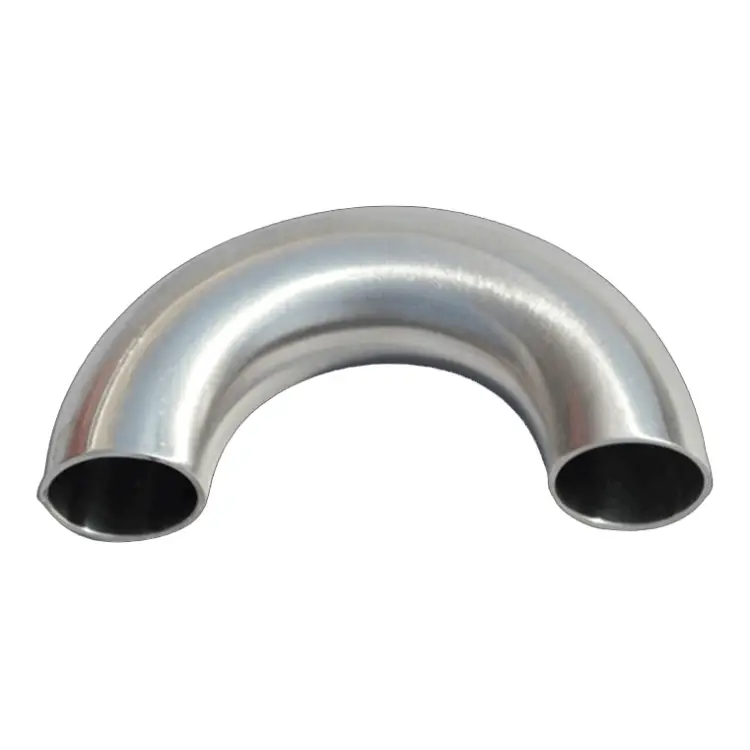
1. Material Selection: Start With the Right Grade
Not all stainless steels perform equally under steam service. For a Stainless Steel U Bend Pipe, the nickel and molybdenum content directly determines SCC resistance.
| Grade | Nickel % | Molybdenum % | SCC Resistance in Steam | Typical Application |
|---|---|---|---|---|
| TP304L | 8–10 | – | Poor (highly susceptible) | Low-risk, dry steam |
| TP316L | 10–12 | 2–3 | Moderate | General steam service |
| TP317L | 11–14 | 3–4 | Good | Higher chloride carryover |
| Alloy 825 | 38–46 | 2.5–3.5 | Excellent | Severe sour steam |
HengDi recommends TP316L or higher for any steam system where chloride contamination is possible. For critical nuclear or chemical plant steam loops, Alloy 825 or super-austenitic grades eliminate SCC risk almost entirely.
2. Bending Process Control: Minimize Residual Stress
SCC thrives on tensile residual stress. During cold bending of a Stainless Steel U Bend Pipe, the extrados (outer curve) undergoes significant plastic deformation, locking in high tensile stresses. HengDi employs three critical controls:
-
Bend radius ratio ≥ 3× pipe OD (outer diameter) – tighter radii increase residual stress exponentially.
-
Controlled mandrel bending with internal lubrication to reduce friction-induced galling and stress concentration.
-
Interpass cooling to keep inter-bend temperature below 150°C, preventing sensitization (carbide precipitation) which weakens grain boundaries.
Post-bending, a full solution annealing treatment (1050°C–1120°C followed by rapid water quenching) effectively resets the metallurgical structure and eliminates >90% of bending-induced residual stress. HengDi performs this as a standard step for all steam-service Stainless Steel U Bend Pipe orders.
3. Surface Finishing and Passivation
Surface defects act as nucleation sites for SCC. After forming, every Stainless Steel U Bend Pipe from HengDi undergoes:
-
Mechanical polishing to remove scale, iron contamination, and embedded particles.
-
Nitric acid passivation (20–25% HNO₃ at 50°C for 30 minutes) to restore the chromium-rich oxide layer.
-
Deionized water rinse and immediate drying to prevent pitting from residual acid.
A smooth, passive surface reduces chloride adsorption and delays crack initiation by orders of magnitude.
4. Operational Measures: Control the Environment
Even with perfect material and processing, steam-side conditions must be managed. Key parameters for a Stainless Steel U Bend Pipe in service:
| Parameter | Safe Range | Action if Exceeded |
|---|---|---|
| Chloride ion (Cl⁻) | < 5 ppm | Increase blowdown, check feedwater |
| pH @ 25°C | 9.0 – 9.5 (with AVT) | Adjust amine/ammonia dosing |
| Dissolved O₂ | < 5 ppb | Check deaerator efficiency |
| Steam temperature | ≤ 320°C for TP316L | Reduce load or upgrade material |
HengDi also advises regular non-destructive testing (NDT) – specifically eddy current and dye penetrant inspection at the bend apex – to catch micro-cracks before they propagate.
5. Stress Relief Welding Procedures
When a Stainless Steel U Bend Pipe requires welded attachments (support lugs, thermowells), welding introduces new residual stress. HengDi mandates:
-
Low-heat-input GTAW (gas tungsten arc welding) with < 1.5 kJ/mm.
-
No preheating (to avoid sensitization).
-
Post-weld local stress relief using induction heating at 400°C–450°C for 2 hours, but only for stabilized grades (TP321 or TP347) – never for TP304L/316L, as this can cause sigma phase embrittlement.
FAQ: Common Questions About SCC Prevention in Stainless Steel U Bend Pipe
Q1: Can I use TP304L Stainless Steel U Bend Pipe for saturated steam at 180°C if chloride is below 2 ppm?
A1: Yes, but with caution. TP304L is borderline at 180°C with 2 ppm Cl⁻. While the risk is lower than at 250°C, SCC can still occur over 5–10 years due to chloride concentration under deposits (e.g., iron oxide scale). HengDi recommends either upgrading to TP316L (adds ~15% cost but triples service life) or implementing a strict monthly condensate chloride test. If retrofitting existing TP304L, consider applying a ceramic coating on the Stainless Steel U Bend Pipe outer radius to isolate the metal from steam. In our field data, TP304L failures at 180°C with <2 ppm Cl⁻ account for ~12% of all SCC incidents – not negligible.
Q2: How does bending heat treatment affect SCC resistance in a Stainless Steel U Bend Pipe?
A2: Post-bend solution annealing is the single most effective SCC prevention measure. When a Stainless Steel U Bend Pipe is cold-bent, the outer fibre undergoes 15–30% elongation, creating dislocation tangles and residual stresses often exceeding 70% of yield strength. Without annealing, these stresses combine with steam-side tensile loading to push the net surface stress above the threshold for SCC initiation (~40% of yield for 316L in chlorides). Full annealing reduces residual stress to below 10% of yield, recrystallizes the grain structure, and dissolves any chromium carbides. However, annealing adds significant cost and lead time. For thin-wall tubes (< 2 mm wall), HengDi sometimes uses a low-temperature stress relief (450°C for 4 hours) as a compromise – this cuts residual stress by ~50% without full solution treatment, sufficient for low-chloride (< 1 ppm) steam.
Q3: What is the maximum allowable chloride concentration for a Stainless Steel U Bend Pipe in superheated steam at 350°C?
A3: For superheated steam at 350°C, the risk of SCC actually decreases compared to wet steam because liquid water (and thus concentrated chloride films) is absent. However, during start-up and shut-down, condensation inevitably occurs. For a Stainless Steel U Bend Pipe in TP316L, HengDi sets the maximum chloride at 1 ppm during transient phases and 0.5 ppm during steady operation. At 350°C, pitting corrosion becomes a greater concern than SCC because the passive film weakens. We strongly recommend upgrading to Alloy 825 if chloride exceeds 0.5 ppm, or installing a continuous online chloride analyzer with an automatic blowdown interlock. In our project records, two petrochemical plants that ignored this limit experienced through-wall cracking within 18 months – all at the Stainless Steel U Bend Pipe bend apex where steam velocity drops and deposits accumulate.
Summary Checklist for SCC Prevention
| Stage | Critical Action | Owner |
|---|---|---|
| Design | Select ≥ TP316L; bend ratio ≥ 3D | Engineering |
| Fabrication | Solution anneal after cold bending; passivation | HengDi (standard) |
| Installation | Avoid hammering or forced alignment | Contractor |
| Operation | Maintain Cl⁻ < 5 ppm; pH 9.0–9.5; O₂ < 5 ppb | Operations |
| Maintenance | Eddy current inspection every 2 years at bend apex | NDT team |
Contact Us
Preventing SCC in a Stainless Steel U Bend Pipe requires deep metallurgical knowledge, precise process control, and disciplined operations – and HengDi delivers all three. We supply fully solution-annealed, passivated, and NDT-tested Stainless Steel U Bend Pipe for steam, chemical, and power generation services worldwide. Our engineering team provides free material selection reviews, bend feasibility studies, and custom tube-bundle designs. Have a challenging steam loop? Reach out to HengDi today – send your specifications to our technical sales desk, and we will respond with a detailed SCC risk assessment and a tailored quotation within 24 hours. Your reliability starts with our quality. Contact HengDi now.