

How Can You Increase Intake Manifold Pressure Without Forced Induction
2026-04-03
Many tuners and racers assume that raising pressure in an Engine Intake Manifold requires a turbocharger or supercharger. However, naturally aspirated engines can also achieve meaningful pressure gains through physics-based tuning. At Shengfa, we specialize in airflow dynamics that help you extract more from every cubic inch without bolting on a blower.
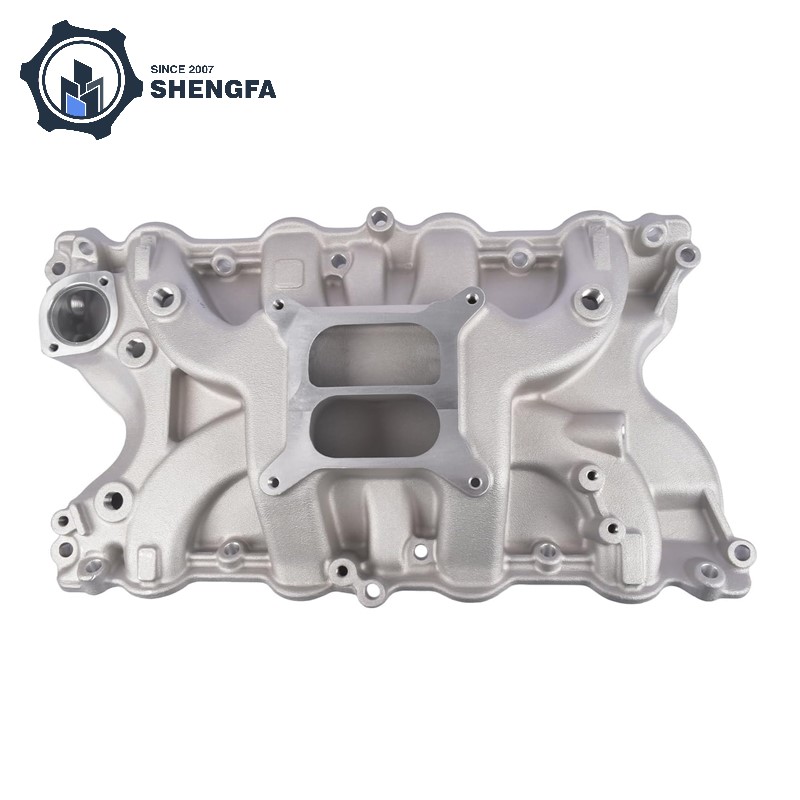
Understanding Atmospheric Pressure Traps
Pressure inside an Engine Intake Manifold is rarely equal to ambient air. By reducing restrictions and exploiting inertia ram effects, you can push manifold absolute pressure (MAP) above 14.7 psi at wide-open throttle. The table below outlines key methods and their typical pressure gains.
| Method | Mechanism | Typical MAP Increase |
|---|---|---|
| Long-runner resonance tuning | Pressure waves reflect back to push air into valve | 1.5–2.5 psi |
| Cold air duct positioning | Higher density air column maintains momentum | 1.0–1.8 psi |
| Port matching and smoothing | Eliminates pressure drop across joints | 0.8–1.2 psi |
| High-lift camshaft timing | Reduces reversion pulses that kill pressure | 1.0–2.0 psi |
Practical Steps to Raise Natural Pressure
1. Optimize Runner Length for Helmholtz Resonance
When an intake valve closes, a high-pressure wave travels back up the Engine Intake Manifold. If the runner length is tuned so this wave arrives just before the next valve opening, it crams extra air into the cylinder. Shengfa designs modular runner inserts that let you adjust length without replacing the whole manifold.
2. Reduce Pressure Drop at the Throttle Body
A stock air filter and throttle body can drop pressure by 1–2 psi. Replace restrictive elements with a tapered bellmouth inlet. The smoother the entry, the less the air slows down before reaching the Engine Intake Manifold.
3. Use a Plenum with Anti-Reversion Baffles
Reversion pulses from cylinder overlap push fresh air backward. Internal baffles in Shengfa plenums trap these pulses and redirect them forward, maintaining 0.5–1.0 psi higher at low-to-mid RPM.
Engine Intake Manifold FAQ – Common Questions
Question: Can a larger intake manifold alone increase pressure without a turbo?
Answer: No, larger volume alone usually decreases pressure because the same air mass expands into more space. However, a properly sized Engine Intake Manifold with tapered runners and a tuned plenum volume can raise pressure through resonance. Shengfa manifolds match plenum size to engine displacement, typically 1.2 to 1.5 times cylinder volume, to maintain velocity while creating reflection waves that boost MAP by 1–2 psi.
Question: Does intake manifold temperature affect natural pressure gain?
Answer: Yes, significantly. Every 10°F drop in Engine Intake Manifold air temperature increases air density by roughly 1%, which translates to a proportional pressure rise at the same flow rate. Using a thermal barrier gasket from Shengfa between the manifold and cylinder head reduces heat soak by 30–40°F, effectively raising pressure by 0.3–0.5 psi without changing airflow speed.
Question: How do I measure pressure increase without a turbo sensor?
Answer: Install a dedicated MAP sensor before and after the Engine Intake Manifold plenum. Run the engine at wide-open throttle from 2000 to 6000 RPM while logging both readings. A naturally aspirated engine with proper tuning should show MAP above ambient (14.7 psi) between 3500–5000 RPM. Shengfa offers a test adapter kit that fits standard 3‑ and 4‑bar sensors directly into the manifold casting for accurate before‑and‑after comparisons.
Why This Matters for Your Build
Higher pressure in the Engine Intake Manifold means more air molecules in the cylinder without increasing engine load. Combined with proper fuel tuning, even a 1.5 psi gain adds 8–10% more torque across the midrange. Shengfa backs every manifold with flow bench data and runner length calculators to eliminate guesswork.
Contact Us
Want to see your naturally aspirated engine build real pressure gains using Shengfa components? Include your engine size, target RPM range, and current manifold type – we will reply within 24 hours with a custom runner and plenum recommendation.