

How Can Silver Onlay Help Electrical Components Stay Reliable Without Driving Up Material Costs?
2026-05-19
When I look at how electrical contact materials are selected for switches, relays, connectors, sensors, and precision stamped parts, I often see buyers balancing two difficult priorities at the same time. They need stable conductivity and dependable contact performance, but they also need to control the use of precious metals. This is where DONGGUAN INT METAL TECH CO.,LTD. has gradually become relevant to engineers and purchasing teams looking for a more practical composite material solution. Instead of using solid precious metal throughout the whole strip, Silver Onlay places silver or silver alloy only where the working surface truly needs it, while the copper or copper alloy base provides strength, formability, and cost efficiency.
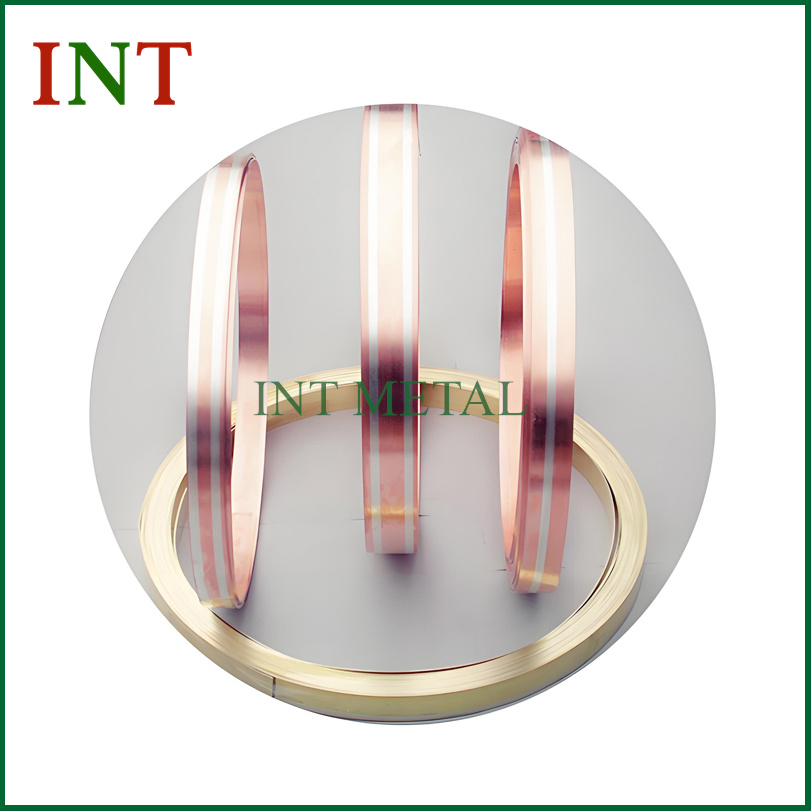
What Makes Silver Onlay Different From Ordinary Metal Strip?
I usually describe Silver Onlay as a functional composite strip rather than a simple plated material. The reason is simple. The silver layer is bonded to a selected area of the base metal through a controlled cladding process, so the material can provide a reliable conductive contact surface while keeping the rest of the strip economical and mechanically stable.
For many electrical applications, the whole strip does not need to be made from precious metal. Only the actual contact area needs high conductivity, corrosion resistance, and stable switching behavior. By placing silver exactly on that working zone, manufacturers can reduce unnecessary silver consumption without weakening the performance of the final component.
- It helps reduce precious metal waste during mass production.
- It supports consistent contact performance in repeated electrical operation.
- It can be processed into stamped parts for automated production lines.
- It reduces the need for extra welding or soldering after forming.
- It gives engineers more freedom when designing cost controlled contact parts.
Why Do I Recommend Silver Onlay For High Volume Electrical Manufacturing?
In high volume production, small differences in material structure can create major differences in cost, stability, and yield. If a factory uses a material that requires additional welding, soldering, or secondary bonding, every extra process may increase labor, inspection work, and quality risk. Silver Onlay helps simplify this situation because the precious metal layer is already integrated into the strip before the component is formed.
This is especially useful when the buyer needs continuous automatic manufacturing. A properly supplied onlay strip can move through stamping, forming, and assembly processes more smoothly. That means fewer handling steps and fewer chances for dimensional errors, weak joints, or inconsistent contact zones.
| Buyer Concern | How Silver Onlay Helps | Practical Value |
|---|---|---|
| High silver cost | Silver is applied only to the functional contact area | Better precious metal utilization |
| Unstable contact performance | The silver layer provides a conductive working surface | More reliable electrical behavior |
| Complex post processing | The strip can be formed without separate welding or soldering in many designs | Shorter production route |
| Mass production consistency | Composite strip structure supports continuous processing | Improved batch stability |
| Design flexibility | Base metal and silver area can be selected according to the application | More suitable custom material planning |
How Does Silver Onlay Support Better Cost Control Without Sacrificing Performance?
When I evaluate contact materials, I never look at unit price alone. A cheaper material can become expensive if it causes poor yield, unstable contact resistance, premature wear, or additional assembly work. The real question is whether the material can reduce total production cost while still meeting the electrical and mechanical requirements of the part.
Silver Onlay is valuable because it targets the most expensive material to the most important location. The copper, brass, or phosphor bronze base can carry the mechanical load, while the silver or silver alloy surface supports the electrical contact function. This structure makes sense for buyers who need strong price control but cannot afford quality problems in the field.
- For switch components, it can help maintain a stable conductive interface.
- For relay parts, it can support repeatable contact behavior during operation.
- For connector applications, it can help balance conductivity and material strength.
- For stamped electrical parts, it can improve production efficiency by reducing secondary operations.
Which Applications Can Benefit From Silver Onlay Materials?
I would consider Silver Onlay whenever an electrical component requires a defined silver contact area but does not justify the cost of full precious metal construction. This is why it is commonly considered for parts that need both electrical performance and economical base metal support.
| Application Area | Typical Requirement | Material Advantage |
|---|---|---|
| Switches | Stable contact surface and repeatable operation | Silver area supports conductivity where switching occurs |
| Relays | Reliable electrical contact under repeated cycles | Composite strip helps combine conductivity and formability |
| Contactors | Durable conductive zone with controlled material cost | Precious metal is concentrated on the working surface |
| Precision stamped parts | Good processing consistency during mass production | Strip format is suitable for automated forming |
| Electrical connectors | Balanced conductivity, strength, and dimensional stability | Base metal provides support while silver improves contact function |
Is Silver Onlay Better Than Welding A Silver Contact After Stamping?
In some traditional production routes, a silver contact is attached after the base part is stamped. That method can work, but it also adds process steps. Each additional step brings its own risk, including alignment deviation, weak bonding, inconsistent contact thickness, and higher labor cost. For high volume production, these small risks can become very expensive.
With Silver Onlay, the contact material is already integrated into the strip before forming. This can make the downstream process cleaner and more predictable. I do not see it as a universal replacement for every contact design, but for many stamped electrical components, it offers a more efficient way to build the contact surface directly into the material.
- It may reduce the number of separate joining steps.
- It can make the contact position more consistent before stamping.
- It supports cleaner production planning for automated lines.
- It may reduce inspection pressure caused by post attached contact points.
What Should Buyers Check Before Choosing Silver Onlay?
Before I recommend a material structure, I always want to understand the working conditions of the final component. A good supplier should not only ask for width, thickness, and quantity. They should also understand where the silver area sits, how the part will be stamped, what electrical load it will face, and whether the base metal needs extra spring performance, conductivity, or corrosion resistance.
For Silver Onlay, the most important buying details usually include the base material, silver alloy type, silver layer position, strip thickness, strip width, tolerance, coil condition, surface requirement, and end use. These details help avoid mismatched material selection and unnecessary production delays.
| Specification Item | Why It Matters | What I Would Confirm |
|---|---|---|
| Base metal | It affects strength, conductivity, spring behavior, and forming performance | Copper, brass, phosphor bronze, or another copper alloy |
| Silver area | It determines whether the contact zone matches the stamped part design | Onlay width, position, and layout |
| Strip thickness | It affects stamping accuracy and final part strength | Total thickness and tolerance range |
| Surface condition | It influences processing and electrical contact quality | Cleanliness, finish, and visible defect control |
| Production method | It determines how well the material fits automated manufacturing | Coil supply, stamping route, and forming needs |
How Can A Custom Silver Onlay Supplier Reduce Procurement Risk?
Procurement risk often starts when the supplier does not understand the final application. A drawing may show the dimensions, but it does not always explain the real problem the buyer is trying to solve. Is the buyer trying to reduce silver cost? Improve contact stability? Replace a welding process? Increase stamping speed? Reduce scrap? These questions matter.
This is why I prefer working with a manufacturer that can discuss the material structure instead of only quoting a standard strip. DONGGUAN INT METAL TECH CO.,LTD. provides different onlay options such as bronze based, brass based, and copper based composite strips, which gives buyers more room to match the material to the actual part design. When the material is selected correctly, the buyer gets more than a strip. They get a production ready solution that can fit their manufacturing route.
- I would ask for drawing review before confirming the final structure.
- I would confirm whether the silver contact area matches the working surface.
- I would check whether the strip condition is suitable for automatic stamping.
- I would discuss sample testing before moving into larger quantity orders.
- I would compare the full production cost rather than only the material price.
Why Is Silver Onlay A Practical Choice For Modern Electrical Contact Design?
Modern electrical component manufacturing is under pressure from every side. Buyers want lower cost, engineers want stable performance, factories want faster production, and end users expect fewer failures. A material that wastes precious metal or creates too many secondary processes can quickly become a weak point in the whole supply chain.
Silver Onlay answers this problem in a practical way. It does not rely on empty claims. It simply puts the right metal in the right place. The silver layer supports the contact function, while the base metal keeps the strip processable and cost controlled. That balance is exactly why this material continues to be attractive for switches, relays, contactors, and other precision electrical parts.
If you are developing a new electrical contact part, replacing a higher cost material, or improving a stamping process that currently depends on extra welding or soldering, I would seriously consider discussing a custom Silver Onlay structure. Share your drawing, target application, base metal preference, and contact performance requirements with DONGGUAN INT METAL TECH CO.,LTD. For samples, technical discussion, or a tailored quotation, please contact us today and leave your inquiry so the team can help you choose a material solution that fits your production needs.
