

How Can Round Tube Improve Structural Strength and Manufacturing Efficiency?
2026-05-26
Round tube products are widely used across construction, automotive manufacturing, furniture production, machinery engineering, agricultural systems, and industrial fabrication because of their outstanding balance of strength, durability, and cost efficiency. Choosing the right round tube material can significantly improve structural stability while reducing long-term maintenance and production costs. This article explores how round tube solutions help manufacturers and contractors achieve higher performance, better corrosion resistance, easier fabrication, and more reliable mechanical support in demanding applications.
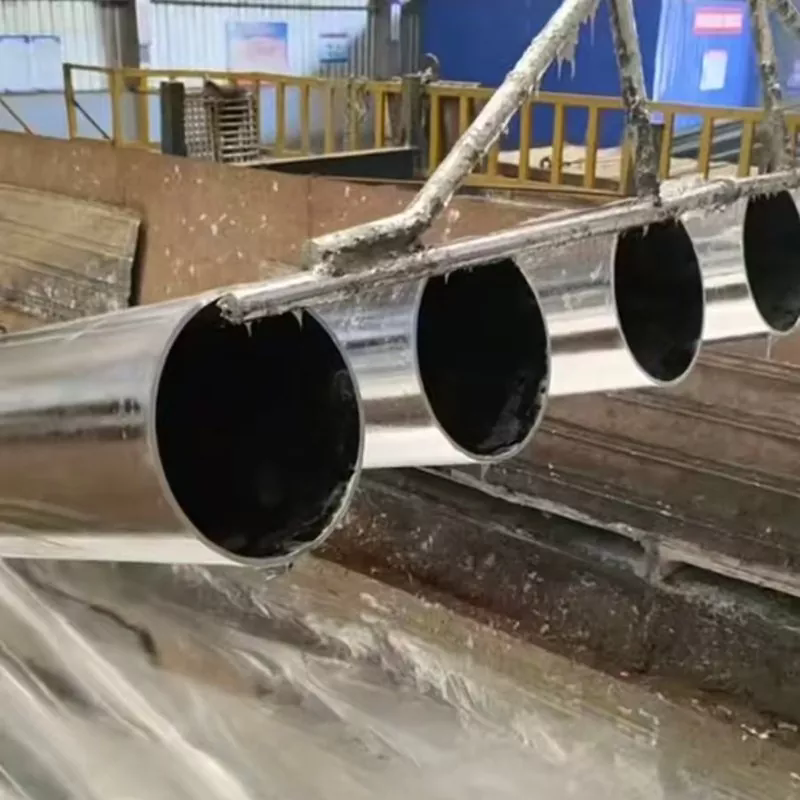
Table of Contents
- What Is a Round Tube?
- Why Is Round Tube Popular in Industrial Applications?
- Common Materials Used for Round Tube Manufacturing
- How Does Round Tube Improve Structural Performance?
- Industries That Commonly Use Round Tube
- How to Choose the Right Round Tube
- Surface Treatments and Finishing Options
- Benefits of Working With Professional Suppliers
- Maintenance Tips for Long-Term Performance
- Frequently Asked Questions
What Is a Round Tube?
A round tube is a hollow cylindrical metal product manufactured using various steel, stainless steel, aluminum, or alloy materials. Unlike solid bars, round tubes provide excellent strength while reducing overall weight, making them ideal for applications requiring durability without excessive material consumption.
Round tubes are commonly produced through seamless or welded manufacturing processes. Their smooth shape distributes stress evenly across the structure, which helps reduce deformation and improves load-bearing capability.
Key Characteristics of Round Tube
- High strength-to-weight ratio
- Excellent corrosion resistance
- Uniform load distribution
- Easy fabrication and welding
- Long service life
- Wide dimensional availability
- Cost-effective material utilization
Why Is Round Tube Popular in Industrial Applications?
Industrial engineers and manufacturers often select round tube products because they combine structural reliability with manufacturing flexibility. Compared with square or rectangular tubing, round tubes offer superior torsional resistance and improved pressure handling capability.
The circular profile minimizes weak points, allowing the tube to perform effectively under compression, tension, and rotational stress. This is especially important in construction frameworks, pipelines, vehicle chassis systems, and mechanical equipment.
Additionally, round tube products can be easily bent, cut, welded, drilled, and coated, making them suitable for customized fabrication projects.
| Feature | Round Tube Advantage |
|---|---|
| Structural Strength | Even stress distribution improves durability |
| Weight Efficiency | Lower weight compared with solid materials |
| Corrosion Resistance | Protective coatings enhance lifespan |
| Fabrication Flexibility | Easy to weld, bend, and machine |
| Cost Control | Reduced material waste and maintenance |
Common Materials Used for Round Tube Manufacturing
Different industries require different material properties. Selecting the correct round tube material directly affects performance, safety, and service life.
Carbon Steel Round Tube
Carbon steel round tubes are widely used for structural frameworks, machinery, and general engineering applications because of their affordability and strength.
Stainless Steel Round Tube
Stainless steel tubes provide superior corrosion resistance and attractive surface finishes, making them ideal for food processing, medical equipment, marine environments, and architectural projects.
Aluminum Round Tube
Aluminum tubes are lightweight and highly corrosion-resistant. They are commonly used in aerospace, transportation, and decorative applications.
How Does Round Tube Improve Structural Performance?
Round tube structures perform exceptionally well under dynamic loads and environmental stress. Their geometry helps distribute force uniformly throughout the surface, reducing the risk of localized cracking or structural failure.
This design advantage is particularly valuable in bridges, scaffolding, support columns, pipelines, and industrial machinery.
Major Structural Advantages
- Higher resistance to bending and torsion
- Improved pressure containment capability
- Better vibration resistance
- Reduced stress concentration points
- Enhanced fatigue resistance
- Long-term dimensional stability
Because of these benefits, many engineers prefer round tube designs when safety, reliability, and performance are critical requirements.
Industries That Commonly Use Round Tube
Round tube products support a wide variety of industrial and commercial applications worldwide.
| Industry | Typical Applications |
|---|---|
| Construction | Building frames, scaffolding, support systems |
| Automotive | Exhaust systems, chassis components |
| Furniture | Metal chairs, tables, shelving |
| Agriculture | Irrigation systems, equipment frames |
| Energy | Oil pipelines, renewable energy structures |
| Manufacturing | Machinery, conveyor systems |
How to Choose the Right Round Tube
Selecting the right round tube depends on several technical and operational factors. Buyers should carefully evaluate the working environment, mechanical requirements, and fabrication needs before placing an order.
Important Selection Factors
- Material type and corrosion resistance
- Wall thickness requirements
- Outer diameter specifications
- Load-bearing capacity
- Operating temperature conditions
- Surface finish requirements
- Welding and fabrication compatibility
- Budget and lifecycle cost considerations
Professional suppliers such as Shunchen can help customers select customized round tube solutions based on project requirements and industry standards.
Surface Treatments and Finishing Options
Surface treatment plays a major role in extending the lifespan and appearance of round tube products. Different coatings and finishes provide additional protection against moisture, chemicals, UV exposure, and corrosion.
- Hot-dip galvanizing for corrosion protection
- Powder coating for decorative durability
- Polishing for stainless steel applications
- Anodizing for aluminum tubes
- Industrial painting for environmental resistance
- Oil coating for temporary storage protection
Choosing the proper finish can reduce maintenance costs and improve product performance in harsh operating environments.
Benefits of Working With Professional Suppliers
Reliable suppliers help customers maintain consistent product quality, accurate dimensions, and timely delivery schedules. Experienced manufacturers also provide technical support, material certification, custom cutting services, and surface finishing options.
Shunchen supplies high-quality round tube products for multiple industries and supports customized production according to client specifications. Professional manufacturing control ensures stable mechanical performance and reliable long-term usage.
Advantages of Professional Manufacturing
- Strict quality inspection procedures
- Custom sizing capabilities
- Stable supply chain management
- International export experience
- Technical consultation support
- Competitive pricing and bulk supply
Maintenance Tips for Long-Term Performance
Although round tube products are highly durable, regular maintenance helps maximize their operational lifespan and appearance.
- Inspect surfaces regularly for corrosion or scratches
- Clean contaminants and debris periodically
- Repair damaged coatings immediately
- Store materials in dry environments
- Use compatible welding and fabrication methods
- Follow proper load limitations during operation
Preventive maintenance significantly reduces unexpected downtime and replacement expenses.
Frequently Asked Questions
What is the difference between seamless and welded round tube?
Seamless tubes are manufactured without welding seams and generally provide higher pressure resistance. Welded tubes are more cost-effective and suitable for many structural applications.
Which industries commonly use stainless steel round tube?
Stainless steel round tubes are commonly used in food processing, medical equipment, marine engineering, architecture, and chemical processing industries.
How do I choose the correct wall thickness?
Wall thickness depends on load requirements, pressure conditions, environmental factors, and fabrication methods. Consulting experienced suppliers is recommended.
Can round tubes be customized?
Yes. Many manufacturers provide customized dimensions, coatings, finishes, and material grades according to project specifications.
Conclusion
Round tube products continue to play a vital role in modern industrial manufacturing and construction because of their exceptional strength, versatility, durability, and cost efficiency. Whether used in structural engineering, machinery systems, transportation equipment, or architectural fabrication, high-quality round tubes help improve operational performance while reducing long-term maintenance concerns.
Shunchen is committed to providing reliable round tube solutions with stable quality, professional manufacturing support, and customized production services for global customers.
Need Reliable Round Tube Solutions?
If you are looking for high-quality round tube products for your next industrial or construction project, Shunchen can provide professional support, customized specifications, and dependable supply services. Contact us today to discuss your requirements and receive competitive product solutions tailored to your business needs.