

How Can Round Steel Bars Enhance Your Industrial Projects?
2026-06-01
Summary: Round steel bars are fundamental components in construction, manufacturing, and engineering projects. This article explores their types, properties, applications, and selection tips to help you make informed purchasing decisions and improve project efficiency.
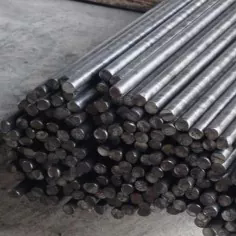
Table of Contents
- Introduction to Round Steel Bars
- Types of Round Steel Bars
- Key Properties and Specifications
- Applications in Industry
- Tips for Choosing the Right Round Steel Bar
- Frequently Asked Questions
Introduction to Round Steel Bars
Round steel bars, also known as round rods, are cylindrical metal products widely used in construction, machinery, automotive, and infrastructure industries. They are prized for their strength, durability, and versatility. Understanding the fundamental characteristics of round steel bars is essential for engineers, builders, and procurement managers seeking optimal performance and cost-efficiency.
- Material: Commonly carbon steel, alloy steel, or stainless steel.
- Production methods: Hot rolled, cold drawn, or forged.
- Surface finish: Smooth, polished, or rough depending on applications.
Types of Round Steel Bars
Round steel bars can be categorized based on material composition, production process, and surface treatment. Selecting the appropriate type is crucial for project safety and efficiency.
| Type | Material | Common Uses | Advantages |
|---|---|---|---|
| Carbon Steel Round Bar | Low to medium carbon | Construction, structural frameworks | High strength, cost-effective |
| Alloy Steel Round Bar | Steel with alloying elements | Machinery, automotive parts | Enhanced mechanical properties |
| Stainless Steel Round Bar | Chromium-nickel steel | Food processing, chemical industry | Corrosion-resistant, hygienic |
| Bright Drawn Round Bar | Carbon or alloy steel | Precision parts, shafts, fasteners | High dimensional accuracy, smooth finish |
Key Properties and Specifications
Understanding the physical and mechanical properties of round steel bars ensures you select a product that meets your project's demands. Important specifications include:
- Diameter: Commonly ranges from 6mm to 200mm.
- Length: Standard lengths are 6m or customized.
- Tensile strength: Critical for load-bearing applications.
- Hardness: Determines wear resistance.
- Surface quality: Smoothness affects machining efficiency.
Applications in Industry
Round steel bars are highly versatile and find applications across multiple sectors. Here’s a breakdown:
- Construction: Reinforcement, columns, and supports.
- Manufacturing: Shafts, pins, gears, and fasteners.
- Automotive: Axles, engine components, and suspension parts.
- Infrastructure: Bridges, railings, and pipelines.
- Industrial Equipment: Press tools, molds, and machinery rods.
Tips for Choosing the Right Round Steel Bar
Choosing the ideal round steel bar involves analyzing project requirements, environmental conditions, and cost-effectiveness. Follow these practical tips:
- Identify the load-bearing requirement: High-stress projects require high-tensile steel.
- Consider corrosion resistance: Stainless steel is best for humid or chemical environments.
- Check dimensional tolerance: For precision machining, bright drawn bars are recommended.
- Evaluate budget vs. performance: Carbon steel is cost-effective; alloy steels offer enhanced durability.
- Source from reputable suppliers: Ensure material certification and consistent quality.
Frequently Asked Questions
Q1: What is the difference between hot rolled and cold drawn round steel bars?
A1: Hot rolled bars are produced at high temperatures and are cost-effective but less precise. Cold drawn bars are pulled through dies at room temperature, resulting in higher dimensional accuracy and smoother surface.
Q2: Can round steel bars be cut or machined easily?
A2: Yes, most round steel bars can be cut, drilled, or machined. Cold drawn and alloy steel bars offer better machining performance.
Q3: How do I prevent corrosion in steel bars?
A3: Using stainless steel or applying protective coatings like galvanization helps prevent rust and prolongs service life.
Q4: Are customized sizes available for round steel bars?
A4: Yes, most suppliers, including Shunchen, offer customized diameters, lengths, and surface finishes based on project requirements.
Conclusion
Round steel bars are essential for a wide range of industrial and construction applications. By understanding the types, properties, and correct selection methods, you can ensure project efficiency, safety, and cost-effectiveness. Choosing a reliable supplier like Shunchen guarantees quality, timely delivery, and expert support for your steel needs. For tailored solutions and inquiries, contact us today.
