

How Can Precision Stainless Steel Strips Help Me Solve Quality and Cost Problems at the Same Time?
2026-05-06
When I evaluate metal materials for stamping, springs, connectors, clips, and other high-precision parts, I do not only look at the base alloy. I look at consistency, edge condition, flatness, processing stability, and long-term supply reliability. That is exactly why I pay attention to Ningbo Dingyan Metal Products Co.Ltd. and its approach to Precision Stainless Steel Strips. In real purchasing work, I have learned that material selection is often where downstream problems begin or end. If the strip is unstable, my scrap rate rises, my tooling wears faster, my forming becomes unpredictable, and my customers start asking hard questions. If the strip is right, production becomes smoother, lead times become easier to manage, and the final part performs more reliably.
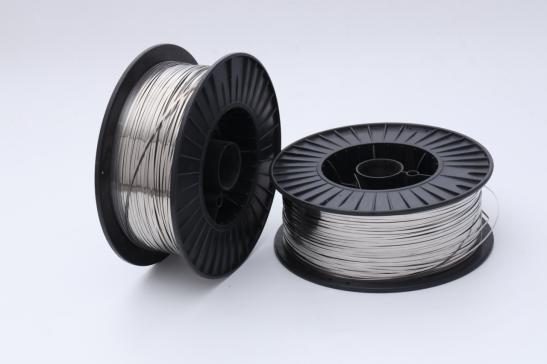
Why Do Buyers So Often Run Into Trouble When Choosing Stainless Strip Materials?
I have seen many projects run into the same set of problems. On paper, the material description may look acceptable, but once the strip enters actual production, the issues start appearing one after another. That is why I never treat Precision Stainless Steel Strips as a simple commodity purchase.
- I may receive material with inconsistent hardness, which affects forming and spring performance.
- I may find burrs or unstable edge quality, which creates safety risks and assembly issues.
- I may struggle with poor flatness, which reduces stamping accuracy.
- I may face surface defects that become visible on finished parts.
- I may lose time because the supplier cannot match size tolerances or processing expectations.
- I may end up paying more later through rework, rejection, downtime, and delayed delivery.
From my perspective, the real issue is not simply buying stainless strip. The real issue is buying a strip product that behaves predictably during slitting, stamping, bending, welding, spring forming, or precision assembly.
What Makes Precision Stainless Steel Strips Different From Ordinary Stainless Strip?
I think the difference becomes obvious when I stop looking at material as a catalog item and start looking at it as a production input. Ordinary strip may work for general use, but Precision Stainless Steel Strips are chosen when dimensional control, mechanical consistency, and surface quality directly affect the final product.
In practical terms, I expect a precision strip product to help me control risk in the following areas:
- More stable thickness and width performance for repeatable downstream processing
- Cleaner edge condition for safer handling and better part quality
- Better flatness and straightness for feeding and forming efficiency
- Reliable surface finish for visible or functional components
- Material options that support spring properties, corrosion resistance, or structural stability
- Custom processing capability that fits real manufacturing requirements rather than forcing me to compromise
That is why I see Precision Stainless Steel Strips as a performance material, not just a raw material.
Which Product Advantages Matter Most When I Compare Suppliers?
When I compare suppliers, I focus less on broad promises and more on the details that affect production every day. The supplier I trust needs to understand that my cost is not limited to the invoice price. My cost also includes waste, delays, machine interruption, inspection pressure, and customer complaints.
| What I Check | Why It Matters to Me | What It Can Influence Downstream |
|---|---|---|
| Thickness consistency | It helps me maintain stable forming and part accuracy | Stamping quality, spring force, fit and function |
| Width precision | It reduces mismatch in tooling and assembly | Yield rate, assembly efficiency, part uniformity |
| Edge quality | It lowers burr-related defects and handling issues | Safety, sealing, connector performance, appearance |
| Surface condition | It affects both visual quality and functional performance | Decorative parts, electronic parts, medical and industrial uses |
| Mechanical stability | It keeps my process repeatable from batch to batch | Bending, forming, resilience, fatigue behavior |
| Customization support | It saves me from adapting my process to unsuitable stock material | Procurement efficiency, project flexibility, lead time control |
For me, a strong supplier is the one that can turn these technical points into consistent commercial value.
How Can Better Strip Quality Reduce My Hidden Manufacturing Costs?
Many buyers focus on unit price first, and I understand why. Still, I have learned that cheap material can become expensive very quickly. If my strip quality is unstable, everything after purchasing becomes harder. My operators need more adjustments. My machines stop more often. My quality team spends more time sorting defects. My delivery commitments become harder to keep.
That is why I look at Precision Stainless Steel Strips through a total-cost lens. A more reliable strip can help me reduce hidden costs in several ways.
- I can lower rejection rates caused by thickness deviation or poor edge control.
- I can reduce damage to tooling and improve process continuity.
- I can improve repeatability across production lots.
- I can shorten inspection and correction time.
- I can support tighter finished-part requirements with fewer process compromises.
- I can protect customer trust by delivering more consistent end products.
That kind of benefit is not theoretical. It directly affects margins, scheduling, and how confidently I can scale an order.
What Kind of Applications Show the Real Value of Precision Stainless Steel Strips?
I usually see the strongest value in applications where the strip is not just present, but critical. In these cases, the material influences function, durability, or dimensional reliability in a very visible way.
| Application Area | Why Precision Matters | What Buyers Usually Care About |
|---|---|---|
| Springs and elastic components | Mechanical consistency affects rebound and service life | Hardness, fatigue behavior, forming stability |
| Connectors and electronic parts | Small tolerances influence fit, conductivity, and assembly | Surface finish, precision width, edge cleanliness |
| Stamping parts | Material variation changes part accuracy and yield | Flatness, thickness uniformity, processing reliability |
| Automotive components | Long-term performance and production consistency are essential | Strength, consistency, corrosion resistance |
| Clamps, clips, and fastening parts | Edge quality and resilience influence function and safety | Burr control, toughness, dimensional precision |
| Industrial and medical-use parts | Material reliability supports quality assurance and end-use confidence | Clean surface, stability, trustworthy supply |
When I source for these kinds of industries, I do not want a vague answer about quality. I want evidence that the supplier understands application-driven requirements.
How Do I Know Whether a Supplier Can Support Custom Requirements Instead of Standard Sales Talk?
I usually ask myself a simple question. Can this supplier adapt to my production reality, or are they only trying to sell what is easiest for them to produce? That question saves me time.
A capable supplier of Precision Stainless Steel Strips should be able to discuss more than general product descriptions. I expect a real conversation around:
- Requested thickness and width range
- Hardness or temper expectations
- Surface finish preferences
- Edge requirements for safety or processing
- Coil condition and packaging suitability
- Tolerance sensitivity for the final application
- Production lead time and batch consistency
What I appreciate about a serious manufacturer is not loud branding. It is the ability to turn these questions into clear and workable solutions. When a supplier understands customization well, I spend less time explaining the same issue repeatedly and more time moving the project forward.
Why Does Supply Stability Matter As Much As Technical Performance?
Even a technically good material can become a problem if the supply chain is unstable. I have had cases where a material sample looked promising, but follow-up batches were inconsistent, lead times drifted, or communication became slow the moment the order moved past quotation.
That is why I also evaluate supplier strength from an operational angle. I want a partner that can support ongoing demand, not just an attractive first quote. For long-term projects, stable supply helps me protect inventory planning, customer delivery schedules, and internal forecasting. In my experience, reliable purchasing happens when technical quality and supply discipline work together.
What Should I Ask Before I Place an Order for Precision Stainless Steel Strips?
Before I move into final procurement, I like to ask a set of practical questions that reveal whether the supplier is truly prepared for the project.
- Can you match the thickness, width, hardness, and surface requirements I need?
- Can you maintain consistency across repeated orders?
- How do you control edge quality and surface defects?
- Can you support custom specifications for my application?
- What industries do you typically serve with this product?
- How do you handle lead time, packaging, and shipment protection?
- Can your team communicate clearly when technical adjustments are needed?
These questions may look basic, but they often reveal whether I am dealing with a true production partner or a trading-style sales response with limited technical depth.
How Do I Turn Better Material Selection Into Better Customer Confidence?
At the end of the day, my customers rarely ask me whether I chose the cheapest strip. They ask whether my parts are stable, whether deliveries are on time, and whether the product performs as expected. That is why choosing the right Precision Stainless Steel Strips matters far beyond procurement. It affects reputation.
When I source from a manufacturer that values precision, customization, and supply consistency, I can quote with more confidence, produce with fewer surprises, and serve my own market more effectively. That is the reason I pay attention to suppliers like Ningbo Dingyan Metal Products Co.Ltd., especially when I need strip materials that are expected to perform, not merely exist on a specification sheet.
What Should I Do If I Want a More Reliable Source for My Next Project?
If I am preparing a project that requires dependable strip quality, stable specifications, and support for real manufacturing conditions, I do not want to wait until production problems appear. I want to discuss requirements early, confirm what is possible, and choose a supplier that understands precision from both a technical and practical point of view. If you are also looking for a trustworthy source of Precision Stainless Steel Strips, now is the right time to compare requirements, share your drawings or material expectations, and move the conversation forward. Contact us today to discuss your application, request product details, or send an inquiry for your next order.