

How Can Metal Nanoparticle Materials Improve Real Industrial Performance?
2026-04-17
When I evaluate advanced materials for demanding applications, I do not look for buzzwords. I look for consistency, functional value, and a supplier that understands how performance at the nanoscale affects results in the real world. That is why, when discussing Metal Nanoparticle solutions, I think it makes sense to gradually introduce Dongguan SAT nano technology material Co., LTD as a manufacturing partner that fits practical purchasing expectations. In many projects, the real question is not whether Metal Nanoparticle materials sound innovative, but whether they can help me solve problems related to reactivity, conductivity, dispersion, surface activity, and product stability in a way that supports production goals.
I have seen many buyers hesitate because nano materials can look overly technical at first glance. In reality, the value becomes easier to understand when I connect the material to real use cases such as conductive systems, catalytic reactions, additive engineering, functional coatings, research programs, and specialized manufacturing. A well-selected Metal Nanoparticle can help improve surface interaction, reduce material loading in some formulations, and support better control over performance-sensitive processes.
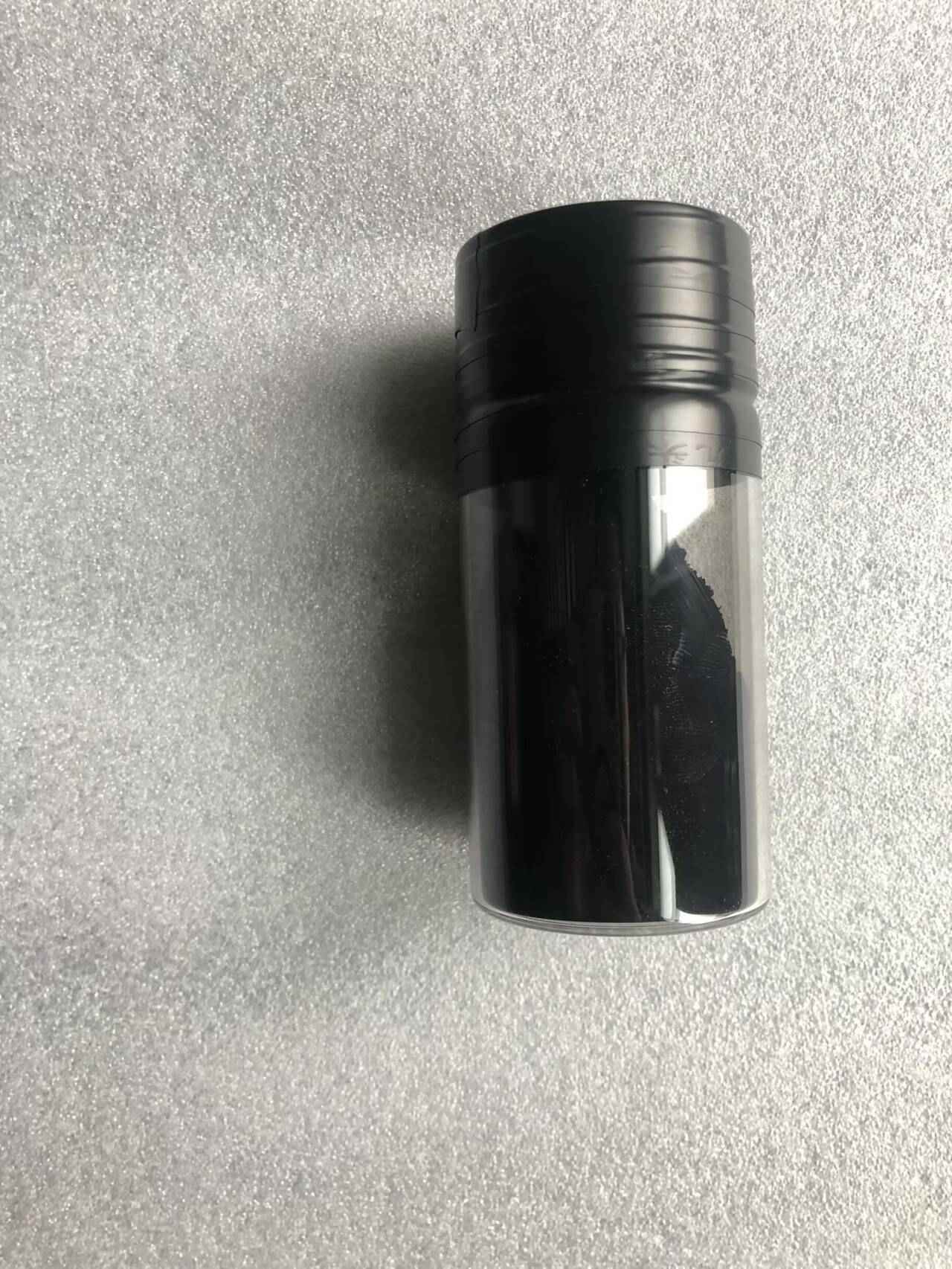
What Makes Metal Nanoparticle Materials Different From Conventional Powders?
The difference starts with size, but the real story goes much deeper than that. When particle dimensions move into the nanoscale range, surface area increases dramatically relative to volume. That change can influence reactivity, sintering behavior, catalytic efficiency, electrical response, and interaction with surrounding media. From my perspective, this is why Metal Nanoparticle materials attract attention in industries that need more than ordinary bulk metal powders can deliver.
Traditional metal powders still have clear value, especially in applications where particle size does not define functional performance. However, when I need better sensitivity, more active surface participation, or tailored physical behavior, nano-scale materials often become more relevant. The benefit is not that they replace every conventional option. The benefit is that they open technical possibilities that standard materials may not achieve as efficiently.
- I can target higher active surface exposure for reaction-driven systems
- I can improve formulation opportunities for coatings, dispersions, and composites
- I can explore conductivity and functional enhancement with smaller material structures
- I can work toward better material integration in advanced R&D and specialty manufacturing
Why Do Buyers Often Struggle When Choosing the Right Nano Material Supplier?
In my experience, buyers rarely struggle because they do not understand the application. They struggle because too many offers look similar on the surface. Product names may sound interchangeable, yet the actual purchasing risks are very different. One supplier may offer attractive pricing but limited control over particle consistency. Another may provide technical language without enough support on packaging, purity range, dispersion options, or application matching.
That is where supplier evaluation becomes essential. I usually want to understand whether the manufacturer can support more than a single product code. A strong supplier is more useful when it can support a broader nano-material ecosystem and discuss how one material choice may compare with another. This matters because sourcing is not just about buying powder. It is about reducing trial-and-error and improving the chance that the selected Metal Nanoparticle fits the process from the beginning.
| Buyer Concern | Why It Matters | What I Usually Check |
|---|---|---|
| Particle consistency | It affects repeatability in production and testing | Size range, batch control, technical communication |
| Material suitability | Not every nano metal fits every application | Target function, environment, compatibility |
| Supply flexibility | Projects may need scale-up or product variation | Available product families and customization support |
| Handling and packaging | Nano materials require careful storage and transport | Packaging method, shipping response, documentation |
| Application guidance | Technical fit reduces waste and delays | Supplier responsiveness and use-case understanding |
Which Applications Benefit Most From Metal Nanoparticle Performance?
I find that the strongest demand often comes from buyers who need function-driven material performance rather than simple commodity input. For example, in catalytic systems, the surface characteristics of nano metals can support more active interaction. In conductive formulations, small particle structures may help with network formation or specialized response. In advanced materials development, the right Metal Nanoparticle may contribute to reinforcement, sensitivity, or process innovation.
What matters to me is not treating all applications as identical. A material that works well in one formulation may not be the best fit for another. That is why application-focused selection is smarter than keyword-based sourcing. I prefer to match the purchase to the job instead of chasing a generic specification.
- Catalysts and catalytic supports where active surface behavior matters
- Sensors and functional systems requiring sensitive material response
- Composite reinforcement where material structure can influence final properties
- Conductive or electronic-related research and manufacturing projects
- Advanced coatings, inks, dispersions, and specialized processing environments
How Can I Judge Whether a Metal Nanoparticle Product Matches My Project?
I usually start with function instead of chemistry alone. That means I ask what the material must actually do inside the final application. Does it need to improve conductivity, support catalytic activity, enhance surface behavior, or contribute to structural performance? Once that is clear, I can narrow material selection more intelligently.
Then I look at practical issues. I ask how the material will be processed, how it will be stored, and whether it needs to be used as a dry powder or adapted to a liquid system. I also think about production scale. A lab trial and an industrial purchasing decision should not be treated as the same sourcing exercise. When buyers skip these steps, they often blame the material when the real issue was poor matching between product properties and process requirements.
| Selection Factor | Question I Ask | Reason It Helps |
|---|---|---|
| Application goal | What problem am I trying to solve? | It keeps sourcing focused on end-use value |
| Material type | Which metal is best suited to the task? | Different metals behave differently under process conditions |
| Form and handling | Do I need powder, dispersion, or another format? | Handling affects usability and production efficiency |
| Scale | Is this for R&D, pilot work, or volume purchasing? | Supply planning changes with project stage |
| Supplier support | Can the manufacturer discuss real application needs? | Good support reduces technical and purchasing risk |
What Do I Look For in a Reliable Nano Materials Manufacturer?
I look for breadth, clarity, and responsiveness. Breadth matters because it shows the supplier is not limited to one isolated product. Clarity matters because nano materials are too specialized for vague communication. Responsiveness matters because most buyers are trying to move from concept to trial to procurement without wasting months on unclear data and slow replies.
From that perspective, a company such as Dongguan SAT nano technology material Co., LTD becomes relevant not because of marketing language, but because a broader materials offering can support more realistic project discussions. If I am comparing metals, oxides, dispersions, alloys, or adjacent nano material systems, it helps to work with a source that understands those relationships and can speak to practical purchasing logic rather than just listing item names.
I also value suppliers that understand how buyers think. Most of us are balancing performance, lead time, testing requirements, and budget at the same time. A useful supplier helps organize those variables instead of making procurement more complicated.
Is Technical Variety Important When Buying Metal Nanoparticle Products?
Yes, and I would say it is more important than many first-time buyers realize. Technical variety does not just mean having more products on a catalog page. It means the manufacturer can support a broader discussion about options. If silver, copper, nickel, iron, tungsten, titanium, or other nano metals serve different goals, then variety gives me room to compare and source more intelligently.
That flexibility matters in real purchasing work. I may start with one material and later discover that another option is more suitable for the target environment, conductivity range, or cost-performance balance. If the supplier can support those shifts, I save time and reduce procurement friction. In other words, product variety improves buying efficiency as much as it improves technical choice.
- It gives me alternatives when my first choice is not ideal
- It supports project evolution from lab testing to scaled sourcing
- It helps me compare cost-performance tradeoffs more clearly
- It reduces the need to manage too many separate suppliers
How Do I Turn Nano Material Interest Into a Better Purchasing Decision?
I try to keep the decision process grounded. First, I define the performance target. Second, I narrow the material family. Third, I compare supplier capability, communication quality, and practical support. That sounds simple, but it prevents a lot of expensive confusion. Buyers sometimes jump straight to price comparison, and that can backfire when nano materials require more precise alignment with process requirements.
I also make sure I ask better questions. Instead of asking only for a quotation, I ask how the product is typically used, what form is available, how the supplier approaches consistency, and whether there are related material options worth considering. Those questions usually reveal whether I am dealing with a sales listing or with a manufacturer that can genuinely support a project.
When the goal is long-term value, the best purchasing decision is rarely the one that looks cheapest at first glance. It is the one that reduces rework, supports application success, and helps me move forward with more confidence.
What Should I Do Next If I Want to Source the Right Metal Nanoparticle?
If I am serious about improving product performance, refining a formulation, or moving a nano-material project toward commercial use, the next step is not guessing. The next step is starting a real technical conversation. A capable manufacturing partner can help me compare options, clarify suitable material paths, and reduce the uncertainty that often slows down sourcing decisions.
If you are currently exploring Metal Nanoparticle solutions for catalysts, conductive applications, advanced materials, or specialized research, this is the right time to move from browsing to action. Tell your supplier what you are trying to improve, what environment the material will face, and what stage your project is in. If you want structured support and practical product communication, contact us and send your inquiry to Dongguan SAT nano technology material Co., LTD. A clear discussion today can save you significant time in testing, sourcing, and final project execution.