

How Can an Acme Trapezoidal Screw Improve Precision, Load Capacity, and Service Life in Industrial Applications?
2026-06-10
Article Summary
Selecting the right linear motion component is critical for equipment reliability, positioning accuracy, and long-term operating efficiency. An Acme Trapezoidal Screw is widely used in lifting systems, automation equipment, machine tools, medical devices, packaging machinery, and industrial positioning systems because of its excellent load-bearing capability, self-locking characteristics, durability, and cost-effectiveness.
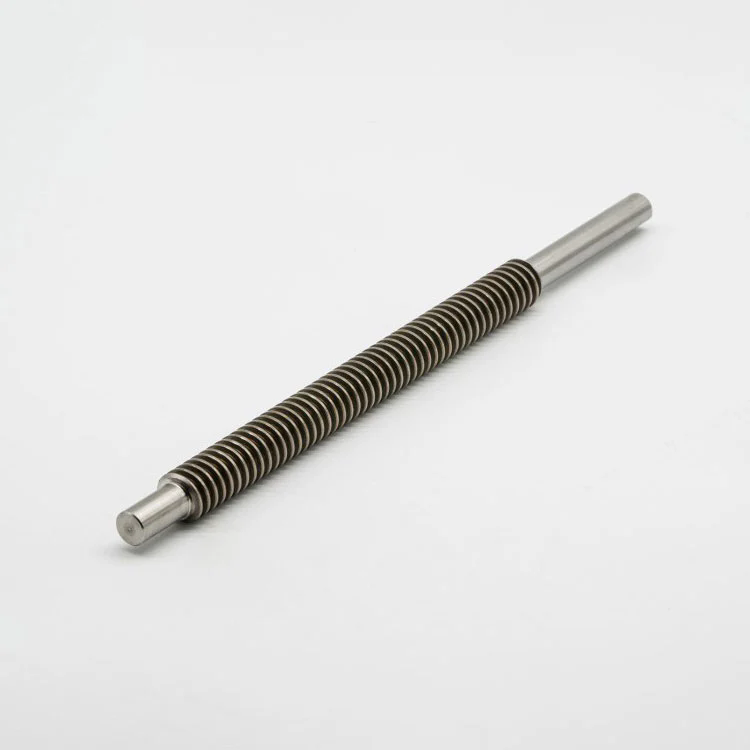
This article explores how an Acme Trapezoidal Screw works, its advantages, common applications, material options, design considerations, maintenance practices, and selection guidelines. Whether you are designing new equipment or upgrading an existing system, understanding these factors can help you achieve better performance and reduce maintenance costs.
Table of Contents
- What Is an Acme Trapezoidal Screw?
- How Does an Acme Trapezoidal Screw Work?
- Why Choose an Acme Trapezoidal Screw?
- Common Industrial Applications
- Material and Surface Treatment Options
- How to Select the Right Screw
- Acme Trapezoidal Screw vs Ball Screw
- Maintenance and Service Life Tips
- Why Manufacturers Choose Maitu
- Frequently Asked Questions
- Conclusion
What Is an Acme Trapezoidal Screw?
An Acme Trapezoidal Screw is a power transmission component designed to convert rotary motion into linear movement. The screw features a trapezoidal thread profile that provides a larger contact surface between the screw and nut compared with standard V-shaped threads.
Because of this geometry, Acme Trapezoidal Screws can transmit high loads while maintaining smooth and reliable motion. They are frequently selected for applications requiring controlled linear movement, lifting mechanisms, positioning systems, and force transmission.
The thread profile is specifically engineered to reduce wear, improve efficiency, and increase load distribution. This makes the screw suitable for both manual and motor-driven systems.
How Does an Acme Trapezoidal Screw Work?
The operating principle is straightforward. As the screw rotates, the mating nut travels along the screw shaft. Depending on system design, either the screw rotates while the nut moves, or the nut rotates while the screw remains stationary.
This conversion of rotational energy into linear motion enables precise positioning and controlled movement across a wide range of industrial equipment.
| Component | Function |
|---|---|
| Screw Shaft | Provides threaded drive surface for motion transmission |
| Nut | Moves along the threaded shaft to create linear motion |
| Bearing System | Supports rotational movement and load transfer |
| Drive Motor | Supplies rotational force |
| Coupling | Connects motor output to screw shaft |
The relatively large thread angle contributes to stable operation and dependable load-carrying performance under demanding working conditions.
Why Choose an Acme Trapezoidal Screw?
Many engineers prefer Acme Trapezoidal Screws because they provide an effective balance between performance, durability, and affordability.
Key Advantages
- High load-carrying capacity
- Excellent wear resistance
- Self-locking capability in many applications
- Reliable positioning accuracy
- Cost-effective solution for linear motion systems
- Long service life when properly maintained
- Suitable for harsh industrial environments
- Available in a wide range of diameters and thread pitches
One particularly valuable feature is self-locking performance. In many vertical lifting applications, the load remains in position even when power is removed, improving operational safety and reducing the need for additional braking mechanisms.
Common Industrial Applications
Acme Trapezoidal Screws are used across numerous industries where precise linear movement and reliable load transmission are required.
| Industry | Typical Application |
|---|---|
| Industrial Automation | Linear actuators and positioning systems |
| Machine Tools | Feed mechanisms and adjustment systems |
| Packaging Equipment | Height adjustment and product handling |
| Medical Equipment | Patient beds and positioning devices |
| Material Handling | Lifting platforms and conveyors |
| Aerospace Support Systems | Ground support positioning equipment |
| Agricultural Machinery | Control and adjustment mechanisms |
| Construction Equipment | Load positioning and lifting devices |
Their versatility allows engineers to integrate them into both simple mechanical systems and highly sophisticated automated equipment.
Material and Surface Treatment Options
Material selection directly affects strength, wear resistance, corrosion protection, and operating life.
| Material | Main Benefits |
|---|---|
| Carbon Steel | High strength and economical cost |
| Alloy Steel | Enhanced durability and fatigue resistance |
| Stainless Steel | Excellent corrosion resistance |
| Hardened Steel | Superior wear resistance for heavy-duty use |
Additional surface treatments may include:
- Induction hardening
- Nitriding
- Chrome plating
- Black oxide coating
- Zinc plating
- Anti-corrosion protective coatings
Selecting the correct material and treatment combination helps maximize reliability under specific operating conditions.
How to Select the Right Screw
Choosing an Acme Trapezoidal Screw requires careful evaluation of multiple engineering parameters.
Important Selection Factors
- Load requirements
- Travel distance
- Operating speed
- Duty cycle
- Environmental conditions
- Required positioning accuracy
- Lubrication requirements
- Installation space limitations
Before finalizing specifications, engineers should calculate axial load, buckling resistance, critical speed, and expected service life. Proper sizing prevents premature wear and ensures stable operation.
Acme Trapezoidal Screw vs Ball Screw
Many customers compare Acme Trapezoidal Screws with ball screws during the design stage.
| Feature | Acme Trapezoidal Screw | Ball Screw |
|---|---|---|
| Cost | Lower | Higher |
| Self-Locking | Often Available | Generally Not Available |
| Efficiency | Moderate | Very High |
| Maintenance | Simple | More Demanding |
| Shock Resistance | Excellent | Good |
| Load Holding | Strong | Requires Additional Brake |
For applications emphasizing load holding, durability, and budget efficiency, Acme Trapezoidal Screws remain a preferred choice.
Maintenance and Service Life Tips
Even the highest-quality screw system requires proper maintenance to achieve maximum longevity.
Best Practices
- Apply suitable lubrication regularly
- Keep screw threads free from contaminants
- Inspect for wear and backlash periodically
- Verify alignment during installation
- Avoid overload conditions
- Protect against corrosive environments
- Monitor operating temperatures
- Replace worn nuts before excessive thread damage occurs
Preventive maintenance significantly reduces downtime and helps maintain positioning accuracy throughout the system's service life.
Why Manufacturers Choose Maitu
When sourcing precision motion components, consistency and manufacturing expertise are essential. Maitu provides Acme Trapezoidal Screw solutions designed to meet demanding industrial requirements across automation, machinery, lifting systems, and customized engineering projects.
Maitu focuses on precision machining, strict quality control, reliable material selection, and customized production capabilities. Whether customers require standard dimensions or application-specific designs, the company supports projects with professional engineering assistance and dependable manufacturing performance.
By combining advanced production processes with extensive industry experience, Maitu helps customers improve equipment reliability, operational efficiency, and long-term value.
Frequently Asked Questions
Q1: What is the primary advantage of an Acme Trapezoidal Screw?
Its ability to carry heavy loads while providing reliable linear motion and self-locking capability in many applications.
Q2: Can Acme Trapezoidal Screws be used in vertical lifting systems?
Yes. They are widely used in lifting equipment because they can hold loads securely when power is removed.
Q3: What materials are commonly used?
Carbon steel, alloy steel, stainless steel, and hardened steel are among the most common choices.
Q4: How often should lubrication be performed?
Lubrication frequency depends on load, speed, environment, and operating hours. Regular inspections help establish an optimal maintenance schedule.
Q5: Can customized thread dimensions be manufactured?
Yes. Many manufacturers, including Maitu, offer custom diameters, thread pitches, lengths, and special machining options.
Q6: Are Acme Trapezoidal Screws suitable for automated machinery?
Absolutely. They are commonly integrated into automated equipment requiring dependable and repeatable linear movement.
Conclusion
Acme Trapezoidal Screws continue to play a vital role in modern industrial motion systems. Their combination of strength, reliability, wear resistance, load-holding capability, and cost efficiency makes them an ideal solution for a wide range of applications. By selecting the appropriate material, thread specification, and maintenance strategy, manufacturers can significantly improve equipment performance and operational longevity.
If you are looking for high-quality Acme Trapezoidal Screw solutions tailored to your project requirements, Maitu can provide professional engineering support and customized manufacturing services. Contact us today to discuss your application and discover how the right screw solution can improve your equipment performance, reliability, and productivity.