

How Can Aluminum Hollow Rivets Improve Assembly Speed and Reduce Material Costs in Manufacturing
2026-04-07
In modern manufacturing, Aluminum Hollow Rivets offered by Nuote provide a strategic advantage by significantly accelerating assembly lines while lowering material expenses. Their lightweight design and efficient installation make them a superior alternative to traditional fasteners.
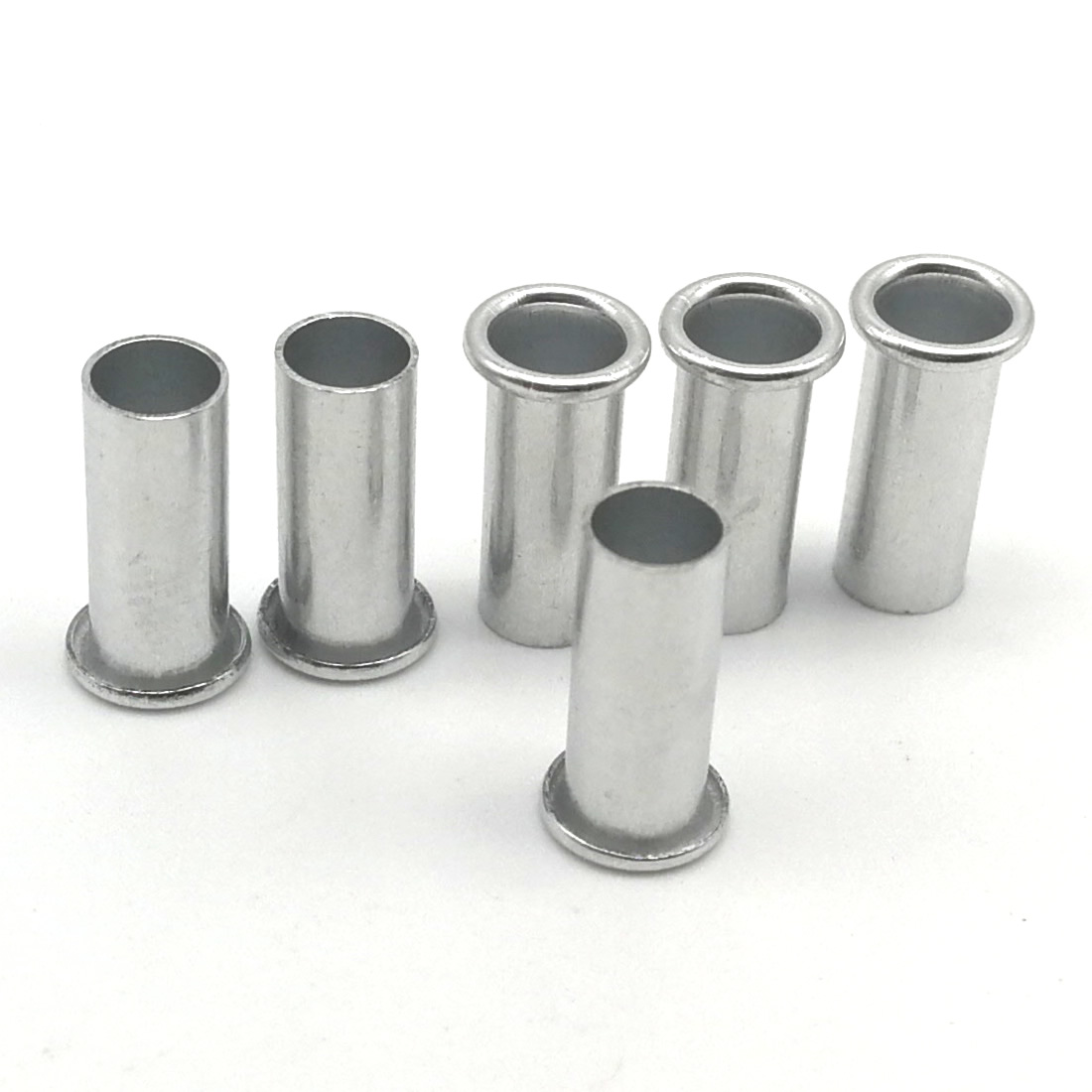
The Speed Advantage of Aluminum Hollow Rivets
Unlike solid rivets that require high force and precise alignment, Aluminum Hollow Rivets are designed for rapid deformation using standard riveting tools. The hollow core reduces the force needed for setting, allowing workers to complete up to 50% more joints per hour. This directly translates into shorter cycle times and higher throughput. Nuote engineers these rivets with precision tolerances to ensure consistent seating and minimal jamming in automated feeding systems.
Material Cost Reduction Benefits
The hollow structure uses less raw aluminum per unit, lowering the base material cost compared to solid rivets. Additionally, because Aluminum Hollow Rivets require lower installation force, tooling wear is reduced by approximately 30%, extending equipment life. Their lightweight nature also reduces shipping weight per batch. Nuote optimizes the rivet geometry to maximize strength while minimizing aluminum usage, achieving savings without compromising joint integrity.
Comparative Performance Overview
| Feature | Solid Rivets | Aluminum Hollow Rivets (Nuote) |
|---|---|---|
| Installation force | High | Low |
| Material usage per 1000 pcs | Heavy | Light (saves ~25% aluminum) |
| Assembly speed (joints/hour) | 400-500 | 700-800 |
| Tool wear frequency | High | Low |
Industries Benefiting the Most
-
Automotive interior assembly – Faster door panel and trim attachment.
-
Consumer electronics – Reduced component weight and faster casing assembly.
-
Light structural frames – Lower labor cost and fewer rejected joints.
Aluminum Hollow Rivets FAQ
Q1: Can Aluminum Hollow Rivets provide the same shear strength as solid rivets for most manufacturing applications?
A1: Yes, for many non-critical structural applications, Aluminum Hollow Rivets offer comparable shear strength—typically within 85-95% of solid rivets. The hollow design concentrates material at the shear plane, which maintains joint integrity. Nuote recommends reviewing specific load requirements, but for sheet metal assemblies, enclosures, and trim components, they perform reliably while offering cost and speed benefits.
Q2: What is the typical installation time difference between Aluminum Hollow Rivets and blind rivets on an automated assembly line?
A2: Aluminum Hollow Rivets install approximately 30-40% faster than standard blind rivets on automated lines because they require shorter stroke lengths and lower pull forces. The hollow core collapses more predictably, reducing cycle time from 1.2 seconds to about 0.8 seconds per rivet on high-speed equipment. Nuote provides optimized rivet geometries that are compatible with most pneumatic and servo-driven riveting systems, minimizing changeover delays.
Q3: How do Aluminum Hollow Rivets help reduce overall manufacturing costs beyond just material savings?
A3: Beyond lower raw material costs, Aluminum Hollow Rivets reduce three additional expense areas: (1) Lower energy consumption per rivet due to reduced installation force, (2) Less frequent tool replacement because the lighter setting force minimizes mandrel and jaw wear, and (3) Reduced shipping costs since 1,000 hollow rivets weigh about 25-30% less than solid ones. Nuote customers report an average total cost reduction of 18-22% after switching from solid rivets to aluminum hollow designs.
Ready to optimize your assembly line with Aluminum Hollow Rivets from Nuote? Our engineering team provides free sample testing and cycle time analysis. Reach out today to discuss your specific application requirements and receive a customized cost-saving report.