

How Can a Three-Dimensional Folding Adjustable Tension Hinge Reduce Door Sagging Over Time
2026-10-29
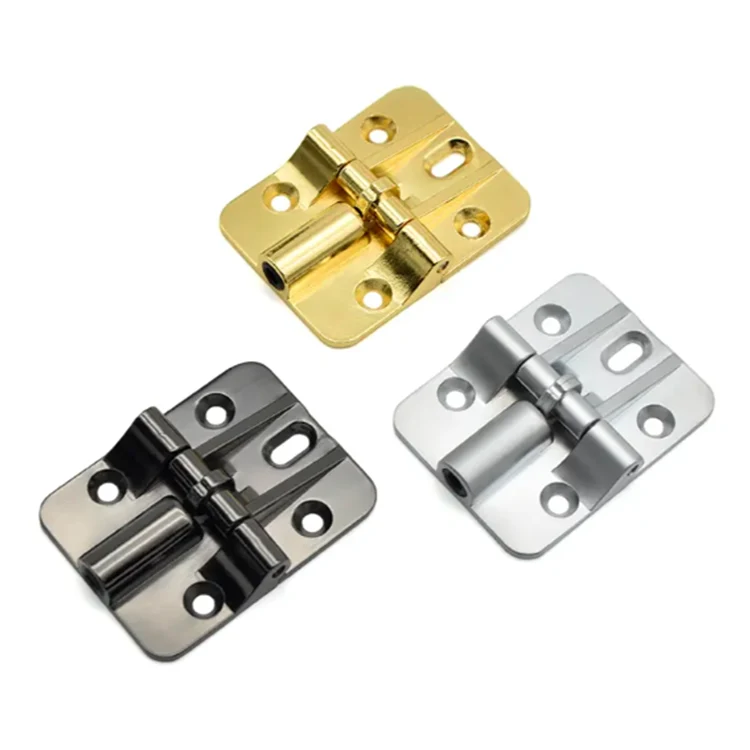
Door sagging is one of the most common complaints in cabinetry and furniture, yet it is largely preventable with the right hardware. A Three-Dimensional Folding Adjustable Tension Hinge from Ousiming addresses the root causes of sag rather than merely masking the symptom, combining multi-axis adjustability with tunable tension control in a single mechanism. This article explains the engineering behind that design and how it translates into long-term door alignment.
Why Doors Sag in the First Place
Sagging rarely stems from a single failure. It is usually the cumulative result of several forces acting on the door-leaf connection:
-
Gravitational load on wide or solid-core doors, which increases torque at the hinge plate
-
Cyclic loading from daily opening and closing, which loosens fasteners over time
-
Material fatigue in mounting screws and wood substrates
-
Misalignment introduced during installation or after seasonal humidity shifts
Traditional fixed hinges offer no correction path once these forces take effect. A Three-Dimensional Folding Adjustable Tension Hinge is engineered to absorb and correct them.
The Three Adjustment Axes and Their Role in Sag Control
The defining feature of a Three-Dimensional Folding Adjustable Tension Hinge is independent control across three axes. Each axis solves a distinct sag-related problem:
| Adjustment Axis | Direction of Movement | Sag-Related Function |
|---|---|---|
| Depth (X-axis) | In/out relative to cabinet body | Corrects door-to-frame gaps and seal compression |
| Height (Y-axis) | Up/down along the hinge plate | Compensates for vertical drop from load |
| Overlay (Z-axis) | Side-to-side lateral shift | Fixes rubbing and uneven reveal after settling |
Because each axis adjusts independently, a technician can correct vertical drop without disturbing the door's flush fit — a precision that two-axis hinges cannot deliver.
How Adjustable Tension Directly Counteracts Sag
Tension control is the second pillar of the design. In a Three-Dimensional Folding Adjustable Tension Hinge, the spring or cam tension can be tuned to match the door's weight and usage frequency.
-
Heavier doors benefit from increased tension, which resists downward drift at the leaf
-
High-cycle environments (commercial kitchens, office storage) benefit from tension that maintains consistent closing force without overloading the mounting points
-
Lightweight doors benefit from reduced tension to prevent binding and premature wear
The table below summarizes recommended tension settings by application:
| Door Type | Typical Weight Range | Recommended Tension Setting | Adjustment Interval |
|---|---|---|---|
| Light cabinet door | Under 5 kg | Low | 12–18 months |
| Standard wardrobe door | 5–12 kg | Medium | 9–12 months |
| Solid-core / commercial door | 12–20 kg | High | 6–9 months |
Installation Practices That Maximize Sag Resistance
Even the best hardware depends on correct installation. Ousiming recommends the following practices:
-
Use hinge plates rated for the door weight and substrate
-
Pre-drill pilot holes to prevent screw pull-out
-
Set depth adjustment before height and overlay
-
Verify tension after the first 50 open/close cycles
-
Re-check all three axes after seasonal humidity changes
Following this sequence ensures the Three-Dimensional Folding Adjustable Tension Hinge operates within its designed correction range rather than compensating for installation error.
Frequently Asked Questions
How often should the tension on a Three-Dimensional Folding Adjustable Tension Hinge be re-adjusted?
Tension should be checked every 6–12 months depending on door weight and usage frequency; heavy commercial doors warrant inspection every 6 months, while light residential cabinet doors can go 12–18 months between checks.
Can a Three-Dimensional Folding Adjustable Tension Hinge correct sagging on an already-installed door?
Yes — the height axis allows vertical correction of up to several millimeters without removing the door, and the depth and overlay axes resolve secondary misalignment, making retrofit correction practical in most cabinet configurations.
What causes a Three-Dimensional Folding Adjustable Tension Hinge to lose its adjustment over time?
The most common causes are screw loosening from cyclic loading, substrate compression in particleboard or softwood, and seasonal humidity expansion; periodic re-torquing of fasteners and tension verification prevents drift.
Is a Three-Dimensional Folding Adjustable Tension Hinge suitable for solid-core doors?
Yes, provided the hinge is rated for the door weight and tension is set to the high range; Ousiming recommends confirming load ratings before specifying hardware for doors above 20 kg.
Conclusion
Sagging is a mechanical problem with a mechanical solution. By combining three independent adjustment axes with tunable tension, a Three-Dimensional Folding Adjustable Tension Hinge gives installers and maintenance teams the tools to correct drift before it becomes visible damage. Ousiming designs its hinge line around exactly this principle — precision adjustment that holds under load.
Contact us today to discuss load ratings, sample requests, or specification support for your next project, and let our team help you select the right Three-Dimensional Folding Adjustable Tension Hinge configuration.