

How Can a 304 Alloy Steel Forged Butt Welding Flange Make Pipeline Connections Safer and Easier to Maintain?
2026-05-14
When I look at a pipeline project, I rarely judge a flange by appearance alone. I care more about how it behaves under pressure, heat, vibration, corrosion, and repeated maintenance. That is why products from Wenzhou Longan Flange Co., Ltd. are worth a closer look for buyers who need a stable connection solution rather than a simple pipe accessory. For projects involving chemical processing, water treatment, shipbuilding, food equipment, pharmaceutical systems, or oil and gas pipelines, a well-made 304 Alloy Steel Forged Butt Welding Flange can help reduce leakage risk, improve structural strength, and support a cleaner welding connection.
I have seen many buyers focus only on flange price at the beginning of procurement. That is understandable, especially when a project includes hundreds or thousands of connection points. But in actual use, the flange is not a small detail. It sits at the point where pipe sections, valves, pumps, vessels, and equipment meet. If the flange is weak, poorly machined, or unsuitable for the working environment, the whole pipeline system may face downtime, repair cost, and safety concerns.
That is why I prefer to evaluate a forged butt welding flange from several practical angles. I want to know whether the material is suitable, whether the forging process improves density, whether the welding end supports a strong joint, whether the surface treatment fits the environment, and whether the manufacturer can provide stable customization for different standards and pressure ratings.
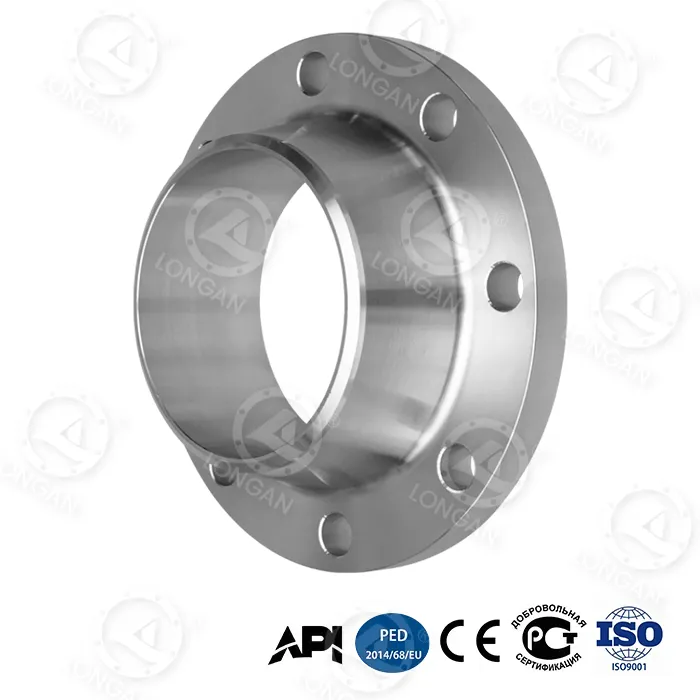
Why Do I Choose a Forged Butt Welding Flange Instead of a Cast Flange?
For demanding pipeline systems, I usually give priority to forged flanges because forging can create a more compact internal structure. During forging, the metal billet is heated and shaped under pressure, which helps improve grain flow and reduce internal defects. Compared with cast flanges, forged flanges generally offer better strength, toughness, and resistance to tensile and shear forces.
This matters in real working conditions. A flange may need to handle pressure fluctuation, temperature change, pipe vibration, corrosive media, and mechanical load from connected equipment. A cast flange may be acceptable for some low pressure systems, but when the pipeline carries valuable, hot, corrosive, or high pressure media, I would rather choose a forged product with more reliable mechanical performance.
- I choose forged flanges when the system needs higher strength and tighter reliability.
- I choose butt welding connections when a smooth flow path and strong welded joint are important.
- I choose 304 stainless alloy material when corrosion resistance and cleanliness are part of the project requirement.
- I choose a customizable supplier when the project involves different standards, dimensions, or surface treatments.
In this sense, the 304 Alloy Steel Forged Butt Welding Flange is not just a connector. It is a pressure bearing component that helps protect the pipeline from weak connection points.
What Makes 304 Alloy Steel Suitable for Pipeline Flange Applications?
304 stainless alloy steel is widely used because it provides a good balance between corrosion resistance, mechanical strength, workability, and long service life. In many industrial environments, especially where moisture, chemicals, cleaning procedures, or mild corrosive media exist, 304 material can be a practical and cost effective choice.
For me, the biggest advantage of 304 material is not only its corrosion resistance. It is also its versatility. One project may involve water lines, another may involve food processing equipment, and another may involve chemical transfer pipelines. A properly produced 304 flange can serve many of these applications without forcing the buyer to over specify a more expensive material when it is not necessary.
| Buyer Concern | How 304 Alloy Steel Helps | Why It Matters in Use |
|---|---|---|
| Corrosion resistance | 304 stainless alloy contains chromium and nickel for better resistance in many service environments | It helps reduce rust related maintenance and supports longer service life |
| Clean processing environment | The material surface can support hygienic applications when properly finished | It is useful for food, beverage, pharmaceutical, and clean water systems |
| Mechanical stability | Forging improves density and structural integrity | It helps the flange handle pressure, vibration, and installation stress |
| Welding reliability | Butt welding design supports a strong welded joint with the pipe | It helps create a smoother connection and reduces leakage risk |
| Project flexibility | Dimensions, pressure ratings, and surface treatment can be customized | It allows the flange to fit different standards and project conditions |
How Does the Butt Welding Design Improve Pipeline Performance?
A butt welding flange is designed to be welded directly to the pipe end. This connection method can create a strong, continuous joint between the flange and the pipeline. When the welding work is done correctly, the connection can handle pressure and temperature changes more smoothly than some detachable or threaded connection styles.
I especially value butt welding design in systems where leakage control is critical. In oil and gas, chemical processing, water treatment, and shipbuilding, leakage is not only a maintenance issue. It can become a safety issue, a production issue, and sometimes an environmental issue. A 304 Alloy Steel Forged Butt Welding Flange helps build a more integrated pipeline connection, which is one reason buyers often choose it for serious industrial projects.
Another benefit is flow efficiency. A proper butt welded connection can reduce unnecessary turbulence around the joint area. This can be important in systems where pressure drop, residue buildup, or clean transfer conditions need attention.
Which Industries Can Benefit Most from This Flange?
I would not describe this flange as a one industry product. Its value is that it can serve many practical fields where strength, corrosion resistance, and stable connection quality are needed. Different industries care about different pain points, but the basic requirement is similar. The connection must be safe, stable, and easy to integrate into the pipeline design.
- Oil and gas pipelines often need flanges that can handle pressure, temperature variation, and demanding installation conditions.
- Chemical processing plants need materials that can resist corrosion from certain media and cleaning procedures.
- Food processing systems require cleanable, corrosion resistant components that support hygienic operation.
- Pharmaceutical equipment needs stable material quality and precise processing to support clean production environments.
- Water treatment projects need long lasting flange connections for fresh water, wastewater, and related pipeline systems.
- Shipbuilding and marine systems often require corrosion resistant flange components for seawater or humid environments.
In these applications, the 304 Alloy Steel Forged Butt Welding Flange can help buyers solve a familiar problem. They need a flange that is strong enough for industrial use, resistant enough for harsh service conditions, and flexible enough to match different pipeline standards.
What Should I Check Before Buying a 304 Alloy Steel Forged Butt Welding Flange?
Before placing an order, I always suggest checking more than the product name. Two flanges may look similar on a quotation sheet, but their real performance can be different. The material grade, standard, pressure rating, forging quality, heat treatment, machining tolerance, surface treatment, and inspection process all affect the final result.
A professional buyer should confirm these details early, because a wrong flange can delay installation or cause mismatch with pipes, valves, and equipment. For overseas procurement, clear technical communication is even more important.
| Item to Confirm | What I Usually Ask | Why It Is Important |
|---|---|---|
| Material grade | Is the flange supplied in 304 stainless alloy material or another required grade | Material affects corrosion resistance, strength, and working environment compatibility |
| Manufacturing standard | Can it meet ANSI, JIS, DIN, EN, BS, MSS, or project specific standards | Standard matching helps avoid installation problems |
| Pressure rating | Which class or pressure level is suitable for my pipeline | Incorrect rating may create safety risks |
| Surface treatment | Do I need anti rust oil, painting, galvanizing, hot dip galvanizing, or another finish | Surface protection affects storage, transport, and service life |
| Customization | Can the supplier adjust size, drilling, thickness, face type, or packaging | Customized requirements are common in industrial projects |
| Quality control | What inspection steps are used before shipment | Inspection reduces the chance of receiving unusable or inconsistent parts |
How Does Custom Manufacturing Help Reduce Procurement Risk?
Many pipeline projects are not completely standard. Even when the flange follows an international standard, buyers may still need special dimensions, specific surface treatment, certain pressure ratings, or matching parts for existing equipment. This is where customization becomes useful.
I see customization as a way to reduce risk rather than add complexity. When the supplier understands the working condition, pipe size, pressure level, medium, and installation environment, the flange can be produced closer to the actual project requirement. That helps avoid rework, delayed installation, and repeated communication after the goods arrive.
Wenzhou Longan Flange Co., Ltd. provides different flange materials and specifications, including stainless steel, alloy steel, carbon steel, and other project based options. This matters because buyers may source not only one 304 Alloy Steel Forged Butt Welding Flange, but also related flange types for the same pipeline project, such as weld neck flanges, slip on flanges, blind flanges, threaded flanges, socket weld flanges, lap joint flanges, ring flanges, and OEM type flanges.
Is Surface Treatment Really Important for Forged Flanges?
Yes, surface treatment is more important than many new buyers expect. A flange may be manufactured correctly, but if it is stored, shipped, or used in a harsh environment without suitable surface protection, its condition can be affected before installation or during service.
For some applications, anti rust oil may be enough for storage and transportation. For other environments, painting, galvanizing, hot dip galvanizing, or another treatment may be required. The correct choice depends on the material, storage time, shipping route, working environment, and customer standard.
- For indoor storage and short shipment, basic anti rust protection may be suitable.
- For outdoor storage, stronger surface protection may be needed.
- For marine or humid environments, corrosion resistance should be evaluated carefully.
- For clean systems, surface finish and cleanliness should be discussed before production.
When I source a 304 Alloy Steel Forged Butt Welding Flange, I do not treat surface treatment as an afterthought. I see it as part of the full service life of the product.
Why Does Supplier Experience Matter for Industrial Flange Orders?
A flange order is not only about production. It also depends on communication, drawing confirmation, standard matching, packaging, inspection, delivery, and after sales response. A supplier with practical experience can help buyers avoid many small mistakes that may turn into expensive problems later.
For example, a buyer may know the pipe size but not be fully sure about flange facing, drilling standard, pressure class, or surface treatment. A good supplier will not simply push the order forward without checking. Instead, they will help clarify the technical details before production.
That is one reason I pay attention to manufacturers like Wenzhou Longan Flange Co., Ltd. The company focuses on flange products and related forged components, and its product range gives buyers more room to match different project needs. For buyers who want consistent supply instead of one time trial purchasing, this kind of manufacturing focus is valuable.
How Can This Flange Help Buyers Control Long Term Costs?
Low unit price can look attractive at first, but the real cost of a flange includes much more than the quotation. I usually think about total cost from installation to maintenance. If the flange is not strong enough, does not match the pipe system, or has poor dimensional accuracy, the buyer may pay more through delayed installation, leakage repair, production shutdown, or replacement.
A reliable 304 Alloy Steel Forged Butt Welding Flange can support long term cost control in several ways.
- It can reduce leakage risk when properly selected, welded, and installed.
- It can improve connection strength in pressure bearing pipeline systems.
- It can lower corrosion related maintenance in suitable working environments.
- It can support cleaner operation in food, pharmaceutical, and water related systems.
- It can reduce project mismatch when customized according to the right standard and size.
For me, a flange is a small component only in size. In project value, it is part of the safety system. Choosing the right flange at the beginning is usually easier and cheaper than solving connection problems after installation.
What Kind of Buyer Should Consider This Product?
I would recommend this flange to buyers who need a stronger and more corrosion resistant pipeline connection for industrial use. It is especially suitable for procurement teams, engineering contractors, equipment manufacturers, pipeline installers, and distributors who want a product that can be adapted to different standards and working environments.
If your project involves pressure pipelines, corrosive media, sanitary processing, water systems, marine conditions, or frequent equipment connection points, the 304 Alloy Steel Forged Butt Welding Flange is worth considering. It gives you the combined benefits of forged strength, 304 stainless alloy performance, and butt welding connection stability.
Of course, the final choice should always match the actual service condition. I would check the medium, pressure, temperature, pipe specification, flange standard, installation method, and required inspection documents before confirming an order.
How Do I Start a Safer Flange Procurement Process?
The easiest way is to prepare your basic project details before asking for a quotation. I would include pipe size, required standard, pressure rating, material grade, quantity, working medium, surface treatment, and any drawing or technical requirement. With this information, the supplier can respond more accurately and help avoid unnecessary back and forth.
If you are planning a new pipeline project or replacing existing flange components, I would suggest discussing your needs with Wenzhou Longan Flange Co., Ltd. early in the process. A well selected 304 Alloy Steel Forged Butt Welding Flange can make the connection safer, cleaner, and easier to maintain over time. For product details, custom requirements, price information, or technical support, please leave your inquiry and contact us today so the team can help you find the right flange solution for your project.