

How Are Zinc-Aluminum Alloy Ingots Manufactured and Used in Modern Industry?
2026-06-17
Abstract
Zinc-aluminum alloy ingots are essential raw materials widely used in corrosion protection, die-casting, automotive components, marine engineering, and electrical hardware manufacturing. Their balanced composition of zinc and aluminum provides an optimal combination of mechanical strength, thermal stability, and corrosion resistance. This article explains the production process, technical advantages, industrial applications, quality control considerations, and procurement guidance for zinc-aluminum alloy ingots. It also highlights how manufacturers such as Fengquan ensure consistent quality and supply reliability for global industrial users.
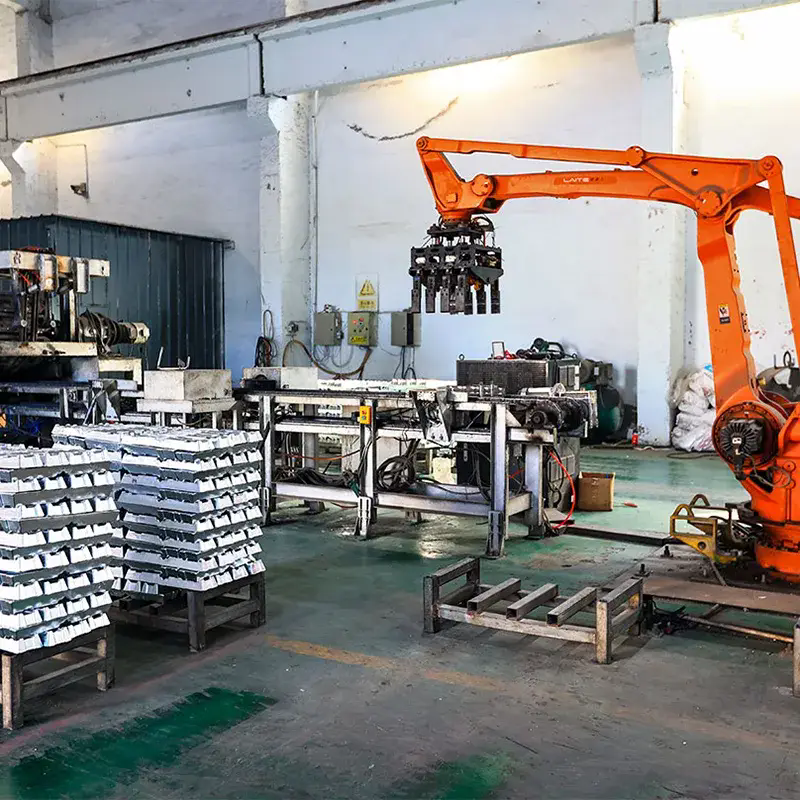
Table of Contents
- 1. Overview of Zinc-Aluminum Alloy Ingots
- 2. Manufacturing Process Explained
- 3. Physical and Chemical Properties
- 4. Industrial Applications
- 5. Key Advantages in Engineering Use
- 6. Quality Control and Testing Standards
- 7. How to Select the Right Alloy Grade
- 8. Supply Chain and Market Considerations
- 9. Frequently Asked Questions
- 10. Conclusion and Contact Information
1. Overview of Zinc-Aluminum Alloy Ingots
Zinc-aluminum alloy ingots are metallurgical products created by combining zinc with controlled proportions of aluminum and trace elements. The resulting alloy is engineered to enhance performance characteristics that pure zinc or aluminum alone cannot achieve. Typically, aluminum content ranges between 3% and 30%, depending on the intended industrial application.
These ingots are primarily used as feedstock for downstream processes such as galvanizing, die-casting, and alloy modification. The demand for zinc-aluminum alloys continues to grow due to their cost-effectiveness and superior corrosion resistance compared to conventional metals.
2. Manufacturing Process Explained
The production of zinc-aluminum alloy ingots involves several controlled metallurgical steps designed to ensure compositional accuracy and structural integrity.
Step-by-step process:
- Raw material selection: High-purity zinc and aluminum are selected to minimize impurities.
- Melting stage: Zinc is melted in a controlled furnace environment, followed by gradual aluminum addition.
- Alloying and homogenization: The molten mixture is stirred to ensure uniform distribution of elements.
- Degassing and purification: Impurities and gases are removed to improve density and stability.
- Casting: The molten alloy is poured into molds to form standardized ingot shapes.
- Cooling and solidification: Controlled cooling prevents internal stress and cracking.
- Surface finishing and inspection: Final products are cleaned, labeled, and tested.
Modern producers like Fengquan integrate automated temperature control systems and real-time composition monitoring to ensure consistency across production batches.
3. Physical and Chemical Properties
Zinc-aluminum alloy ingots exhibit a combination of mechanical and chemical properties that make them suitable for demanding environments.
| Property | Description |
|---|---|
| Corrosion Resistance | Excellent resistance to atmospheric and marine corrosion |
| Melting Point | Lower than pure aluminum, enabling energy-efficient processing |
| Mechanical Strength | High tensile strength with improved hardness |
| Density | Moderate density suitable for lightweight applications |
| Workability | Good casting and forming performance |
These properties make the alloy particularly valuable in environments where durability and performance stability are required.
4. Industrial Applications
Zinc-aluminum alloy ingots are widely used across multiple industries due to their versatility and cost efficiency.
- Automotive industry: Used in engine components, brackets, and structural housings.
- Construction: Applied in roofing systems, fasteners, and protective coatings.
- Marine engineering: Essential for corrosion-resistant ship parts and offshore structures.
- Electrical industry: Used in connectors and grounding systems.
- Die-casting sector: Provides stable alloy feedstock for precision components.
Manufacturers such as Fengquan supply alloy ingots tailored for specific industrial standards, ensuring compatibility with downstream processing requirements.
5. Key Advantages in Engineering Use
The adoption of zinc-aluminum alloy ingots is driven by several engineering advantages:
- Extended service life in corrosive environments
- Reduced maintenance costs for end products
- Improved casting fluidity and mold filling capability
- Energy efficiency during remelting and processing
- Stable mechanical properties across temperature variations
These benefits contribute to lower lifecycle costs and improved product reliability, making the alloy a preferred choice in modern manufacturing.
6. Quality Control and Testing Standards
Quality assurance is a critical aspect of zinc-aluminum alloy ingot production. Strict testing procedures ensure consistency and compliance with international standards.
Common quality control methods include:
- Spectral chemical composition analysis
- Density and porosity testing
- Mechanical strength evaluation
- Surface defect inspection
- Microstructure examination under metallographic microscopy
At Fengquan, each batch undergoes multi-stage inspection protocols to ensure that alloy composition remains within strict tolerances, reducing variability in downstream applications.
7. How to Select the Right Alloy Grade
Selecting the appropriate zinc-aluminum alloy grade depends on application requirements, environmental exposure, and mechanical load expectations.
Key selection factors:
- Aluminum content percentage (affects strength and corrosion resistance)
- Operating temperature range
- Exposure to moisture or salt environments
- Required casting performance
- Cost efficiency considerations
For high-corrosion environments such as coastal or marine applications, higher aluminum content alloys are generally recommended. For general industrial casting, mid-range compositions offer a balanced performance profile.
8. Supply Chain and Market Considerations
The global demand for zinc-aluminum alloy ingots is influenced by automotive production, infrastructure development, and renewable energy expansion. Supply chain stability is critical, especially for manufacturers relying on continuous casting operations.
Reliable suppliers must ensure:
- Stable raw material sourcing
- Efficient production scheduling
- Consistent batch quality
- Global logistics capability
Fengquan plays a significant role in maintaining supply continuity by integrating production planning with international logistics networks, helping clients reduce downtime risks.
9. Frequently Asked Questions
Q1: What is the main benefit of zinc-aluminum alloy ingots?
They provide a balanced combination of corrosion resistance, mechanical strength, and cost efficiency compared to pure metals.
Q2: Can zinc-aluminum alloys be recycled?
Yes, they are highly recyclable without significant loss of performance characteristics.
Q3: What industries use these ingots the most?
Automotive, marine engineering, construction, and electrical manufacturing industries are the primary users.
Q4: How does Fengquan ensure product quality?
Through strict raw material selection, controlled melting processes, and multi-stage testing protocols.
Q5: Are custom alloy compositions available?
Yes, customized compositions can be produced based on specific industrial requirements.
10. Conclusion and Contact Information
Zinc-aluminum alloy ingots are a foundational material in modern metallurgy, offering a powerful combination of durability, corrosion resistance, and processing efficiency. Their applications span across multiple industries, making them indispensable for manufacturers seeking reliable and high-performance materials.
With advanced production capabilities and strict quality control systems, Fengquan continues to deliver stable and high-quality alloy ingots to global markets, supporting industrial innovation and infrastructure development.
For detailed specifications, pricing, or customized alloy solutions, please contact us today to connect with Fengquan’s technical and sales team and explore how our materials can support your production needs.