

Article Summary: Steel components CNC machined are essential for industrial equipment that demands dimensional accuracy, mechanical strength, repeatable assembly, and long-term service performance. Compared with conventional manual machining, CNC machining provides a controlled and repeatable production process that can manufacture shafts, brackets, gears, bearing plates, fixing bases, pulleys, pins, housings, and other steel parts according to detailed engineering drawings. The selection of steel grade, machining strategy, tooling, tolerances, surface finish, inspection method, and post-processing all influence the final component.
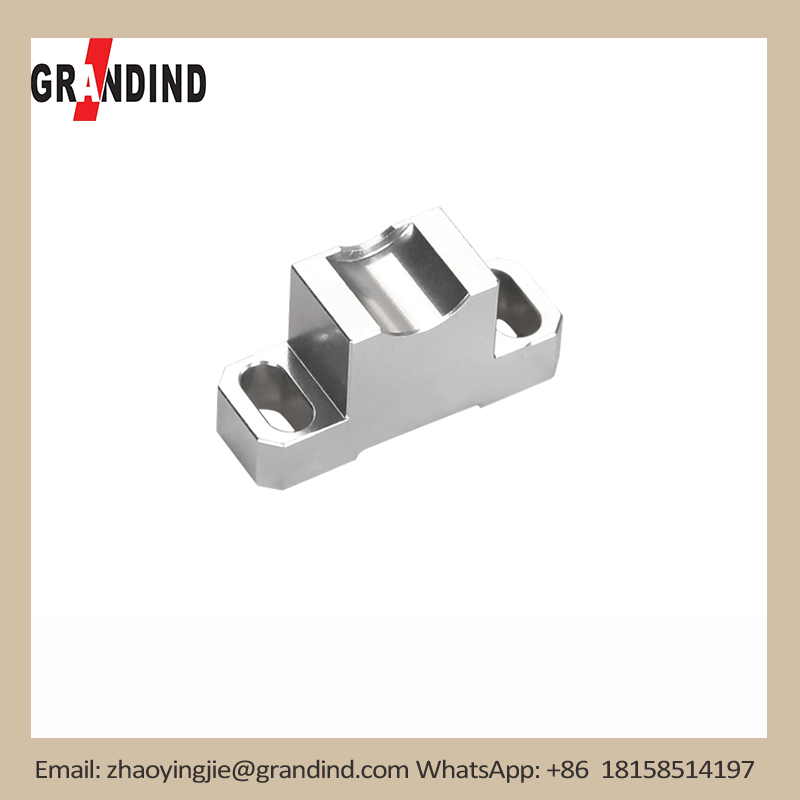
This guide explains how steel components are CNC machined, what factors determine quality, how manufacturers control common production problems, and how buyers can specify parts more effectively. It also explains how Hangzhou Grand Import And Export Co., Ltd. approaches customized steel component production for industrial applications.
Table of Contents
- Article Outline
- Steel Components CNC Machined: An Overview
- Why CNC Machining Is Important for Steel Components
- Common Steel Materials for CNC Components
- How Steel Components Are CNC Machined
- How Machining Precision Is Controlled
- Surface Finishing and Protection
- Applications of CNC Machined Steel Components
- Common Problems and How to Avoid Them
- How to Choose a Reliable Steel CNC Machining Supplier
- Steel CNC Machining from Hangzhou Grand Import And Export Co., Ltd.
- Buyer Specification Checklist
- Frequently Asked Questions
- Conclusion
Article Outline
- Understanding the role of CNC machining in steel component manufacturing
- Comparing steel material options according to application requirements
- Explaining the complete CNC machining workflow
- Controlling dimensional accuracy, tolerances, and repeatability
- Selecting suitable surface treatments for different environments
- Identifying common machining problems before they become costly failures
- Evaluating suppliers, quality systems, production capabilities, and communication
- Preparing better technical specifications for customized steel components
Steel Components CNC Machined: An Overview
Steel components CNC machined are mechanical parts manufactured from steel stock using computer-controlled cutting equipment. Depending on the component geometry, production may involve CNC turning, CNC milling, drilling, boring, tapping, grooving, threading, reaming, or a combination of several operations.
The main advantage is controlled repeatability. Once the machining process has been properly developed and verified, the same program, tooling strategy, workholding method, and inspection requirements can be used to produce multiple parts with consistent dimensions.
This is particularly important for industrial components that must fit into assemblies. A shaft with an incorrectly sized bearing seat, for example, can cause excessive movement, difficult assembly, vibration, or premature bearing failure. Similarly, an inaccurately machined mounting bracket may create alignment problems elsewhere in the machine.
For this reason, successful steel CNC machining is not simply about removing material. It is a coordinated process involving material selection, engineering interpretation, tool selection, machine capability, cutting parameters, workholding, dimensional inspection, and final finishing.
Why CNC Machining Is Important for Steel Components
Steel is widely selected for mechanical components because many steel grades provide a useful combination of strength, hardness, toughness, wear resistance, and machinability. However, steel can also be demanding to machine, especially when a component contains deep pockets, narrow grooves, tight tolerances, interrupted cuts, or hardened surfaces.
CNC machining helps manufacturers manage these requirements through programmed tool movement and controlled production parameters.
| Requirement | How CNC Machining Helps | Customer Benefit |
|---|---|---|
| Dimensional accuracy | Programmed cutting paths and controlled machine movements | Better assembly compatibility |
| Repeatability | Consistent machining programs and process parameters | More uniform production batches |
| Complex geometry | Multi-axis and multi-operation machining capabilities | Greater design flexibility |
| Production efficiency | Automated tool movements and repeatable cycles | Reduced manual machining workload |
| Quality inspection | Defined measurement points and inspection procedures | More predictable quality control |
For OEM buyers, these advantages can translate into fewer assembly adjustments, more stable production schedules, lower rejection rates, and improved equipment reliability.
Common Steel Materials for CNC Components
Material selection should begin with the component's operating conditions rather than simply choosing the most familiar steel grade. Load, wear, corrosion exposure, heat, impact, required hardness, machining complexity, and budget can all influence the appropriate material.
| Material Category | Typical Characteristics | Potential Applications |
|---|---|---|
| Carbon steel | Good strength and practical machinability depending on grade | Brackets, shafts, plates, structural mechanical parts |
| Alloy steel | Enhanced mechanical properties through alloying elements and suitable heat treatment | Gears, shafts, pins, transmission components |
| Stainless steel | Strong corrosion resistance in many service environments | Food equipment, chemical equipment, outdoor machinery, precision components |
| Tool steel | High hardness and wear resistance in appropriate grades and conditions | Tooling, wear components, dies, specialized mechanical parts |
The material grade should always be confirmed against the engineering specification. Two steels may appear similar but behave very differently during machining, heat treatment, finishing, and service.
How Steel Components Are CNC Machined
The production of a precision steel component normally begins long before the cutting tool touches the workpiece. A reliable process starts with a clear drawing, suitable material, and a defined inspection requirement.
1. Review the Engineering Drawing
The manufacturer first examines the drawing or three-dimensional model. Important information includes overall dimensions, hole locations, thread specifications, geometric tolerances, surface roughness requirements, material grade, heat-treatment requirements, and finishing requirements.
Any unclear dimensions should be resolved before production. Manufacturing a part based on assumptions can result in expensive rework or an entire batch of unusable components.
2. Select and Prepare the Steel Material
The raw material is selected according to the specified steel grade and required blank dimensions. The initial stock should provide enough machining allowance for the component while avoiding unnecessary material waste.
For critical components, material identification and traceability can also be important, particularly when customers require documented production control.
3. Develop the CNC Machining Strategy
Manufacturing engineers determine how the part will be positioned, clamped, machined, and inspected. The sequence is important because each operation can affect the accuracy of subsequent operations.
A typical strategy may involve rough machining first, followed by semi-finishing and precision finishing. Critical holes, bearing seats, threads, slots, and mating surfaces may receive dedicated finishing operations.
4. Choose Cutting Tools and Parameters
Steel machining requires suitable cutting tools, spindle speeds, feed rates, cutting depths, and coolant or lubrication strategies. Tool selection depends on the steel grade, hardness, geometry, tolerance, and surface-finish requirement.
Incorrect cutting conditions can create excessive heat, rapid tool wear, burrs, chatter, poor surface finish, or dimensional instability. Experienced process planning therefore aims to balance productivity with predictable machining performance.
5. Perform Rough Machining
Rough machining removes the majority of unwanted material while leaving an appropriate allowance for finishing. The priority at this stage is stable material removal without creating excessive stress or damaging critical surfaces.
6. Complete Precision Machining
Finishing operations bring the component to its specified dimensions and surface requirements. Depending on the design, this can include precision turning, fine milling, boring, reaming, threading, grooving, chamfering, or other operations.
7. Inspect the Finished Component
Inspection confirms whether the component meets the drawing and agreed specifications. Critical dimensions should be measured using suitable instruments rather than relying solely on visual inspection.
Inspection may include calipers, micrometers, height gauges, bore gauges, thread gauges, surface measurement equipment, or coordinate measurement equipment, depending on the component and tolerance requirements.
8. Apply Required Finishing and Package the Parts
After machining and inspection, the parts may receive cleaning, deburring, polishing, plating, coating, heat treatment, passivation, or another specified process. Packaging should protect precision surfaces from scratches, contamination, moisture, and impact during storage and transportation.
How Machining Precision Is Controlled
Precision is not determined by the CNC machine alone. It depends on the entire production system. Machine condition, fixture rigidity, tool condition, thermal effects, material behavior, machining sequence, programming, operator experience, and inspection practices can all influence the final result.
For a customer ordering steel components CNC machined, the most important dimensions should be clearly identified. Not every dimension necessarily requires the same tolerance. Applying unnecessarily tight tolerances to every feature can significantly increase manufacturing cost without improving functional performance.
- Identify critical dimensions: Focus tighter tolerances on mating and functional surfaces.
- Define geometric requirements: Specify concentricity, flatness, perpendicularity, or position where they affect assembly.
- Control surface roughness: Bearing seats, sealing surfaces, and sliding interfaces may require specific finishes.
- Inspect functional features: Threads, bores, slots, keyways, and mounting holes should be checked according to their function.
- Maintain process consistency: Stable tooling and workholding reduce batch-to-batch variation.
A practical tolerance strategy is therefore based on function. The objective is not simply to achieve the smallest possible tolerance, but to achieve the correct tolerance consistently.
Surface Finishing and Protection
Machining creates the required geometry, but the finished component may need additional treatment to meet its service requirements. Surface finishing can improve appearance, corrosion resistance, wear resistance, or compatibility with mating parts.
| Finish or Treatment | Primary Purpose | Considerations |
|---|---|---|
| Deburring | Remove sharp edges and machining burrs | Important for assembly and safe handling |
| Polishing | Improve surface appearance and smoothness | May be used on visible or functional surfaces |
| Plating | Improve corrosion or wear resistance | Thickness can affect critical dimensions |
| Protective coating | Provide environmental protection | Coating compatibility should match operating conditions |
| Heat treatment | Modify hardness and mechanical properties | May influence dimensions and require subsequent finishing |
When a component receives a coating or heat treatment, the manufacturer should consider its impact on dimensional requirements. A process that changes surface thickness or material properties should be incorporated into the manufacturing sequence rather than treated as an afterthought.
Applications of CNC Machined Steel Components
Steel CNC components are used throughout industrial manufacturing because their strength and dimensional stability make them suitable for many mechanical systems.
- Automation equipment
- Packaging machinery
- Textile machinery
- Paper and disposable-product machinery
- Material handling systems
- Industrial transmission systems
- Machine tools
- Pumps and valve assemblies
- Production fixtures and tooling
- Industrial assembly equipment
- Custom mechanical equipment
Typical components include transmission shafts, bearing plates, fixing bases, brackets, connecting rods, pulleys, pins, blocks, valve accessories, machine screws, housings, and other custom mechanical parts.
The ability to manufacture parts from customer drawings makes CNC machining particularly useful for OEM development, replacement parts, equipment upgrades, and low-to-medium volume customized production.
Common Problems and How to Avoid Them
Even when a part looks simple, several production problems can affect its performance.
| Common Problem | Possible Cause | Practical Prevention |
|---|---|---|
| Dimensional variation | Tool wear, thermal changes, unstable process conditions | Monitor tooling and inspect critical dimensions during production |
| Surface chatter | Insufficient rigidity or unsuitable cutting conditions | Improve workholding and optimize machining parameters |
| Excessive burrs | Tool condition, cutting direction, or material behavior | Optimize tooling and include appropriate deburring |
| Incorrect hole position | Poor workholding, programming, or datum selection | Use accurate datums and verify positioning before batch production |
| Poor surface finish | Worn tooling or inappropriate cutting parameters | Use suitable finishing tools and controlled parameters |
| Assembly mismatch | Incorrect tolerance interpretation or missing functional dimensions | Review drawings and define mating requirements clearly |
One of the most effective ways to prevent these problems is to identify critical features before production begins. A clear drawing and detailed technical communication can eliminate many avoidable manufacturing errors.
How to Choose a Reliable Steel CNC Machining Supplier
Choosing a supplier based only on unit price can create hidden costs. A slightly cheaper component may become expensive if it causes assembly problems, delivery delays, inconsistent quality, or repeated inspection work.
When evaluating a supplier for steel components CNC machined, consider the following factors:
- Material capability: Confirm that the supplier regularly works with the required carbon steel, alloy steel, or stainless steel grades.
- Machining capability: Check whether available CNC turning and milling equipment can handle the component geometry and required tolerances.
- Quality control: Ask how critical dimensions are inspected and documented.
- Drawing interpretation: A capable supplier should be able to identify manufacturing risks before production begins.
- Customization: Confirm whether the supplier can manufacture according to drawings rather than only offering standard parts.
- Production capacity: Make sure the supplier can support both prototype requirements and repeat orders when needed.
- Communication: Clear technical communication is essential when dimensions, materials, tolerances, or finishes require clarification.
- Packaging and logistics: Precision parts should be packaged appropriately to avoid damage during transportation.
A supplier that understands the entire component lifecycle can contribute more value than a supplier focused only on machining time.
Steel CNC Machining from Hangzhou Grand Import And Export Co., Ltd.
Hangzhou Grand Import And Export Co., Ltd. provides customized CNC machined metal components for industrial applications. Its steel component offering covers a range of precision mechanical parts manufactured from carbon steel, alloy steel, stainless steel, and other suitable materials according to project requirements.
The company's steel machining capabilities are suitable for components such as shafts, bearing-related parts, brackets, fixing bases, connecting components, pulleys, machine screws, valve accessories, and other customized mechanical parts.
For OEM and industrial buyers, drawing-based customization is particularly valuable. Instead of adapting an off-the-shelf component to an existing machine, customers can specify the dimensions, mounting configuration, hole pattern, thread requirements, material, surface finish, and other functional characteristics required by their equipment.
A reliable manufacturing workflow should also consider production consistency. For repeated orders, maintaining the same material specification, machining method, inspection requirements, and finishing process helps reduce variation between batches.
Customers considering customized steel components should provide as much technical information as possible at the quotation stage. A detailed drawing, three-dimensional model, material specification, estimated quantity, critical tolerance requirements, surface treatment, and intended application can help the manufacturer recommend an appropriate production approach.
Buyer Specification Checklist for Steel Components CNC Machined
Before sending a steel CNC machining inquiry, prepare the following information whenever available:
| Specification | Information to Provide |
|---|---|
| Part drawing | 2D engineering drawing and/or 3D CAD model |
| Material | Exact steel grade or required material characteristics |
| Quantity | Prototype quantity, trial batch, and estimated repeat demand |
| Tolerances | General tolerances plus critical dimensional requirements |
| Surface finish | Surface roughness and visual requirements where applicable |
| Heat treatment | Required hardness or specified treatment if applicable |
| Surface treatment | Plating, coating, polishing, passivation, or other requirements |
| Inspection | Required inspection reports, certificates, or measurement records |
| Application | Load, temperature, environment, wear, or other operating conditions |
| Delivery requirements | Target delivery schedule and packaging expectations |
The more complete the technical information, the easier it is to establish a practical manufacturing process and avoid misunderstandings during production.
Frequently Asked Questions
What are steel components CNC machined used for?
Steel components CNC machined are used in industrial machinery, automation equipment, packaging systems, transmission mechanisms, fixtures, tooling, pumps, valves, and many other mechanical assemblies. They are especially useful when strength, wear resistance, dimensional accuracy, and repeatability are important.
Can CNC machining produce customized steel components from drawings?
Yes. CNC machining is well suited to customized components because the machining program can be developed from engineering drawings or CAD models. Customers can specify dimensions, holes, threads, tolerances, surface finishes, and material requirements according to their equipment.
What steel is best for CNC machined components?
There is no single steel grade that is best for every application. Carbon steel may be suitable for general mechanical components, alloy steel can be selected where higher mechanical performance is required, and stainless steel may be preferred when corrosion resistance is important. The correct choice depends on the component's operating environment and functional requirements.
Are steel CNC machined parts suitable for small quantities?
Yes. CNC machining can be practical for prototypes, replacement parts, engineering samples, and small production batches. The economics depend on part complexity, programming requirements, tooling, material, finishing, inspection, and quantity.
How can I improve the accuracy of my steel CNC components?
Start with a clear engineering drawing and correctly defined datums and tolerances. Critical mating surfaces should be identified clearly. Using suitable workholding, stable cutting parameters, appropriate tooling, controlled inspection, and a consistent machining sequence can also improve dimensional repeatability.
Do CNC steel components require surface treatment?
Not always. The need for surface treatment depends on the operating environment and functional requirements. Some parts may only need deburring and cleaning, while others may require polishing, plating, coating, passivation, or heat treatment for corrosion resistance, wear resistance, hardness, or appearance.
What should I send when requesting a quotation?
A complete drawing or CAD file, material specification, quantity, tolerances, surface finish, treatment requirements, inspection requirements, and delivery expectations are highly useful. If the component has a special application, information about load, temperature, corrosion exposure, or wear can also help the manufacturer evaluate the project correctly.
Why is material selection important for CNC steel parts?
Material affects machinability, strength, hardness, wear resistance, corrosion behavior, finishing options, and cost. Selecting the wrong material can result in unnecessary machining difficulty or insufficient performance during service.
Conclusion
Producing high-quality STEEL COMPONENTS CNC MACHINED requires more than programming a CNC machine. Successful production begins with the correct material and a clear engineering specification, then continues through process planning, workholding, tooling selection, rough machining, precision finishing, inspection, surface treatment, and careful packaging.
For buyers, the most important priorities are functional requirements, dimensional accuracy, material suitability, consistent quality, reliable communication, and predictable delivery. A well-prepared drawing and clear technical specification can significantly reduce production risks and help the manufacturer establish a more efficient machining process.
Hangzhou Grand Import And Export Co., Ltd. supports customized steel CNC machining requirements for industrial customers seeking precision components manufactured according to drawings and application needs. Whether you need a prototype, replacement component, customized mechanical part, or repeat production order, defining your requirements clearly is the first step toward a reliable result.
Looking for dependable steel components CNC machined for your industrial equipment? Send your drawings, material requirements, quantities, tolerances, and finishing specifications to Hangzhou Grand Import And Export Co., Ltd. for professional project evaluation and customized manufacturing support. Contact us today to discuss your steel CNC machining requirements and find a practical solution for your application.